Personalized Customer Service: What Actually Works
%201-min.avif)
.webp)
Most Companies Personalise the Wrong Things. Here's What Actually Moves the Number.
At a hotel I stayed at in the South of France, a handwritten note was waiting on the pillow. It said, "Welcome back, Mr. Bahbahani." I had never stayed there before. Someone had copied a name from a reservation system onto a card, and the gesture that was meant to feel personal instead felt mechanical. I knew it was a template. The hotel knew it was a template. And yet someone had decided this counted as personalisation.
This is the state of personalisation in most businesses today. The intent is right, but the execution is shallow. Companies invest in CRM systems, build segmentation models, and send emails with first names in the subject line. Then they wonder why none of it seems to move retention or revenue in any meaningful way.
The problem is not that personalisation doesn't work. McKinsey's research shows that companies that get personalisation right generate 40% more revenue from those activities than average performers. The typical lift is 10-15%, with the best operators reaching 25%. Those are real numbers. But most companies never get close, because they personalise the easy things (the name, the birthday email, the generic "recommended for you" carousel) and leave the hard things untouched.
The hard things are the ones that actually matter.
What Personalisation Actually Is (and Isn't)
Personalisation is not decoration. It is using what you know about a person to reduce friction in their experience and increase the relevance of what you offer them.
A hotel that remembers your room preference and has the room ready before you arrive is personalising. A hotel that sends you a generic "We miss you" email six months after checkout is not. A car dealership that contacts you before your service interval with a specific time slot based on your driving pattern is personalising. One that sends the same seasonal promotion to every customer in the database is not.
The test is simple: is the business using data to make the customer's life easier, or using data to make its own marketing feel modern?
Where Personalisation Creates Real Value
1. Reducing friction at the point of need
The highest-value personalisation is often invisible. It removes a step the customer would otherwise have to take, or anticipates a need before they articulate it.
In automotive service, this looks like a dealership that knows your car's mileage, your service history, and your preferred appointment window, and contacts you with a specific booking rather than a generic reminder. The customer doesn't have to think about scheduling. The friction disappears. At Ali Alghanim and Sons, we saw this approach consistently produce higher service retention than any promotional campaign. It wasn't clever. It was just useful.
In hospitality, the equivalent is a hotel that knows you always request extra pillows and a late checkout, and has both arranged before you check in. No form to fill out. No request to make. The friction is removed from the handoff between booking and arrival. That is personalisation worth paying for.
2. Making offers relevant instead of frequent
Most businesses over-communicate and under-target. They send more messages rather than better ones. The result is noise that trains customers to ignore everything.
McKinsey's data shows that 71% of consumers expect personalised interactions, and 76% get frustrated when they don't receive them. But there's a telling gap between what companies think they deliver and what customers actually experience. That gap is where most of the wasted marketing spend lives.
The fix is not more personalisation. It is better targeting. A bank that sends a savings product offer to a customer who just made a large deposit is personalising well. The same bank sending generic credit card promotions to its entire customer base every month is spending money to be ignored.
3. Driving repeat business through recognition
Personalisation is at its most powerful when it makes a customer feel known, not marketed to. This is the territory where satisfaction tips into loyalty.
I've written elsewhere about the emotional mechanics behind this. The psychological research calls it Kama Muta: the sudden feeling of being moved when you realise someone has paid genuine attention. It's what happens when a hotel receptionist says, "I've put you in the same room as last time, the one with the garden view," without you asking. Or when a sales advisor at a car dealership remembers that you were concerned about boot space because of your daughter's hockey kit.
These moments don't require sophisticated technology. They require a system that captures relevant details and a culture that acts on them.

Why Most Personalisation Fails
If the business case is this clear, why do so many companies struggle with execution?
Because personalisation is treated as a marketing project when it is actually an infrastructure problem. The data exists. It just doesn't reach the person who needs it at the moment it matters.
A front-desk agent who doesn't know that the arriving guest stayed three times last year. A service advisor who can't see that the customer complained about wait times on their last visit. A relationship manager who sends a standard renewal notice to a client who just told a colleague they were considering leaving. In each case, the information is in the system. The failure is that nobody built the workflow to surface it. A proper journey audit almost always reveals these blind spots, because it follows the customer's path rather than the department's process.
Here is the part that surprises people: the companies spending the most on personalisation technology are often the worst at this. They've bought the platform, configured it for the marketing department, and declared the job done. But the customer's experience is shaped by operations, not by marketing. The email might be personalised. The service call is not. And the customer judges you on the service call.
The result is a strange inversion. Companies with sophisticated CRM systems and AI-powered recommendation engines still deliver experiences that feel generic, because the personalisation stops at the inbox and never reaches the showroom floor, the front desk, or the branch. The technology works. The organisation doesn't.
What Good Personalisation Looks Like in Practice
In hospitality
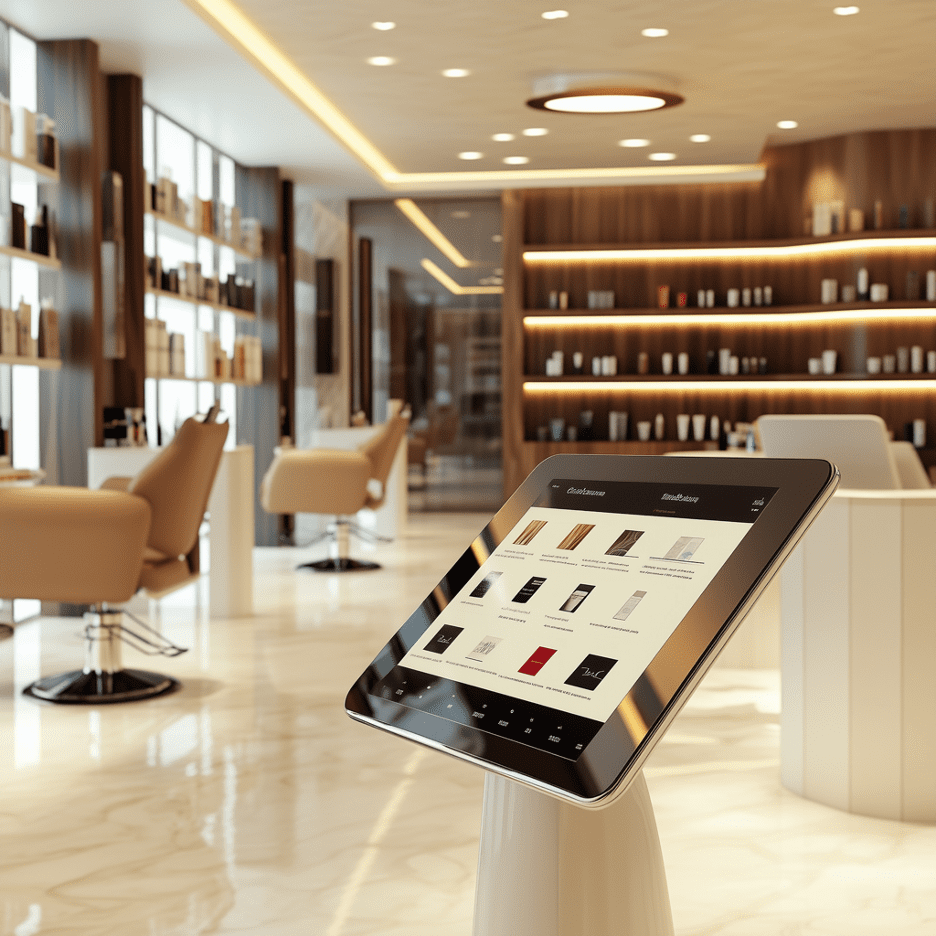
The best hotels don't personalise through grand gestures. They personalise through continuity. The data flows from the booking system to the front desk, to housekeeping, and to the restaurant. Everyone who interacts with the guest has context. A pre-arrival email that references a specific restaurant near the hotel rather than a generic list of amenities. A room assignment based on past preferences rather than availability algorithms. A post-stay follow-up that mentions something real about the visit. That continuity is what makes the experience feel personal, even though it's entirely systematic.
In automotive
Car ownership is a long relationship with a predictable rhythm: purchase, first service, routine maintenance, warranty events, renewal. Every stage is an opportunity to personalise, and most dealerships waste nearly all of them.
The ones that don't waste them use service history and ownership data to time their communications precisely. Not "it's been six months, time for a checkup" but "your car has reached 15,000 km based on your average driving pattern, and your front brake pads are likely approaching replacement." That kind of specificity turns a routine reminder into a useful notification. It respects the customer's intelligence and demonstrates that the dealership is paying attention.
In banking
Financial services have more customer data than almost any other industry and use it less effectively than almost any other industry. The typical bank knows your salary, your spending patterns, your savings rate, and your life stage. It uses this information to send you the same credit card offer it sends everyone else.
The banks that personalise well use behavioural triggers rather than calendar-based campaigns. A customer who just received a large transfer gets a savings product suggestion. A customer whose spending pattern has shifted toward a new city gets information about branch locations there. A customer approaching retirement gets a conversation, not a brochure. None of this requires new data. It requires someone to decide to use the data that the bank already collects. The same principle applies to loyalty programme design: the best programmes are built on behavioural insight, not blanket discounts.

The Technology Question
Technology enables personalisation. It does not create it.
The CRM, the customer data platform, the AI recommendation engine: these are tools that make personalisation scalable. But they are downstream of two things no software can provide: a clear understanding of what your customer needs at each stage of their relationship with you, and an organisational commitment to acting on that understanding.
I've seen companies spend millions on personalisation platforms and produce nothing more than slightly better-targeted email campaigns. The technology worked. The strategy didn't exist. The most effective personalisation I've observed, in hotels, in automotive, in banking, has come from companies that first figured out what they wanted to personalise and why, then found the simplest technology that could support it.
AI is changing the scale at which personalisation is possible. Predictive models can anticipate customer needs before they arise. Dynamic pricing can adjust in real time. But when the vast majority of businesses are already using AI for personalisation, the technology itself is no longer a differentiator. What separates the companies getting returns from the ones getting reports is whether the organisation is designed to act on what the technology reveals.
Where to Start
If personalisation across your entire customer journey feels overwhelming, start with the moment where friction is highest. Not the moment where personalisation is easiest.
In most businesses, that moment is a handoff: the transition from marketing to sales, from booking to arrival, from purchase to service, from complaint to resolution. Those are the seams where customers feel the gap between what the company promised and what actually happens. Personalisation at those points doesn't need to be sophisticated. It just needs to demonstrate that someone is paying attention.
Three questions worth asking this quarter: What do we already know about our customers that we're not using? Where in the journey does the customer have to repeat themselves or start from scratch? Which department owns the experience at that point, and do they have access to the data they need?
Start there. The answers will show you where the friction is highest and where personalisation will produce returns rather than cosmetics.
A Final Thought
Personalisation is not about making customers feel special. It is about making them feel known. There is a difference. Special is a birthday email with a 10% discount. Known is a service advisor who remembers your name, your car, and the concern you raised last time.
The companies that treat personalisation as a communications exercise will keep generating diminishing returns from increasingly ignored messages. The ones that treat it as an operating discipline, built into how the business works rather than bolted onto how it markets, will keep the customers that everyone else is spending a fortune trying to acquire.
Most of the information you need is already in your systems. The question is whether your organisation is designed to use it.
Ali Bahbahani is the Founder of Ali Bahbahani & Partners, a GCC-based consultancy specialising in customer experience and hospitality advisory.