.webp)
Understanding Your Evolving Guest
What Today's Travellers Expect: The 2026 Hospitality Trends Guide
Foreword: Why This Guide Exists
I have spent over two decades working across hospitality, finance, automotive operations, and customer experience consulting in the GCC. In that time, I have stayed in more than 200 hotels around the world. Some were extraordinary. Most were not. The gap between the two almost always came down to the same thing: whether the people running the property understood what their guests actually needed or were guessing.
This guide is not an academic exercise. It is a practical tool for hotel operators, owners, and investors who want to understand where the industry is heading and what to do about it. Each of the 20 trends documented here is grounded in current data, real-world examples, and, where relevant, my own experience as a consultant and a guest.
Some of these trends are familiar. Personalisation, sustainability, and wellness have been discussed for years. But the conversation has moved on. Guests are no longer impressed by a recycling bin in the bathroom or a spa menu stapled to the room directory. They expect genuine commitment, and they can tell the difference between a hotel that has embedded these principles into its operations and one that has added them to its marketing.
Other trends are newer. Casino-integrated hospitality in the GCC, the rise of serviced community residences, and the growing influence of cinematic tourism on booking behaviour are reshaping the market in ways that many operators have not yet accounted for.
A Note on Timing. This guide was substantially written before the US-Israel-Iran conflict that began on 28 February 2026. The war has caused the most severe disruption to GCC tourism since the pandemic: Dubai hotel occupancy fell to 22.8% in the week ending 14 March, the lowest since April 2020. The WTTC estimates the region is losing $600 million per day in visitor spending, and Tourism Economics projects inbound arrivals could decline 11-27% year on year. Every trend in this guide should be read against that backdrop. But the structural forces described here, shifting guest expectations, demographic change, technology adoption, climate pressure, will outlast any single conflict. The GCC has recovered before, and faster than most markets expected. The operators who use this period to invest in capability rather than retreat from it will be best positioned when demand returns.
What connects all 20 trends is a single idea that runs through my consulting work: friction. Every trend discussed in this guide is, at its core, about eliminating one form of friction or another.
I hope you find it useful.
A Note on Method. This guide draws on three categories of evidence. The first is published research from named sources: industry bodies (UNWTO, WTTC), consultancies (McKinsey, Deloitte, JLL, Phocuswright), and company reports (Booking.com, Mastercard, AMEX). Where a statistic is cited, the source is named in the text. The second is case-study data from publicly reported hotel operations and brand announcements. The third is field observation from my own consulting practice and personal travel across the GCC and internationally. I have published detailed assessments of over twenty properties and travel experiences in my Inside Hospitality series, covering hotels from the Four Seasons Cap-Ferrat to Carlisle Bay Antigua, airlines from British Airways to Wizz Air, and restaurant experiences from Mayfair to Medina. Where a claim reflects my professional judgement rather than a published source, it is presented as such. The 20 trends were selected based on market-sizing data, frequency of appearance in operator conversations during 2024 and 2025, and relevance to the GCC hospitality context specifically. The guide covers the period from late 2023 to early 2026.
Trend 01: Raised Personalisation and Instant Gratification
The Era of Hyper-Personalised Digital Fluency
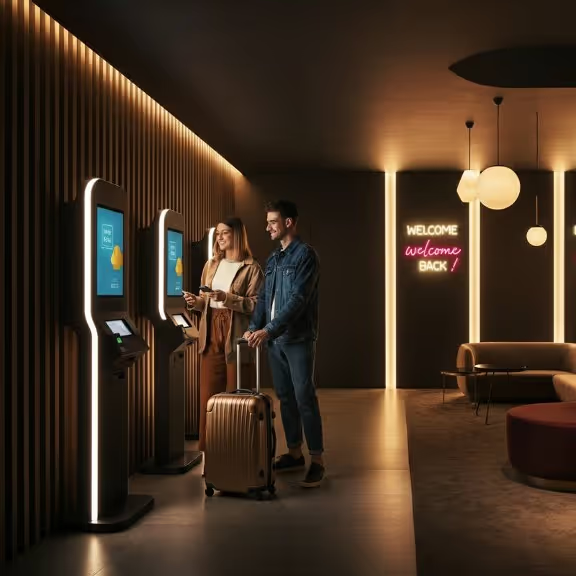
A young couple arrives at a midscale city hotel shortly after midnight following a delayed flight. Instead of queuing at the front desk, they use the hotel's mobile app to check in, access their room with a digital key, and browse a list of 24/7 eateries nearby. This tailored approach satisfies their immediate needs, earns social media praise, and reinforces the hotel's reputation as a property that actually thinks about its guests.
Key Statistics. Mobile travel booking surpassed $228 billion in 2024, projected to exceed $526 billion by 2032. AI in travel and hospitality was valued at $16.34 billion in 2023, expected to reach $70.33 billion by 2031 at a CAGR of 20.7% (Verified Market Research). 80% of guests prefer returning to hotels that recognise them and offer data-driven personalisation (HotelTechReport / Oracle Hospitality, 2025). 56% of UK travellers plan to increase spending, driven primarily by personalised and tech-enhanced experiences (Deloitte Consumer Travel Survey, 2024).
From the Field. At a hotel in Palermo, the night manager greeted me by name on arrival and had my usual room ready without being asked. No technology involved. Just a handwritten note in a logbook. That property runs roughly 85% repeat guest rates, among the highest I have seen in its class. The most effective personalisation I have seen costs nothing. It requires someone paying attention and a system that does not let that attention get lost between shifts. That property was Villa Igiea in Palermo, and it changed how I think about what technology can and cannot do.
Why It Matters
When we mapped the guest journey for a 200-room property, we identified 47 touchpoints from booking to checkout. The finding that mattered most: guest satisfaction correlated with the elimination of negative moments, not the addition of positive ones. A smooth check-in mattered more than a welcome amenity. Fast WiFi mattered more than lobby aesthetics. The properties getting personalisation right are not necessarily the ones spending the most on technology. They are the ones that mapped their friction points first and fixed the ones guests actually notice. The pattern is consistent: five-star hotels that receive one-star reviews almost always fail on attention, not investment.
Segment Differentiation
Luxury: Guests expect sophisticated AI (facial recognition, automated room settings) that enhances rather than replaces attentive human service.
Midscale: Kiosks, mobile apps, and locally relevant suggestions deliver meaningful personalisation at a reasonable cost.
Budget: Simple chatbots, digital check-in, and basic personalisation make a noticeable difference in satisfaction while easing staffing demands.
Case Study: Hilton Honors App
Hilton integrated digital keys, AI-based room personalisation, and contactless payments across its portfolio. The result: a 70% reduction in reception calls, a 60% acceleration in check-ins, and increased loyalty among 80% of surveyed guests (HotelTechReport / Oracle Hospitality, 2023-2025).
The gap between hotels that personalise well and those that do not is widening every quarter. Within two years, guests will stop noticing personalisation when it is present and only notice when it is absent, the way we now expect Wi-Fi to work without thinking about it.
Trend 02: Experiences Over Things
Purpose-Driven Travel and Local Engagement
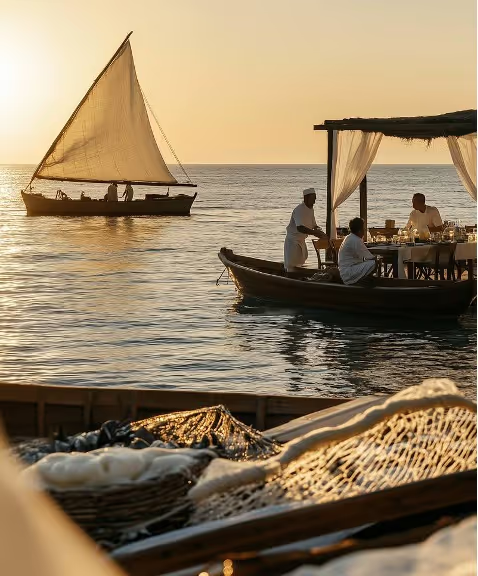
Guests at a coastal hotel start their day sailing with local fishermen and catching fresh seafood using traditional methods. Later, the hotel chef transforms their catch into lunch. This kind of experience creates lasting memories and connects guests to the local community in a way that a buffet breakfast never will.
Key Statistics. Adventure tourism is projected to grow from $351 billion to $890 billion by 2029, reflecting demand for immersive cultural and adventure travel. Millennials and Gen Z are drawn to volunteer tourism and local lifestyle immersion (Skift Research, 2024).
From the Field. The hotel I talk about most is not a five-star property. It is a 12-room place in Puglia where the owner took us to his cousin's olive press and we crushed our own oil. Cost him almost nothing to arrange. That experience generated more word-of-mouth than any property I have stayed at since. Experiences do not need to be expensive. They need to be specific to the place.
Why It Matters
The shift from sightseeing to story-driven experiences creates a commercial advantage that most operators underestimate: organic reach. A guest who catches their own fish with a local fisherman and eats it for lunch will tell that story unprompted. They will post it, recommend it, and return for it. No marketing spend required. I have written about what makes these moments land: it is often a phenomenon called kama muta, the feeling of being moved by connection. The question for operators is simple: does your property feel like it belongs where it is, or could it exist anywhere?
Segment Differentiation
Luxury: Private workshops, exclusive cooking lessons with renowned chefs, and privileged access to heritage sites.
Midscale: Affordable communal events such as weekly artisan demonstrations, cultural market nights, and small-group cooking lessons.
Budget: Partnerships with local NGOs and free walking tours that cater to travellers seeking affordable, authentic experiences.
Case Study: Riad Kniza, Marrakech
Riad Kniza hosts weekly Souk and Spice sessions, immersing guests in authentic Moroccan cooking experiences and significantly boosting direct bookings.
Purpose-driven travel is not a generational fad. It is a permanent shift in how people evaluate whether a trip was worth the money and the time. Properties that treat local engagement as a line item on the activities menu will always lose to properties that treat it as the reason the hotel exists.
Trend 03: Eco and Wellness Waves
Sustainability Meets Complete Health
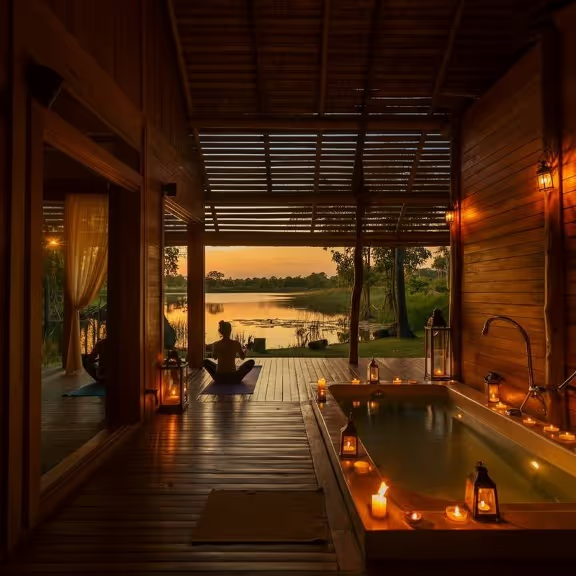
A mindful traveller arrives at a lakeside wellness retreat and immediately notices the organic cuisine, plastic-free packaging, and spa treatments using locally sourced, plant-based ingredients. After a sunset yoga session by the water, she enjoys a farm-to-table dinner from nearby organic farms.
Key Statistics. Global sustainable tourism was estimated at $3.4 trillion in 2023, projected to reach approximately $13 trillion by 2033 at 13.5% CAGR (Allied Market Research / Global Market Insights, 2024). 83% of travellers now consider a hotel's environmental credentials before booking (Booking.com Sustainability Report, 2024). Wellness tourism was valued at roughly $817 billion in 2022, forecast to reach $1.3 trillion by 2025 (Global Wellness Institute, 2024).
From the Field. During a property audit in Oman, I asked the spa director how many guests actually used the wellness facilities. She said twelve percent. I then asked how many guests complained about poor sleep. She said nearly half. The gap between what hotels offer as "wellness" and what guests actually need is enormous. Sleep quality, air quality, and circadian lighting would do more for guest wellbeing than any spa menu. That is the conversation most properties have not started yet.
Why It Matters
In Bali, wellness is a lifestyle aspiration. In the Gulf, it is closer to a medical necessity. When summer temperatures exceed 45 degrees Celsius for three consecutive months, residents spend the equivalent of a full season indoors. The physical and mental toll is measurable, and it shapes what GCC guests expect from wellness programming. They are not looking for a spa menu. They are looking for sleep quality, air quality, circadian lighting, and programming that offsets the physiological cost of living in an extreme climate. That is the conversation most properties have not started yet.
At our Dibba Beach Resort project in Musandam, we built sustainability into the operating model from day one: solar and wind integration, paperless operations, local sourcing. The difference between sustainability as identity and sustainability as marketing is whether it shows up in the P&L or just the brochure. Guests can smell greenwashing from the lobby. Hotels charging a premium for eco-credentials without third-party verification are borrowing credibility they have not earned.
Segment Differentiation
Luxury: Eco-driven design with reclaimed materials and solar power, paired with tailored wellness programmes such as exclusive detox retreats and personalised treatments.
Midscale: Achievable sustainability measures (refillable amenities, chemical-free housekeeping) complementing accessible wellness experiences like group yoga sessions.
Budget: Straightforward eco-actions such as removing single-use plastics, offering herbal tea stations, or installing basic spa amenities.
Case Study: Zulal Wellness Resort by Chiva-Som, Qatar
Combines traditional Arabic and Islamic medicine with modern wellness approaches, appealing to Middle Eastern and global wellness travellers. Its operational sustainability cements its premium reputation.
The wellness market will exceed $1.3 trillion by the end of the decade. Properties that combine genuine sustainability with meaningful wellness, not spa menus alone, but programmes that guests remember and return for, will command the pricing power that everyone else is chasing through room renovations.
Trend 04: Multi-Generational Family Journeys
Designing for Every Age and Lifestyle
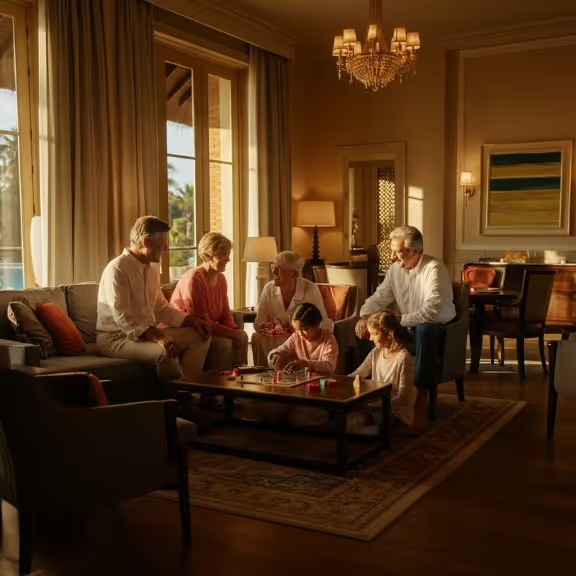
Three generations of a family. grandparents, parents, two children. arrive for their annual reunion at a resort. They discover interconnecting suites with privacy for older adults, a dedicated play area for the younger ones, and cosy communal spaces for family bonding.
Key Statistics. Over 50% of parents plan to include grandparents or extended relatives in forthcoming holidays (Blueprint RF, 2024). Multi-generational groups typically spend 20% more per booking than conventional family units (Mastercard Affluent Travel Report, 2024). GCC families often require culturally sensitive amenities: prayer-friendly spaces, spacious suites ensuring privacy (STR Global, 2025).
From the Field. A Kuwaiti family I consulted for books seven rooms every summer at the Eden Rock in Antibes. They spend over 40,000 euros per trip. The hotel still does not know the grandmother needs a wheelchair-accessible bathroom or that the teenage daughter is vegetarian. Seven years, same booking, and they still start from scratch each time. That is not a data problem. It is an attention problem. And this family is not unusual. Most Arab families take at least one multi-generational trip a year. The spend is significant, the loyalty is available, and almost nobody is designing for it.
Why It Matters
A Kuwaiti family travelling to Europe does not look like the family in your operator's training manual. The grandmother needs a prayer space. The teenager needs a door that closes. The father is booking four rooms and expects them adjacent. The mother is comparing your kids' club to the one at the resort they visited last Eid. Most international hotels design family offerings around a nuclear Western family of four. That misses the reality of GCC family travel, where three generations, domestic staff, and specific cultural requirements are the norm, not the exception. The properties that understand this fill first.
Segment Differentiation
Luxury: Large villas or interconnected suites with personal butlers, private chefs, and cultural experiences tailored to each generation.
Midscale: Cleverly configured family rooms, flexible dining packages, and inclusive cultural activities that enrich the stay without inflating costs.
Budget: Practical family rooms, communal spaces, engaging activities, and thoughtful family-oriented amenities at minimal expense.
Case Study: Atlantis, The Palm, Dubai
Renowned for spacious family suites and multi-generational activity options, Atlantis tailors services to large, culturally varied family groups. Child-friendly amenities, exclusive adult hideaways, and culturally aligned dining make it a favoured holiday spot across the GCC.
Multi-generational travel is the fastest-growing segment in GCC hospitality, and it is the segment most poorly served by conventional room configurations. The properties that redesign for how families actually live together will capture both the booking and the loyalty of everyone in the group.
Trend 05: The Bleisure Boom
Blending Work and Leisure Smoothly
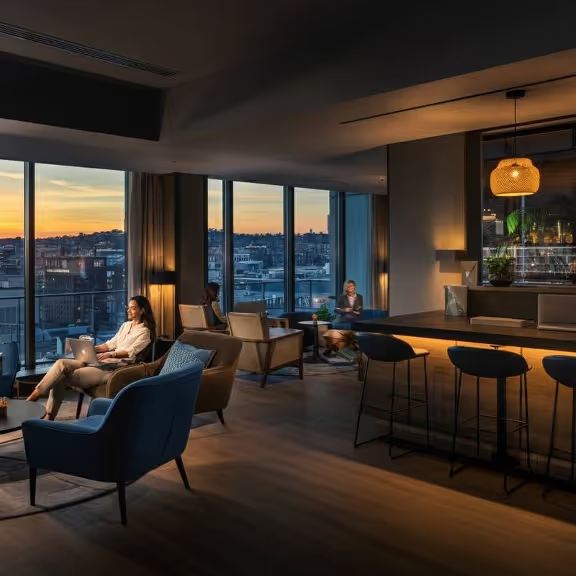
A mid-level executive attends a two-day conference in a lively city. Once her meetings conclude, she extends her stay by two nights, booking a suite large enough for her partner and child. By day, she completes client calls in the hotel's co-working lounge; by evening, the family explores local attractions.
Key Statistics. Approximately 53% of corporate travel in 2024 involved younger demographics who favour blending work with leisure (Serviced Apartment News, 2024). Roughly 43% of millennials regularly extend business trips to include leisure (TravelPerk, 2024). Bleisure travellers typically outspend strictly-business counterparts by up to 20% per trip (Mastercard Affluent Travel Report, 2024).
From the Field. 85% of travellers rate schedule flexibility as a key decision factor. The hotels winning this segment are not the ones adding a desk to the room. They are the ones eliminating the friction between work and leisure entirely: reliable Wi-Fi across the property, food that arrives fast enough for a lunch break, and checkout policies that do not punish people for staying an extra night.
Why It Matters
Bleisure is no longer a trend. It is baseline. The pandemic proved that most knowledge workers can do their jobs from anywhere with decent WiFi and a quiet room. Kuwait Airways data shows corporate bookings more often include weekend extensions. Hotel apartments in Kuwait surged from 15% to 23% market share post-pandemic precisely because they offer what bleisure travellers need: a desk that works, a kitchen that functions, and flexible checkout. Bleisure guests fill midweek occupancy gaps and spend on amenities that pure business travellers skip. A co-working lounge that doubles as a bar after 6pm is not a design challenge. It is a revenue strategy.
Segment Differentiation
Luxury: Top-tier co-working lounges, advanced technology, and indulgent after-hours packages with extended check-in/check-out privileges.
Midscale: Welcoming workspaces with dependable Wi-Fi, practical business facilities, moderate family-friendly leisure packages.
Budget: Communal workspaces, consistent internet, and budget-friendly local excursions for cost-conscious professionals.
Case Study: Marriott Bonvoy 'Work Anywhere' Programme
Marriott introduced flexible booking options, upgraded workspace facilities, and leisure-oriented add-ons across many properties, boosting appeal among remote workers and bleisure travellers.
The question is whether your property treats the extended-stay guest as a valued customer or an administrative inconvenience. If your checkout policy penalises flexibility, you are telling your most valuable guests to book somewhere else.
Trend 06: Insights for GCC and Middle Eastern Markets
Cultural Nuances, Luxury Expectations and High Spending Power
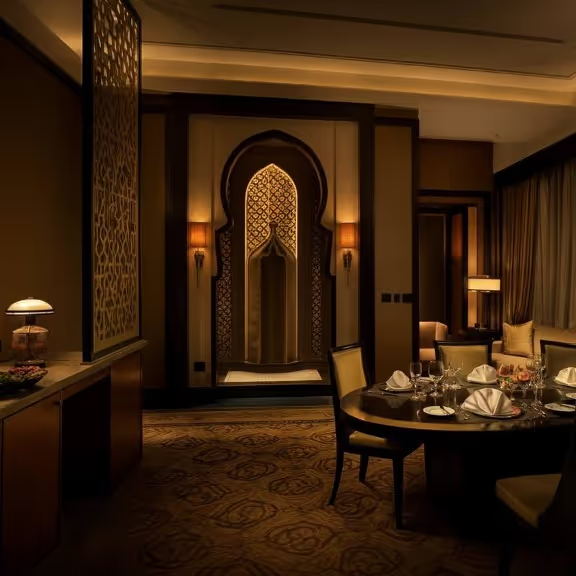
A wealthy GCC family holidaying in Europe reserves an entire floor of interconnecting suites with private entrances, prayer-friendly spaces, and halal dining. During the day, they embark on carefully planned outings that respect local dress codes and prayer times, accompanied by an Arabic-speaking concierge.
Key Statistics. GCC travellers spend up to 6.5 times the global average on travel (Mastercard Affluent Travel Report, 2024). GCC families often travel in large groups, reflecting a cultural focus on extended family bonding (STR Global, 2025). Middle Eastern guests are accustomed to high living standards at home and expect comparable or superior quality overseas (UNWTO, 2024).
From the Field. A colleague once tested whether five luxury hotels in Kuwait could describe what makes their property distinctly Kuwaiti. Three could not answer at all. One mentioned the Arabic coffee at check-in. One talked about a calligraphy installation in the lobby. In a region where karam, generosity, is a cultural principle, most hotels have not figured out how to make their hospitality feel local.
Why It Matters
Most five-star properties in Kuwait could exist anywhere globally. Minimal local art, generic international cuisine, staff who cannot tell you where to find the best machboos in the neighbourhood. In the GCC, the concept of karam means that hidden fees and unexpected charges do not just create friction. They violate cultural expectations. But the single most common complaint I hear from GCC families travelling internationally is simpler than any of that: halal food. Not the availability of a halal option buried at the bottom of the menu. The confidence that the kitchen understands what halal means, that cross-contamination is taken seriously, and that the family does not have to interrogate the waiter at every meal. When a Kuwaiti family spends 40,000 euros on a European holiday and cannot eat comfortably in the hotel restaurant, every other amenity becomes irrelevant. The GCC's Tourist Product Satisfaction Index stands at 68.1 out of 100, below Singapore and Thailand at 70-75. That gap is not about hardware. It is about cultural intelligence, or the lack of it. The same problem plays out domestically: Kuwaiti hotels struggle to attract locals because their restaurants sit empty, their spas go unused, and their venues feel disconnected from the communities they inhabit. The fix is not a Kuwaiti dish on the buffet. It is a property that feels like it belongs to its city.
Kuwait's hotel market of 136 properties and 13,593 rooms had occupancy projected at 56-60% by 2026, though the Iran conflict has disrupted near-term projections across the GCC. New entrants are raising the bar: Safir Seaview opens in Sabah Al Salem in H2 2026, and Nobu Hospitality has announced its first Kuwait development in the Hessah District, with 90 serviced residences and a restaurant overlooking the Arabian Gulf. Meanwhile, Kuwait's Failaka Island is being positioned as a pedestrian-only boutique destination under Vision 2035, blending 4,000 years of archaeological heritage with eco-tourism development. These projects signal a market that is diversifying beyond conventional five-star hotels.
Segment Differentiation
Luxury: Expansive villas or interconnecting suites with discreet butler service, personal chefs, private experiences. Ladies-only wellness centres, secluded beach areas, premium halal culinary options.
Midscale: Comfortably designed rooms, flexible family packages, staff trained in cultural norms such as prayer schedules and respectful greetings.
Budget:Family-sized rooms or connecting suites, a modest prayer area, and breakfast options that are halal or easily adaptable.
Case Study: Fairmont Makkah Clock Royal Tower
Near the Holy Mosque, with spacious suites and dedicated prayer facilities, the Fairmont illustrates how cultural elements can integrate naturally into top-tier luxury hospitality.
The GCC hospitality sector's satisfaction index still trails Singapore and Thailand by a meaningful margin. This is not a facilities gap. It is a friction gap. The operators who close it first, by eliminating the small irritations that compound into negative reviews, will define the next decade of Gulf hospitality.
Trend 07: Luxury Reimagined: Quiet and Ethical Luxury
Understated Sophistication and Responsible Indulgence
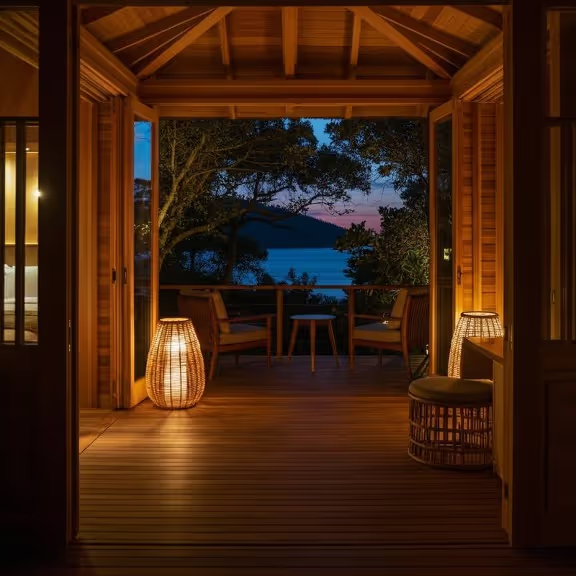
A high-net-worth couple arrives at an exclusive hideaway in a serene coastal forest. Rather than designer logos or extravagant decorations, the resort features understated architecture that merges with the natural surroundings. Guest suites are elegantly minimal: vegan silk bedding, regionally inspired spa rituals, fair-wage artisanal decor.
Key Statistics. 73% of affluent travellers prefer discreet luxury, emphasising uniqueness over status symbols (Mastercard Affluent Travel Report, 2024). 42% increase in inquiries from high-end guests regarding supply chains and labour practices (McKinsey Luxury Travel Survey, 2024). 25% increase in private dining requests and custom spa offerings at select premium resorts (McKinsey Travel & Logistics Practice, 2025).
From the Field. At the Four Seasons Cap-Ferrat, a staff member noticed my wife admiring a particular flower arrangement. Without a word, a smaller version appeared in our room that evening with a handwritten note identifying each bloom. The upgrade probably cost the hotel fifteen euros. We have returned twice and recommended it to at least a dozen people. Quiet luxury is not about what you spend. It is about what you notice. That kind of emotional precision turns a stay into a story.
Why It Matters
At an Aman resort, I noticed something that took me a moment to process: there was no logo. No uniformed doorman. No marble lobby designed to impress. The luxury was in the absence of performance. Compare that to the Ritz-Carlton South Beach in Miami. Grand lobby, impressive scale, prime location. But the room felt like an afterthought, an air conditioning unit blocked the balcony view, and the pool area lacked the relaxed intimacy a beachside property should deliver. The hotel was performing luxury rather than delivering it. That gap between theatre and substance is what quiet luxury eliminates. Piers Schmidt made this point at Global Hospitality Talk: there is a significant gap between the brand value of luxury hotels and other luxury sectors like fashion and automotive. Luxury hotels are still selling rooms. The best luxury brands are selling belonging. The properties that understand quiet luxury are the ones where staff judgment replaces scripts, where the sommelier remembers your wine and does not mention it, and where the bill never contains a surprise.
Segment Differentiation
Luxury: Private residences, personal butlers providing silent yet attentive service, locally sourced experiences emphasising authenticity and philanthropic tie-ins.
Midscale: Discreet touches (no-logo experiences, basic eco-lux materials) resonating with travellers wanting subtle sophistication.
Budget: Select quiet-lux principles like transparent linen sourcing and calm, uncluttered decor that enhance perceived value.
Case Study: Aman Resorts
Renowned for minimalist design, secluded locations, and unwavering focus on discreet service, Aman epitomises quiet luxury. Properties avoid overt branding, instead emphasising local architecture and subtle personal touches.
Quiet luxury demands editorial discipline. Every amenity, every fixture, every interaction should pass a simple test: does this serve the guest, or does it serve the hotel's ego? The properties that answer honestly will attract the travellers who spend the most and complain the least.
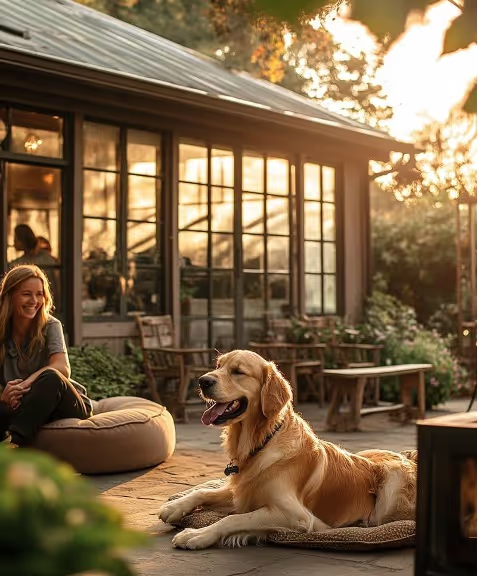
Trend 08: Pet-Friendly Travel
The Loyalty Segment Nobody Is Serving
Here is a segment with a 68% return guest rate, a willingness to pay premiums, and almost zero competition in the GCC. Pet owners. The economics are compelling. The operational requirements are modest. And yet across the Gulf, the default policy is either "no" or a punitive deposit that signals hostility rather than welcome.
Key Statistics. Around 75% of hotels globally now list pet-friendly amenities or allow pets (AMEX Global Travel Trends, 2024). 78% of American pet owners plan at least one holiday yearly with their pets (Zimmerman Agency, 2025).
From the Field. I am currently travelling with a small pet out of Kuwait, and the experience has been an education in friction at every level. The only airline that flies out of Kuwait with a small pet in the cabin is Turkish Airlines. The UK does not permit any commercial flights with pets in the cabin. Neither does Eurostar. So the fastest route from Kuwait to London with a dog is this: fly Turkish Airlines to Istanbul, connect to Lyon, rent a car or arrange a driver, cross the Channel via the Eurotunnel Le Shuttle (where you ride in your own vehicle), then drive from Folkestone to London. That is four modes of transport across three countries to accomplish what should be a single booking. And the friction does not end when you arrive. Hotels and restaurants are just as inconsistent. Some accept pets everywhere. Some allow them in the room but not in the lobby or the lounge. Some say yes on the website and no at the front desk. The Baur au Lac in Zurich does not allow pets in its public areas. Neither does the Gstaad Palace. These are properties charging upwards of 1,000 francs a night, losing guests who would happily pay more. not because they lack the facilities, but because they have not decided on a policy and communicated it clearly. When I travel with my pet, I call every hotel and restaurant in advance. Half the time, the person answering does not know their own policy. That uncertainty is the friction. And it is costing properties bookings they never see, because the guest simply moves on to the next option without telling them why.
Why It Matters
The pet travel market is mispriced everywhere, but especially in the GCC. Pet ownership is rising across the region, and owners travel with their animals or they do not travel at all. That is not a preference. It is a constraint that shapes every booking decision in the household.
The friction operates at two levels, and most operators only see one of them.
The first is the journey. Airline cabin policies vary wildly by carrier and route. Major rail operators ban pets outright. Border requirements change by country. The pet owner's travel planning starts not with "which hotel" but with "which airline will let my dog in the cabin," and the answer eliminates most options before the hotel search even begins.
The second is the stay. Hotel pet policies are astonishingly inconsistent, even at the luxury end of the market. Some properties accept pets in the room but ban them from the restaurant, the lounge, and all public areas. Others say they are pet-friendly on their website but cannot confirm the details when you call. A property charging 1,000 francs a night that cannot tell a guest where their dog is allowed to sit is not pet-friendly. It is pet-tolerant. And the guest who encounters that ambiguity does not complain. They book somewhere else and never explain why.
The operators who recognise both layers of this problem have a significant opportunity. A hotel that publishes a clear pet arrival guide, which airlines allow cabin pets on routes to your city, what documentation is required, where the nearest emergency vet is, and backs it with an unambiguous on-property policy (the dog is welcome here, here, and here; not there) solves a problem that guests will pay a premium for and remember. In Kuwait, where finding pet-friendly accommodation is already an ordeal, the first operator to build a genuinely welcoming experience will capture loyalty that competitors will struggle to break.
Segment Differentiation
Luxury: Premium pet services: dog-walking butlers, in-suite pet dining, animal spa treatments.
Midscale: Moderate pet packages with dedicated lounge areas, treat vouchers, and staff guidance to local vets.
Budget: Simple, well-publicised amenities: a walking trail, feeding bowls upon request, a clear fee structure.

Case Studies
The Clifton, Charlottesville, Virginia. Nestled on a 100-acre estate, this historic inn welcomes dogs of all sizes with amenities including water bowls, blankets, treats, and toys. Its pet programme has become a primary booking driver.
Les Sources de Caudalie, Bordeaux. The contrast to properties like the Baur au Lac and the Gstaad Palace. When I stayed with my pet, the experience was smooth: the dog was welcome in the restaurant, in the grounds, and across the property without hesitation or ambiguity. No phone calls in advance to negotiate terms. No confused staff. No restrictions discovered on arrival. That clarity is the product. It made every other part of the stay easier, and it is the reason I would return.
The hotel that solves pet travel is not just the one with a dog bed in the room. It is the one that tells you which airline to fly, which border to cross, and which vet to call at midnight. Solve the journey, and the stay sells itself.
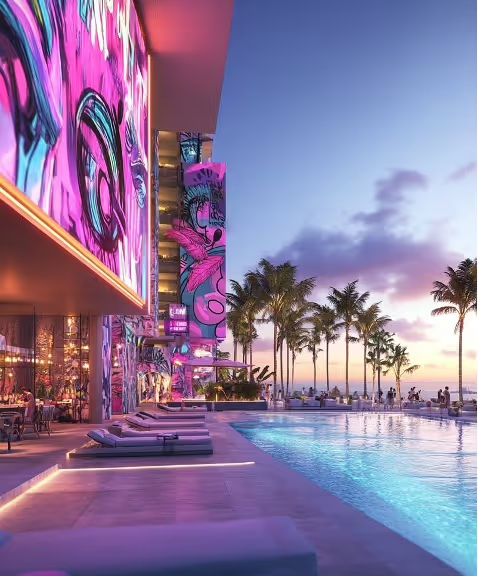
Trend 09: Visually Driven Travel and Influencer Power
Social Media and the Influence of Digital Storytelling
A group of Gen Z travellers scrolls through Instagram and discovers mesmerising posts of a beachside boutique hotel: lively wall art, stunning infinity pools, a dedicated selfie station with panoramic ocean views. They book a weekend getaway immediately.
Key Statistics. 60% of travellers under 40 consider a hotel's Instagram presence a key factor in booking decisions (Zimmerman Agency, 2025). 45% increase in hotels engaging influencers, with properties reporting up to 30% more brand engagement (Phocuswright, 2024). Properties encouraging guest content see a 20% increase in online booking conversions (Sprout Social / Phocuswright, 2025).
From the Field. A hotelier I know received twelve direct bookings from a single guest's Instagram story filmed from his rooftop at sunset. It cost him nothing. But I have also seen properties invest heavily in influencer partnerships that generated zero bookings. The difference is almost always the same: properties that are photogenic by design, not by accident, attract organic content. If your guests are not photographing your space without being asked, no paid influencer will fix that. Staged photoshoots in empty lobbies fool nobody.
Why It Matters
Most hotels get this backwards. They hire an influencer, pay for the post, and measure impressions. The impressions look good. The bookings do not arrive. Then they conclude that influencer marketing doesn't work and move on.
The problem is not the influencer. The problem is the property. The hotels generating the strongest organic social media content are the ones where guests pick up their phones without being prompted. A rooftop with a sunset view that frames itself. A breakfast presentation that looks as good as it tastes. A corridor with lighting that flatters every photograph. These are design decisions, not marketing decisions. When a property is photogenic by architecture and atmosphere, the content creates itself. When it is not, no partnership budget will compensate.
The early days of free stays for posts are giving way to performance-based partnerships with measurable ROI. That is an improvement. But the operators who treat visual engagement as a marketing line item rather than a design principle will always overpay for attention that their competitors get for free.
Case Study: Azulik, Tulum, Mexico
Azulik did not become one of the most photographed hotels on Instagram through paid partnerships. Its organic architecture, dramatic treetop walkways, and ocean views made every corner shareable by design. The hotel's visual identity is inseparable from its physical identity. That is the standard.
If your guests are not photographing your property without being asked, the problem is not your marketing. It is your architecture.
Trend 10: Entertainment, Mega-Events and Hybrid Tourism
Capitalising on Major Concerts, Sports, Festivals, and the Digital-Physical Convergence
It is 9 PM on a Wednesday in Abu Dhabi, and a conference delegate is trying to decide whether to attend the opening gala or watch the Formula 1 qualifying session being streamed at the hotel bar. He does both. The hotel has set up a split-screen viewing area with food service timed to the session breaks. By midnight, he has posted three stories, tagged the hotel twice, and extended his booking by a night.
Meanwhile, a 22-year-old from London has been planning her Eras Tour trip for nine months. She booked the hotel before the concert tickets. She chose it because another fan on TikTok showed the friendship bracelet trading wall the hotel had set up in the lobby. She will spend more on the room, the pre-show dinner, and the merchandise display than on the concert itself.
Key Statistics. Hotels can experience up to a 30% increase in occupancy during high-profile events or festivals (AMEX Global Travel Trends, 2024). 64% of music fans are willing to book more expensive accommodations if they offer event-related perks (UK Music / PwC, 2024). By 2024, roughly 65% of large-scale international events had adopted hybrid elements (PwC Global Entertainment & Media Outlook, 2025). Taylor Swift's Eras Tour generated an estimated $5.7 billion in consumer spending in the United States alone. Marriott reported a 30% revenue increase at select Dubai properties during Expo 2020.
From the Field. During the 2022 FIFA World Cup in Qatar, hotels within a 30-minute radius of stadiums saw occupancy rates above 95 percent. Some achieved rates four times their normal ADR. But the properties that profited most were not the ones closest to the events. They were the ones that had invested in flexible room configurations and staff cross-training months before the tournament began. Mega-events reward preparation, not proximity. The Iran conflict of 2026 has highlighted this brutally: the 2026 Bahrain Grand Prix and Saudi Grand Prix were both cancelled, and Dubai's event-driven tourism collapsed overnight. The operators who had diversified their demand sources beyond mega-events are weathering the storm better than those who depended on a single annual spike.
Why It Matters
Sporting tournaments, concerts, and cultural festivals generate intense short-term demand that allows hotels to raise rates and develop higher-margin services. But the sustained revenue sits in corporate hybrid events that happen fifty weeks a year, not the two weeks of a tournament. The pandemic split live events into two channels: the people who show up and the people who watch from home. Both audiences spend money. The properties investing in broadcast-quality streaming, multicamera setups, and real-time interaction tools are capturing corporate clients that used to default to convention centres.
Segment Differentiation
Luxury: Premium suites themed around events, exclusive meet-and-greets, personal drivers for VIP guests. Purpose-built conference suites with ultra-high-speed internet and advanced AV systems.
Midscale: Packages combining room, event shuttle, and local dining discounts. Well-equipped, moderately priced conference areas with user-friendly streaming.
Budget: Partnerships with local transport providers for discounted tickets. Communal spaces for pre/post-event meetups. Basic but stable digital conferencing equipment.
Case Studies
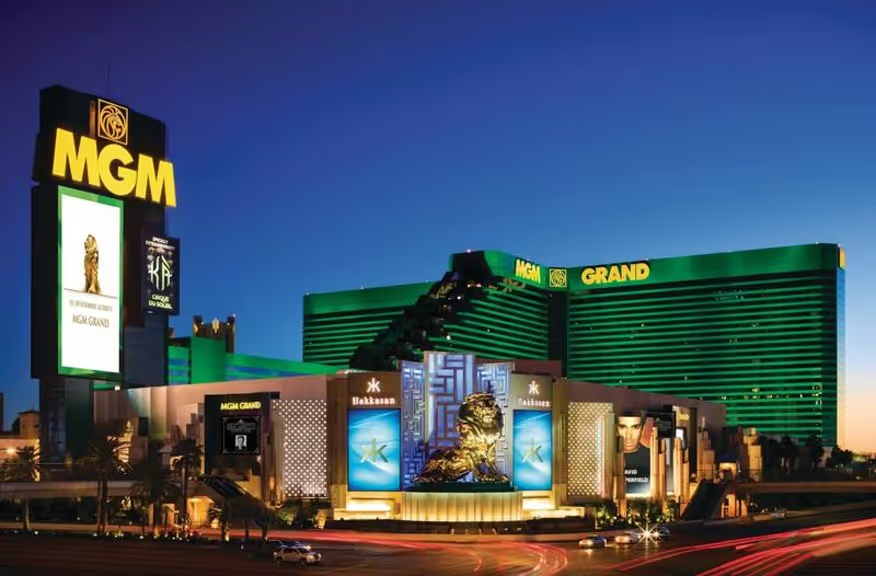
MGM Grand Hotel and Casino, Las Vegas. Consistently hosts major boxing, UFC matches, and large-scale conventions. Integrates these events into tailored packages that maximise revenue during event windows.
Taylor Swift, The Eras Tour. Hotels in cities hosting her performances reported occupancy spikes of 20-50%, benefiting from live attendance while simultaneously catering to hybrid experiences through pre and post-event online engagements.
Mega-events are not occupancy spikes. They are stress tests. The properties that have standing relationships with tour promoters, festivals, and sporting bodies achieve occupancy stability that no amount of OTA optimisation can match.
Trend 11: Emerging Markets and Multi-Destination Journeys
Expanding Travel Horizons Across GCC and European Hotspots
A retired couple from Hamburg lands in Muscat, the first stop on a three-country Gulf circuit. Their hotel knows they prefer a high floor, decaf after 4 PM, and a firm mattress. When they arrive in Doha four days later, the second property already has this information. Their room feels familiar, even though they have never been. This is what multi-destination travel should be: continuity without repetition.
Key Statistics. Saudi Arabia's Vision 2030 aims to welcome 100 million visitors annually by 2030. Infrastructure investments in Saudi Arabia, Qatar, and Egypt drive a marked rise in inbound and intra-GCC tourism (Colliers International GCC Hospitality Forecast, 2025). Iconic European regions like the French Riviera and Amalfi Coast continue to see 15-20% yearly growth in multi-stop itineraries among global travellers (European Travel Commission, 2024).
From the Field. I spent years watching my own multi-city trips repeat the same pattern: pack, unpack, queue, explain yourself again. Every 72 hours, the relationship with the hotel resets. On a trip through the south of France, I stayed at three properties in ten days. Each one asked me to fill in the same registration form. Each one offered me the same welcome drink I do not want. None of them knew what the previous property had learned about me. That frustration became the seed for what I now call the Touring Hotel concept. The traveller who has done 30 countries does not want another welcome drink. They want the hotel to remember who they are.
Why It Matters
When I developed the Touring Hotel concept, the core insight was straightforward: the best hotel experience should feel like one continuous thread, not a series of restarts. In a study of 153 multi-destination travellers, flexible arrival and departure were the strongest pull factors, explaining roughly 42% of travel intent. The GCC is positioned well here. Saudi Arabia, Qatar, and the UAE offer new attractions, retail, and event venues within short flight distances, though the Iran conflict has temporarily disrupted the air connectivity that made the GCC a natural multi-stop circuit. The challenge is operational: most hotel groups still treat each property as an island. The ones that build a shared service spine across destinations. one profile, one folio, one thread of service memory. will define the next category of luxury travel.
Segment Differentiation
Luxury: Tailored multi-stop packages. Advanced concierge services for travel logistics, visa coordination, private jet and yacht arrangements.
Midscale: Partnerships with local DMCs or European rail pass providers, offering custom itineraries linking Middle Eastern highlights with classic European hotspots.
Budget: Well-coordinated group tours linking Gulf cities, followed by budget-friendly options in the Riviera or scenic ferry passes along the Amalfi Coast.
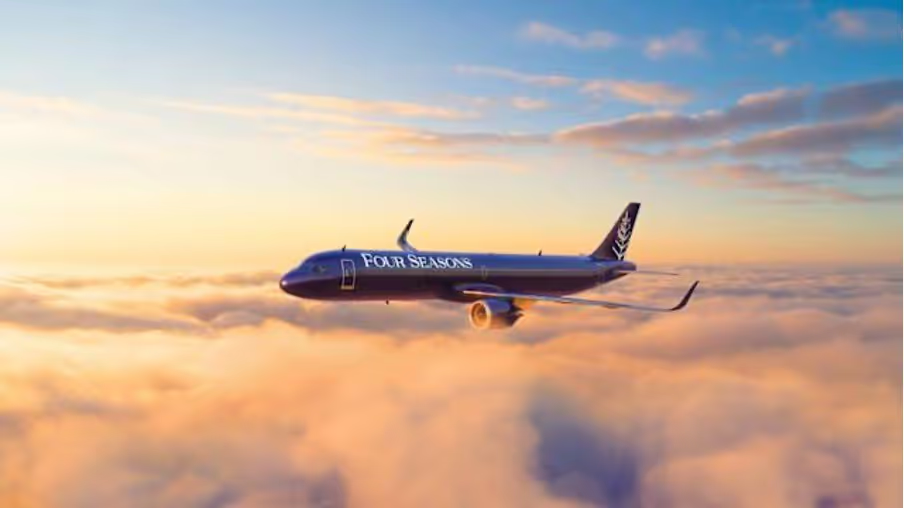
Case Study: Four Seasons 'World of Wellness' Private Jet Package
A 20-day ultra-luxury journey spanning eight Four Seasons properties worldwide, priced at $188,000 per person. Limited to 48 guests, combining filming locations from HBO's The White Lotus with tailored wellness experiences.
Multi-destination travel is growing because travellers want variety without friction. Continuity across properties, whether through partnerships, shared loyalty programmes, or circuit-based models, is now the defining capability for the highest-value segment in leisure travel.
Trend 12: Transformative and Regenerative Travel
Beyond Sustainability Towards Positive Impact
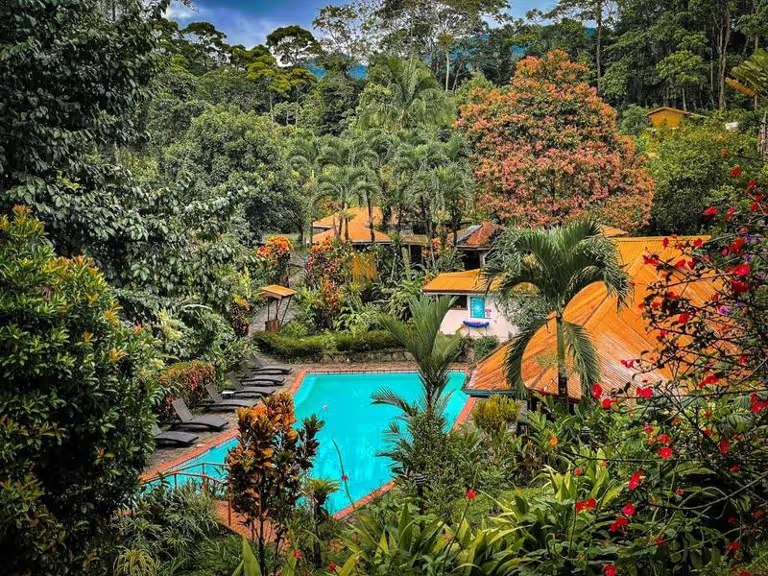
A marine biologist on holiday in Costa Rica wakes at 5 AM not for the beach but to help the lodge's conservation team tag sea turtles. She has paid a premium for this programme, and she will spend the afternoon writing about it in detail for her 40,000 followers. The lodge's occupancy next quarter will tell you how much that morning was worth.
Key Statistics. Over 60% of travellers favour experiences that actively benefit local people and ecosystems (Global Wellness Institute, 2025). Sustainable tourism has evolved from 'do no harm' to 'leave it better,' with regenerative initiatives gaining 20% popularity rises year on year (UNWTO Sustainable Tourism Report, 2024). Travellers are prepared to spend an additional 10-15% for verifiable regenerative stays (UNWTO / Adventure Travel Trade Association, 2025).
From the Field. Regenerative travel is where I see the most genuine innovation happening in hospitality. Not the tokenistic kind where a resort plants a tree for every guest. The real kind, where properties in Costa Rica are rebuilding rainforest corridors, and lodges in East Africa are funding anti-poaching units. At the Dibba Beach project, we specified coral reef monitoring partnerships and local artisan sourcing not because they look good in marketing but because the Musandam environment is fragile and the resort's long-term viability depends on its health.
Why It Matters
Most hotel sustainability programmes still amount to reusing towels and calling it a day. The gap between "do no harm" and "leave it better" is where the commercial opportunity sits.
Guests participating in regenerative programmes, habitat restoration, cultural volunteering, conservation research, form stronger emotional bonds that deepen loyalty and generate the kind of five-star reviews that money cannot buy. Over 85% of travellers who participated in regenerative stays left five-star reviews citing emotional resonance with the property's mission (UNWTO Sustainable Tourism Report, 2024). At the Dibba Beach project, we specified coral reef monitoring and local artisan sourcing because the Musandam environment is fragile and the resort's long-term viability depends on its health. But the programme must be real. Hotels that slap a green leaf on their website without changing operations are one investigative article away from a reputation crisis.
Case Study: Finca Luna Nueva Lodge, Costa Rica
A rainforest eco-resort and certified biodynamic farm where guests engage in regenerative agriculture and biodiversity conservation, enriching their stays while supporting long-term habitat renewal.
The test is simple: can you publish your environmental impact data without embarrassment? If yes, you have a regenerative programme. If no, you have a marketing claim. Guests are learning to tell the difference faster than most operators expect.
Trend 13: Casino and Entertainment Tourism in the GCC
A New Wave of High-End Gaming and Luxury Leisure
A group of Kuwaiti businessmen flies to Ras Al Khaimah for the weekend. Their hotel offers valet parking, a private gaming floor accessible by invitation, and a restaurant that serves dinner until 2 AM. None of this existed in the UAE three years ago. The group has already booked their next visit before checkout, not because of the gaming but because of the full evening experience that wrapped around it.
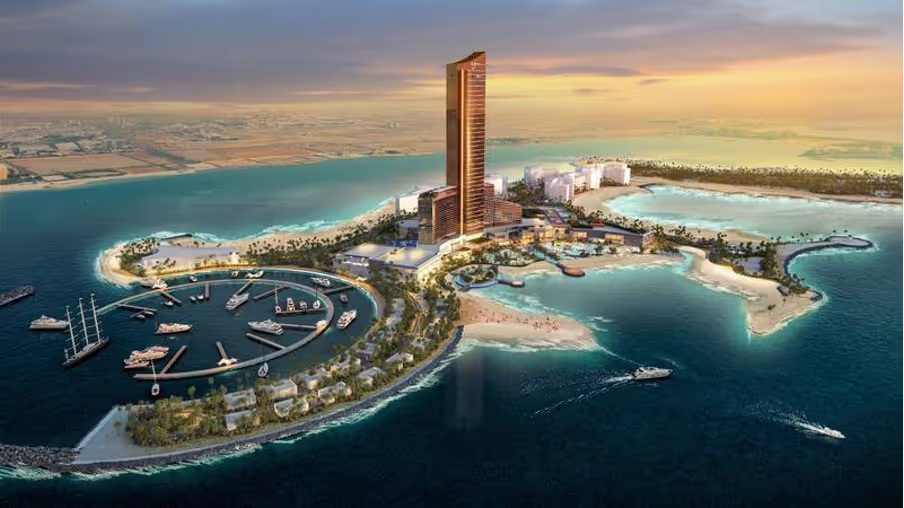
Key Statistics. Entertainment and casino resorts in the Middle East are expected to boost tourism by over 20% within five years (Mastercard Affluent Travel Report, 2024). Ras Al Khaimah's upcoming Wynn resort marks a significant pivot for the GCC, appealing to gamblers who previously favoured Las Vegas or Macau (STR Global / JLL Hotels Research, 2025). Affluent travellers from Europe and Asia often seek novel gaming experiences abroad (Deloitte Gaming Industry Outlook, 2024).
From the Field. I have spent considerable time analysing how gaming intersects with Gulf culture. The UAE's creation of the General Commercial Gaming Regulatory Authority signals a strategic shift, not an accidental one. For hoteliers, the question is not whether gaming will arrive in the GCC. It is whether you will be ready when it does. Properties near Wynn Al Marjan Island should be planning their complementary entertainment and dining offerings now, not after opening day.
Why It Matters
By introducing luxury gaming offerings, parts of the GCC can diversify their appeal beyond family leisure and cultural heritage. Casino tourists are known for higher average spending, driving substantial F&B revenue and increased occupancy. The cultural sensitivity required is real but manageable: discreet access, invitation-only floors, separation from family areas. Casino-integrated hospitality in the GCC is a once-in-a-generation positioning opportunity for operators willing to do the cultural work.
Segment Differentiation
Luxury: Ultra-luxe casino resorts featuring signature dining by celebrity chefs, lavish spa complexes, private gaming salons, and high-stakes VIP experiences.
Midscale: Well-appointed guest rooms, accessible gaming floors, and entertainment programmes including live shows and moderate table limits.
Budget: Budget hotels nearby may benefit from overflow guests, offering no-frills lodging for travellers primarily interested in gaming.
Case Study: Wynn Al Marjan Island, Ras Al Khaimah
Set to open in 2027, the GCC's first integrated casino resort. Inspired by Wynn properties in Las Vegas and Macau, it aims to attract affluent international travellers with high-end gaming, fine dining, luxury accommodations, and top-tier entertainment.
Casino-integrated hospitality in the GCC is a once-in-a-generation positioning opportunity. The first operators to combine high-end gaming with regionally appropriate luxury, entertainment, and F&B will define a new category. The window is open, but it will not stay open long.
Trend 14: Iconic Attractions and Innovation-Led Tourism
Using Major Landmarks and Advanced Entertainment
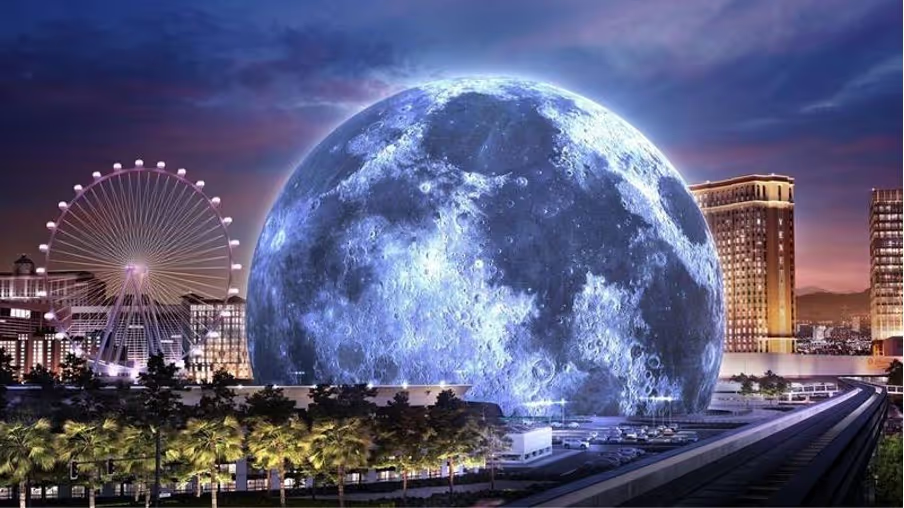
A family from Riyadh stands outside The Sphere in Las Vegas, the children slack-jawed at the building's exterior display. They are staying at the Hilton across the boulevard, which included Sphere tickets in its weekend package. The father booked the hotel specifically for this reason. He had seven other options. The package made the decision for him.
Key Statistics. Hotels near major new landmarks often witness a 25% rise in reservations once the attraction opens (AMEX Global Travel Trends, 2024). Properties near major new attractions report up to 20% higher direct bookings in the months following launch (Phocuswright Technology Trends, 2025).
From the Field. When the Museum of the Future opened in Dubai, nearby hotels reported occupancy spikes within weeks. The Sphere in Las Vegas replicated the pattern. But I have seen a trap here that few operators discuss: chasing every new attraction without a coherent positioning strategy turns your property into a reactive follower. The best operators build relationships with attraction developers early, secure exclusive access agreements, and design packages that make the hotel part of the story rather than just a place to sleep nearby. You are not selling a room with a view. You are selling proximity to a story that guests want to tell.
Why It Matters
Here is the trap: most hotels near major attractions react to them rather than plan for them. They raise rates when demand arrives and lower them when it fades. That is not strategy. That is price discovery.
The operators who extract lasting value from landmark proximity do three things before opening day, not after. They negotiate exclusive access agreements with the attraction developer. They design packages that make the hotel part of the story. a Sphere-view room is a different product from a room that happens to face The Sphere. And they invest in the relationship infrastructure (shuttle logistics, concierge briefings, pre-visit content) that converts a single visit into a repeat guest who comes back for the hotel, not the landmark.
Properties that build their identity around a single attraction are renting someone else's brand equity. Properties that use the proximity to establish their own story are building an asset. The window is typically two to three years before the market adjusts and the premium normalises.
Segment Differentiation
Luxury: Premium experience suites featuring top-tier views, private tours, or behind-the-scenes access. Exclusive lounge passes and celebrity chef tie-ins.
Midscale: Comfortable rooms with partial attraction views or on-site interactive displays. Partnerships with local event coordinators.
Budget: Highlight proximity to the attraction with basic group packages (discounted tickets, map guides) for cost-effective stays.
Case Study: Resorts World Las Vegas and The Sphere
Capitalised on proximity by introducing exclusive Sphere-view rooms and tailored packages, attracting guests eager to witness the attraction firsthand and significantly boosting occupancy.
Proximity to iconic attractions has always driven hotel pricing. What has changed is the speed at which new landmarks create their own demand. The time to package and promote is before opening day, not after.
Trend 15: Retail and Hospitality Fusion
Blending Hotel Stays with Immersive On-Site Shopping
A guest at a boutique Tokyo hotel notices a small display of handmade ceramics near the lift. She picks up a tea cup, turns it over, scans the QR code, and learns it was made by an artisan in Mashiko, two hours north. She buys three. The hotel takes a 30 percent commission on a sale that required no staff time, no dedicated retail space, and no inventory risk. The artisan ships directly.
Key Statistics. 68% of travellers enjoy boutique shopping experiences directly within their accommodation (Phocuswright, 2024). Properties adopting lobby pop-ups or permanent retail corners report an average 10-15% increase in ancillary sales (JLL Hotels & Hospitality Research, 2025).
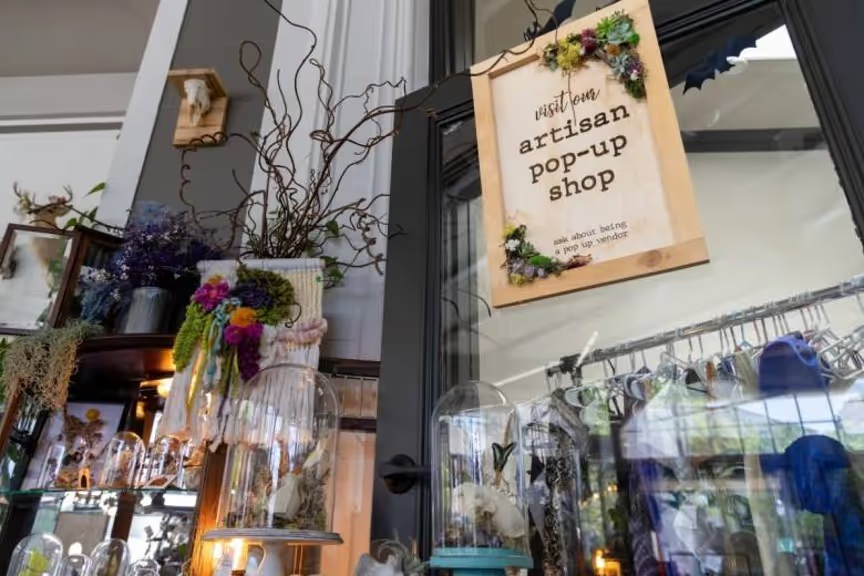
From the Field. The Peninsula New York's artisan pop-up programme showed me something I had not expected: guests spent more in lobby retail than in the hotel's own restaurant. When you place a considered selection of local makers in a space guests already pass through, you create incremental revenue with almost no additional operational cost. This is exactly the kind of friction-free monetisation I advocate in my consulting work.
Why It Matters
The mistake most hotels make is treating retail as a gift shop. The opportunity is treating it as an extension of the local experience, where every item for sale tells a story about where you are. QR codes on in-room ceramics that link to the potter's studio. Rotating artisan pop-ups that draw foot traffic. Commission-based models that require no inventory. Retail integration works when it feels like discovery, not commerce. The moment a guest feels sold to rather than surprised, the spell breaks.
Segment Differentiation
Luxury: Rotating mini-boutiques from established high-end labels or partnerships with Michelin-starred brands for exclusive product lines.
Midscale: Pop-up kiosks prioritising local crafts, artisanal foods, or small-scale fashion labels.
Budget: Small lobbies showcasing local souvenirs, design trinkets, or eco-friendly goods.
Case Study: The Peninsula New York Artisan Pop-Up
Hosted rotating selections of unique, locally crafted jewellery, limited-edition artworks, and designer clothing exclusive to the property. Lobby traffic increased by approximately 25% and drove a notable rise in F&B revenues.
The best hotel retail programmes succeed because they feel inevitable in the space, not imposed on it.
Trend 16: Cinematic Tourism and Set-Jetting
Capitalising on Screen-Fuelled Destination Hype
A couple from Seoul arrives in Sicily not for the beaches but for the village where The White Lotus Season 2 was filmed. They have a printed map of shooting locations. The hotel, which was not in the show, offers a guided tour of the sites and a Sicilian cooking class inspired by the programme. Occupancy in this village has risen 40 percent since the series aired.
Key Statistics. Destinations featured in films or TV shows often see a 20-50% spike in occupancy after release (Oxford Economics / VisitBritain Film Tourism Study, 2024). Over 60% of travellers under 35 actively research or plan trips based on filming locations (Olsberg SPI / Oxford Economics, 2024).
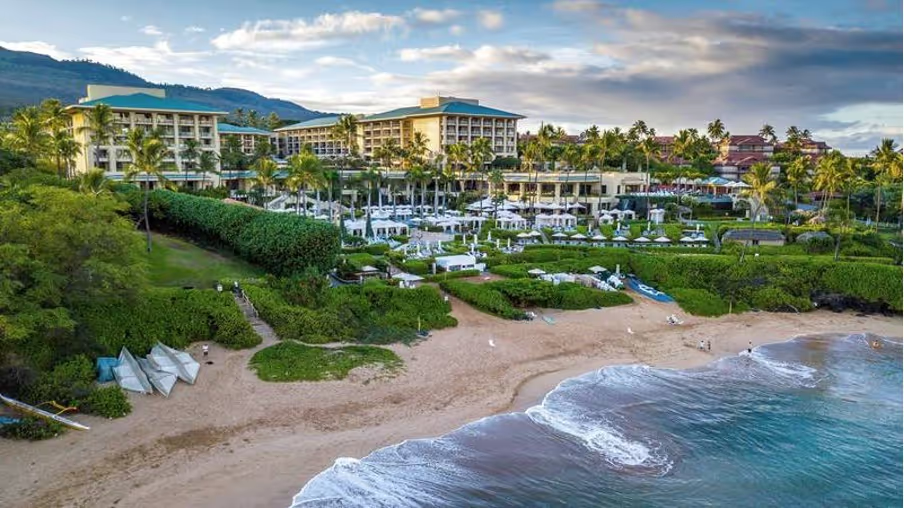
From the Field. After The White Lotus aired on HBO, Four Seasons Maui saw a measurable increase in bookings. What interests me more is what happened next: the hotel had to manage an influx of guests who arrived expecting a fictional experience. Cinematic tourism creates demand, but it also creates expectation gaps that can damage reviews if unmanaged. Properties featured on screen need a plan for both.
Why It Matters
After The White Lotus aired its Sicily season, hotels in Taormina and the surrounding villages reported occupancy increases of up to 40%. Some properties raised rates by 30% and still sold out months in advance. But cinematic tourism has an 18-to-24-month shelf life after broadcast. The initial surge is real and profitable. The question is whether you can convert the first wave of visitors into repeat guests who come back for the destination, not the show. Properties that build their identity around a single production are renting someone else's brand equity. Properties that use the exposure to establish their own story are building an asset.
Segment Differentiation
Luxury: Exclusive resorts can benefit from large-scale filming tie-ins with premium rates for story-driven experiences and VIP fan events.
Midscale: Highlight filming heritage with moderate on-site experiences: branded set tours or photo opportunities.
Budget: Even modest accommodations gain from a cameo in a cult indie film. Low-cost set tours give budget travellers a reason to choose your property.
Case Study: Four Seasons Maui, The White Lotus (HBO)
Experienced a remarkable surge in bookings and global recognition following its starring role in the series. Fans actively booked stays to relive scenes, sparking significant media coverage and increased social media engagement.
Cinematic tourism is a demand catalyst with a shelf life. Properties near filming locations have a window of 18-24 months after broadcast to capture peak interest. Act within the first season and you capture disproportionate value. Wait for the second, and the market has already adjusted.
Trend 17: Co-Living, Extended-Stay and Serviced Community Residences
Flexible, Community-Oriented Stays for Remote Workers, Nomads and Relocating Professionals
A management consultant from Cape Town checks into a serviced community residence in Kuwait City. Her 120-day assignment has no defined end date. The residence offers flexible terms, a co-working lounge, and a Wednesday evening dinner where new residents introduce themselves. By month two, she has a routine, a social circle, and zero interest in moving to a conventional apartment. She renews for another 90 days.
Key Statistics. By 2025, 35% of the global workforce is expected to be remote or location-independent (McKinsey Global Institute, 2024). Industry data indicate 7.4% annual growth in extended-stay properties worldwide (STR Global, 2025). Over 31 million expats live in the GCC, representing 55% of the region's population (Gulf Labour Markets and Migration, 2025). An estimated 18,000 high-net-worth individuals will relocate to the GCC by 2025 (Henley & Partners, 2024). Consultants, medical tourists, and project-based professionals staying 30-120 days are a growing market in the Gulf (STR Global / JLL Hotels Research, 2025).
From the Field. In Dubai, I met a retired European, around 70 years old, who had been living in the same hotel apartment for eight months. He knew nobody in the building. He ate alone every night. The rent was not the problem. The loneliness was. When I asked what would make him stay longer, he said: "somewhere with people who know my name." That conversation shaped the entire Serviced Community Residence concept. Our internal scenario modelling was convincing: 20 units, average stay of 60 days, occupancy at 80 percent. The projected net operating income was 18 percent higher than the same floor running as traditional hotel rooms. The residents organised their own weekly dinner by month two. Community is not a marketing word. It is a financial strategy.
Why It Matters
Kuwait's population is 68.6% expatriate. Most of these residents face a binary housing choice: a hotel room at nightly rates or a 12-month apartment lease. The gap between those two options is where the opportunity sits. I developed the Serviced Community Residence concept specifically for this market. Remote workers and digital nomads crave social interaction. Co-living models cater to this need, enhancing satisfaction and encouraging longer stays. Converting underutilised hotel floors into communal kitchens, shared living rooms, or co-working lounges boosts occupancy during off-peak periods. Extended stays eliminate the daily turnover costs that erode hotel margins, while community programming drives retention that apartments cannot match. When a 90-day resident has a running group and a regular coffee companion by week three, they are not shopping for alternatives.
Segment Differentiation
Luxury: Penthouse-style community residences with private terraces, premium concierge, high-end communal kitchens, exclusive networking events, and personal relocation assistants.
Midscale: Well-furnished apartments with hotel-level housekeeping, communal lounge and co-working area, social programming such as cooking nights.
Budget: Compact studio apartments with essential amenities, basic communal kitchen and lounge, group rates for corporate relocations.
Case Studies
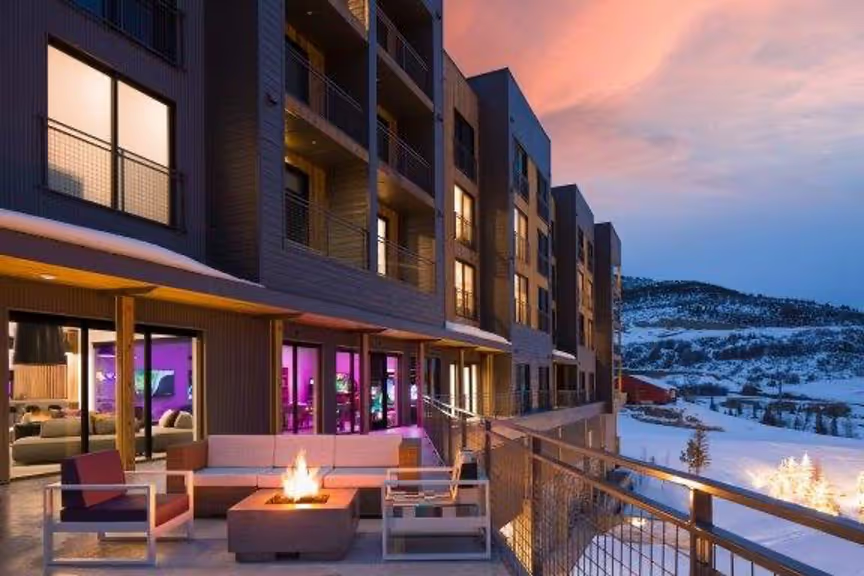
YotelPAD, Miami and Park City. Yotel's co-living concept combines compact, stylish private accommodations with extensive communal amenities. Properties have reported occupancy increases of up to 40%, driven by digital nomads and remote workers seeking community-driven extended stays.
The Collective Old Oak Common, London. Over 550 bedrooms with shared communal areas, coworking space, restaurant, gym, cinema, spa, and regular social events. The concept builds community and encourages extended stays and repeat bookings.
Serviced community residences address one of the largest unmet accommodation needs in the GCC. The demand is structural, not cyclical: as long as our cities attract international talent on flexible contracts, the gap between hotels and apartments will persist. Whoever fills it first does not just win market share. They define the category.

Trend 18: Seasonal Strategy and Occasion-Based Escapes
Turning Slow Periods into Profitable Windows
A couple celebrating their tenth anniversary checks into a resort on the Amalfi Coast. A handwritten note on the pillow mentions the sunset dinner reservation they did not book but hoped someone would suggest. The wine at dinner is a bottle from the year they married, and the waiter, who checked their booking notes that morning, knows to pour without being asked. The bill for the weekend is significant. The memory is priceless.
Key Statistics. Properties introducing romantic or seasonal bundles report an average 15-25% growth in occupancy during otherwise slow periods (STR Global Seasonal Performance Report, 2025). Demand for unique, festive, or occasion-based getaways has increased by approximately 28% globally (WTTC Economic Impact Report, 2024).
From the Field. Every hotel in the GCC knows that summer is slow and Eid is busy. Most respond with the same tools: rate cuts in June, package deals in December. That is not seasonal strategy. That is a reflex. The real seasonal opportunity in the GCC is counter-programming: marketing cool-climate escapes to Gulf residents in August, or positioning your property as the post-Ramadan recovery destination. The Iran conflict has added a new dimension: properties in Mediterranean markets and Southeast Asia are seeing a sharp increase in GCC bookings as Gulf residents redirect their travel spend away from regional destinations. The operators who capture these guests now and build a relationship will benefit long after the conflict ends.
Why It Matters
Tailoring packages around specific seasonal moments. winter festivals, spring school breaks, summer wellness retreats, post-Ramadan recovery. turns slow periods into profitable windows. Couples and romantic travellers appreciate carefully planned itineraries that heighten anticipation. But couple-centric packages succeed or fail on choreography: the rate premium couples will pay correlates directly with how considered the experience feels. One missed detail breaks the spell. The operational standard required is higher than for any other segment.
Segment Differentiation
Luxury: Exclusive, tailor-made experiences: private candlelit igloos, in-villa personal chefs, signature couples' spa therapies with scenic panoramas.
Midscale: Well-crafted seasonal ambiance: romantic suite upgrades, tickets to local winter or summer events, memorable honeymoon or anniversary packages.
Budget: Simple, heartfelt gestures like complimentary hot drinks, local festival tie-ins, or basic discount couples' packages.
Case Study: Four Seasons Resort, Bora Bora
Introduced year-round romantic experiences during quieter seasons, including private beach dinners, spa rituals, and lagoon-side breakfasts, attracting honeymooners and couples celebrating anniversaries.
The hotels that treat seasonality as a design constraint rather than a problem to discount around consistently outperform their neighbours.
Trend 19: New Inbound Markets: India and Africa
Preparing for Emerging Tourism Flows and Cultural Diversity
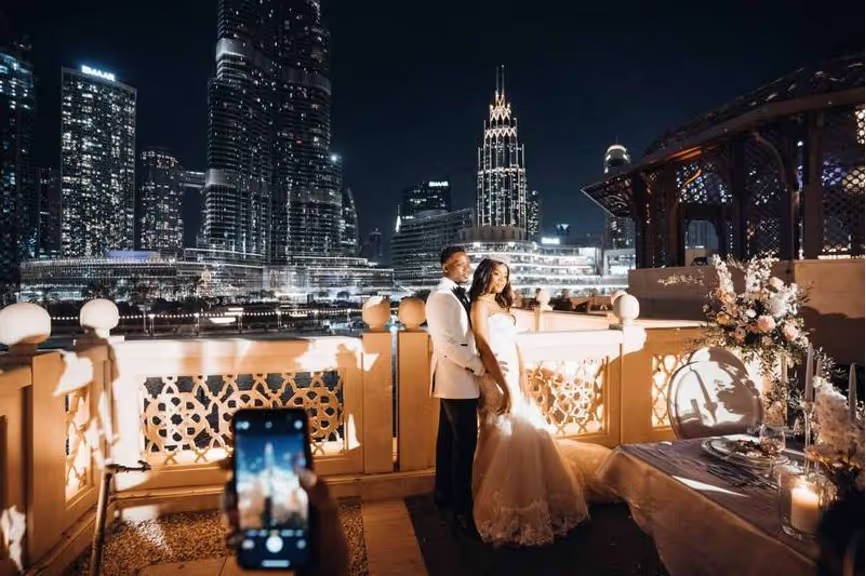
The ballroom of an Address Hotel in Dubai is set for a Nigerian wedding reception. The menu includes jollof rice alongside Arabic mezze. The playlist moves between Afrobeats and Khaleeji pop. The hotel's events team has done 14 of these weddings this year, and the feedback cards consistently say the same thing: you understood what we actually wanted.
Key Statistics. Indian international travel is projected to surge by over 40% in five years, with GCC and European destinations as primary beneficiaries (Federation of Indian Chambers of Commerce, 2025). Select African nations (Nigeria, Kenya, South Africa) are experiencing 15-20% annual increases in outbound leisure travel (WTTC Africa & Middle East Economic Impact, 2024). 68% of Indian and African travellers prioritise hotels catering to cultural norms, dietary preferences, and language support (WTTC, 2024).
From the Field. India is projected to become the world's third-largest outbound travel market by 2030. In the GCC, this is not a forecast. It is already happening. The Address Hotels in Dubai created dedicated wedding and cultural packages for Indian and Nigerian families, and the results speak for themselves. Hotels in our region that still design their F&B offerings exclusively around Western and Arabic palates are leaving significant revenue on the table. The Iran conflict is accelerating a secondary trend: hundreds of thousands of Indian nationals have been repatriated from the Gulf region, and many may not return quickly. The long-term impact on GCC demographics and the expat-dependent hospitality workforce remains to be seen.
Why It Matters
India's outbound travel market is projected to reach 50 million trips by 2030. Africa's middle class is the fastest-growing on the planet. These are not future markets. They are current markets that most GCC hotels are ignoring. Meeting preferences such as vegetarian meal options, specific spice profiles, and local language signage helps build loyalty. The properties that learn to serve these markets authentically, rather than treating them as an afterthought, will secure growth that Western European markets can no longer reliably deliver. In high-context cultures, word of mouth is not a marketing channel. It is the marketing channel.
Segment Differentiation
Luxury: Advanced personalisation: concierges who speak Hindi or Swahili, customised spa treatments incorporating local herbal traditions, fine dining with Indian or African-inspired haute cuisine.
Midscale: Staff training in basic linguistic phrases, expanded buffet choices, family-friendly packages bridging cultural interests.
Budget: Cost-effective rooms with basic multilingual signage, extended breakfast menus catering to vegetarian or spice-forward palates, group-booking discounts.
Case Study: Address Hotels, Dubai
Successfully catered to African markets, particularly Nigerian travellers, by developing packages for weddings, religious celebrations, and family gatherings with culturally relevant cuisine and multilingual staff.
India and Africa represent the largest untapped inbound markets for GCC hospitality. The properties that invest now in understanding dietary preferences, cultural norms, and booking behaviours will be the ones these travellers recommend to everyone they know.
Trend 20: Climate-Adaptive Design and Infrastructure
Future-Proofing Hotels Amidst Environmental Volatility
A guest at a luxury resort in Muscat wakes at 3 AM to a room that has climbed to 29 degrees. The AC unit, overwhelmed by the August heat and undersized for the room, hums ineffectually. She calls reception. They offer to move her at 3 AM. She declines. She leaves a two-star review at the airport. The resort loses her lifetime value over a piece of equipment that cost less than one night's rate.
Key Statistics. Flood-prone regions are expected to experience a 50% increase in severe weather events over the next decade (World Economic Forum Risk Report, 2025). Hotels utilising climate-proof construction report 15-20% rises in guest perception of safety (JLL Hotels & Hospitality Research, 2025). Properties investing in resilience measures could see 25% longer asset lifespans with reduced repair costs (World Bank Group, 2024).
From the Field. At the Cape Bodrum in Turkey, the room reached 27 degrees by 2 AM despite the air conditioning running at full capacity. I checked the maintenance log the next morning. The same unit had been flagged three times in the previous month. The room was still being sold at full rate. That property now has reviews mentioning the exact room number. Climate infrastructure is not a sustainability talking point. It is an operational necessity. If your HVAC cannot hold temperature in peak season, you are selling a product you cannot deliver.
Why It Matters
In the Gulf, where summer temperatures routinely exceed 45 degrees Celsius, climate control is not an amenity. It is the amenity. Forward-looking infrastructure safeguards operational viability, guest well-being, and brand reputation. Properties in areas prone to extreme heat, flooding, or rising sea levels face growing insurance and maintenance costs. Climate-smart design reduces long-term operational risk. But the most immediate climate adaptation most GCC hotels need is not a solar panel. It is an HVAC system that works reliably at 50 degrees and a policy that pulls rooms from inventory at the first maintenance alert.
Segment Differentiation
Luxury: Floating villas or raised eco-lodges with advanced renewable energy, reinforced structures, and premium guest-facing climate storytelling.
Midscale: Green roofs, improved insulation, localised flood barriers, and cost-effective solar panels.
Budget: Simple, affordable measures: rain gardens, basic weatherproofing, and informational signage about eco-efforts.
Case Study: The Brando Resort, Tetiaroa, French Polynesia
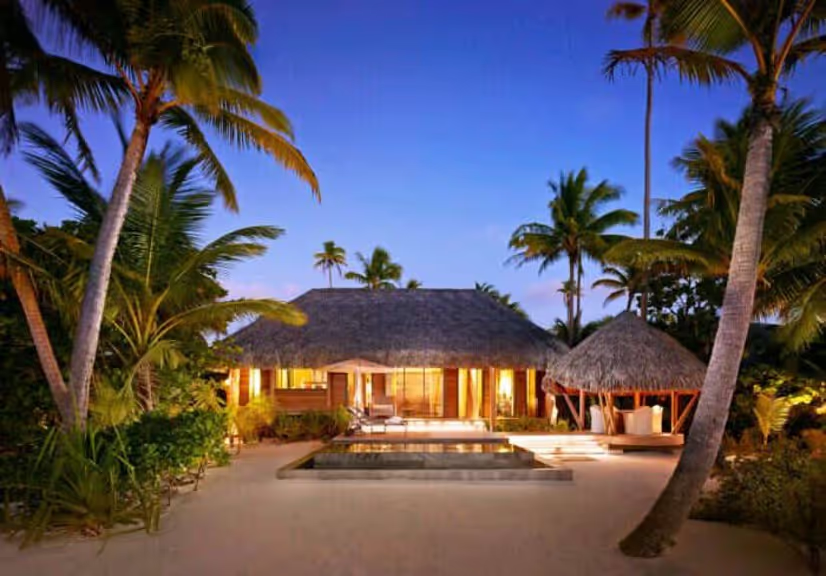
Uses raised structures, renewable energy (solar, seawater air-conditioning, rainwater collection), and extensive biodiversity initiatives for long-term resilience and sustainability.
In the GCC, climate-adaptive design is not a future consideration. It is a present-day operational requirement. Properties that treat HVAC, insulation, and shading as afterthoughts rather than core design elements will continue to lose guests over comfort failures that no amount of service recovery can repair.
Strategic Synthesis: Five Imperatives for 2026 and Beyond
Twenty trends, distilled to their common denominators, point to five imperatives for hotel owners and operators.
First, eliminate friction before adding features. The single most reliable predictor of guest satisfaction and repeat bookings is not what you offer but what you remove. Digital check-in matters because it removes queues. Cultural sensitivity matters because it removes embarrassment. Climate-adaptive design matters because it removes discomfort. Before investing in any new amenity, ask what irritation it eliminates. If the answer is none, reconsider.
Second, design for how people actually travel, not how they used to. The nuclear family in a standard room is no longer the default guest profile. Multi-generational groups need flexible partitions. Bleisure travellers need workspaces that do not feel like afterthoughts. Pet owners need a property that does not treat their animal as a liability. Extended-stay residents need community, not just a room key. The operators who reconfigure their physical spaces and booking systems for these realities will capture the segments growing fastest.
Third, prove what you claim. The era of unverifiable marketing claims is ending. Guests now check sustainability credentials, read reviews with forensic attention, and share negative experiences instantly. Whether the subject is ecological responsibility, cultural competence, or service quality, the gap between what you say and what you deliver is the fastest route to reputational damage. Publish your metrics. Name your partners. Show your working.
Fourth, treat the GCC as a distinct market, not a regional variant of a global template. The spending power, family structures, cultural expectations, and seasonal patterns of Gulf travellers are specific enough to demand purpose-built strategies. Properties that simply translate their European or American playbook into Arabic will continue to underperform properties that start from the guest's actual life.
Fifth, build for duration, not for launch. The trends in this guide are not seasonal fashions. Personalisation, sustainability, extended-stay models, and climate adaptation are structural shifts that will accelerate, not reverse. The Iran conflict has reminded the region that external shocks can arrive without warning. The operators who treat these trends as permanent changes to the operating environment, and invest accordingly, even during disruption, will outperform those who wait for the next cycle.
Ali Bahbahani is the Founder of Ali Bahbahani & Partners, a GCC-based consultancy specialising in customer experience, hospitality advisory, and brand strategy.