The Hotel Customer Journey: Six Phases That Build Loyalty
%201-min.avif)
.webp)
Hotels Don't Lose Guests at Check-Out. They Lose Them Across the Hotel Customer Journey.
A few years ago, I stayed at a well-regarded hotel in Southern Europe. Beautiful property. Great location. The room was spotless. But the check-in took fourteen minutes because the system couldn't find my reservation. The pre-arrival email had promised a welcome drink that nobody at the bar knew about. And when I left, the only follow-up was a generic survey that arrived three weeks later, addressed to "Dear Guest." Every individual department had done acceptable work. The front desk was polite. Housekeeping was thorough. The bar was well-stocked. But nobody had designed the experience across those departments. The friction lived in the handoffs.
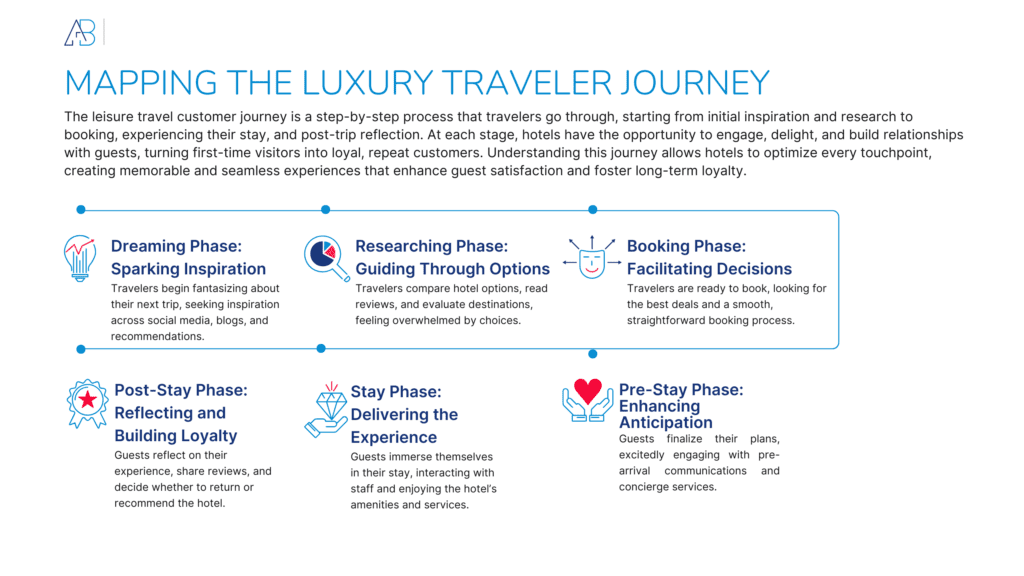
That hotel taught me something I've seen confirmed hundreds of times since: most hotels can sketch the hotel customer journey on a whiteboard. They know the six stages. What they don't do, what almost none of them do well, is design for the seams between those stages of the hotel customer journey, where trust quietly builds or silently leaks away.
This is not a marketing problem. It is an organisational design problem. The dreaming phase sits with the brand team. Booking belongs to revenue management. The stay is operational. Post-stay falls to nobody in particular. Each department optimises its own phase while the guest experiences one continuous arc of rising or falling confidence. The journey is continuous for the traveller. Inside the hotel, it is fractured across three org charts and five software systems.
After twenty years of consulting across the GCC and staying in over two hundred hotels in more than thirty countries, I've come to see the hotel customer journey as a trust ledger. Each interaction either deposits trust or withdraws it. Hotels that understand this don't just fill rooms. They build a business that compounds. Hotels that don't understand it spend ever-increasing sums acquiring guests who never return.
Industry data consistently shows that hotels retain barely half their guests. For independents without CRM systems, repeat rates can sit below 15%. That is not a satisfaction problem. It is a hotel customer journey design problem. And it starts long before check-in.
What follows is a framework for mapping the hotel customer journey from the first flicker of wanderlust through to the loyalty loop that brings guests back. It draws on two decades of hospitality consulting, over two hundred hotel stays across thirty-plus countries, and the patterns that separate properties that compound guest trust from those that leak it at every seam.

1. The Dreaming Phase
The guest: Restless. Scrolling Instagram at midnight. Watching a friend's story from Santorini. Not comparing hotels, not even sure which country yet. The appetite for escape hasn't formed into a plan.
What most hotels get wrong
They spend almost nothing here. The bulk of marketing budgets goes to the booking phase, competing with OTAs on paid search, while the dreaming phase is left to chance. That's backwards. A guest who dreams about your hotel specifically will find a way around every OTA to book direct. You cannot buy that intent at the booking stage. You can only earn it here.
What to do instead
Produce content that earns desire, not clicks. Not stock photography with a logo. The texture of your property. What does breakfast actually look like on your terrace? What's the light like at 6 pm by the pool? The hotels winning this phase in the GCC are producing short-form videos that feel personal rather than corporate. Red Sea Global's early-access content has generated enormous anticipation precisely because it shows raw landscapes being transformed. A narrative, not a brochure.
Own your destination in search. A hotel in Muscat should publish the definitive guide to Muscat's hidden beaches. A Kuwait City hotel should own the conversation around weekend getaways from the capital. This content serves double duty: it inspires the dreamer and captures the researcher.
Be sceptical of transactional influencer partnerships. A single well-chosen collaborator who has a genuine relationship with your property beats twenty gifted-stay posts that audiences scroll past with justified suspicion.

2. The Research Phase
The guest: Interested but overwhelmed. Cross-referencing Booking.com, Google Maps, and TripAdvisor. Reading reviews compulsively. Asking friends on WhatsApp. Making comparative judgements where the smallest doubt eliminates you.
What most hotels get wrong
They treat their OTA listings as administrative necessities rather than their most-viewed shop window. For independent hotels, where OTAs can account for well over 60% of bookings, the Booking.com profile is seen by more people than the hotel's own website. Outdated photos, inconsistent room descriptions, and missing amenity details don't just look sloppy. They give the guest a reason to keep scrolling.
What to do instead
Manage reviews as a research-phase asset, not a post-stay chore. The properties performing best have built systematic processes for generating and responding to reviews. Not canned responses, but specific, thoughtful replies that demonstrate management is paying attention. In the GCC, where guests are sophisticated and hospitality standards are high, a pattern of copy-paste review responses signals disengagement louder than any marketing campaign can drown out.
Reduce anxiety with honest visual content. This stage of the hotel customer journey is driven by anxiety as much as excitement. Guests want to know what the standard room actually looks like, whether the pool is crowded, and how far the beach really is. Virtual tours, drone footage, and honest floor plans don't just convert better. They reduce post-arrival complaints because expectations match reality.
Watch the shift to AI-mediated discovery. Travellers are beginning to use AI tools that synthesise reviews and recommendations into direct answers, bypassing individual review sites entirely. Hotels with rich, well-structured content across multiple platforms will surface in these results. Those dependent on a single channel are increasingly exposed.
3. The Booking Phase of the Hotel Customer Journey
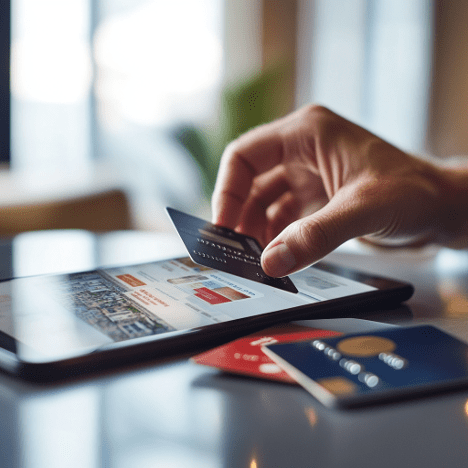
The guest: Ready to commit, but comparing rates across channels. Looking not just for the lowest price, but for reassurance that they're getting the best value. Those are different things.
What most hotels get wrong
They fight OTAs on the OTAs' terms. They bid on branded search terms, try to match OTA pricing, and wonder why the guest still books on Booking.com. The problem isn't price. The problem is that the hotel's own booking experience offers no compelling reason to leave the platform the guest is already on.
What to do instead
Make direct booking undeniably better. Not a "best rate guarantee" banner. Tangible extras OTAs can't match: a room upgrade, late checkout, a welcome amenity, and a flexible cancellation policy that exceeds the OTA standard. The value gap needs to be obvious and immediate. If a guest has to do the maths to figure out whether booking direct is worth it, you've already lost them.
Fix your booking engine or accept the commission. If your mobile booking flow requires more than three taps from intent to confirmation, you're donating guests to Booking.com. Mobile devices now account for the majority of online travel bookings. Every guest who bounces from your website to an OTA because the checkout was slow costs you 15-25% of that booking in commission. Multiply that by a year of mobile traffic, and the number is painful.
Understand the billboard effect. A meaningful share of guests discover hotels on OTAs and then search for the hotel by name. Your OTA presence functions partly as advertising. The smart play is maintaining visibility there while making your direct channel compelling enough to capture the conversion when it comes.
In the GCC, flexibility is table stakes. Last-minute travel is culturally embedded. Weekend getaways are decided on Thursday morning. Hotels offering free cancellation until 24-48 hours before arrival consistently outperform rigid policies, even at slightly higher rates. A cancellation policy designed for planning cultures will underperform in a spontaneous one.

4. The Pre-Stay Phase
The guest: Anticipation building. Mentally unpacking. Checking the weather, making restaurant plans, thinking about whether to upgrade.
This is the most undervalued window in hospitality. Most hotels send a confirmation email and go silent until check-in. That silence costs twice: once in lost upsell revenue, once in the impression that nobody is paying attention.
What to do instead
The pre-arrival message is your first act of hospitality. Three to five days before arrival: local weather, a curated list of nearby restaurants (not every restaurant, your actual recommendations), events during their stay, and an easy way to make requests. This is also the most effective upselling window in the journey. A room upgrade offered as a thoughtful suggestion converts at rates that would embarrass most marketing campaigns.
Use what you know. If they've stayed before, reference their preferences. If they've booked a suite, the communication should reflect that tier. If they're celebrating something, acknowledge it before they arrive. The technology exists and is affordable. The bottleneck is almost always operational: in most hotels, the pre-arrival window falls between marketing, reservations, and front office, and because it belongs to everyone, it belongs to nobody. Someone, usually the rooms division or a dedicated guest experience lead, needs to own it explicitly.
In the GCC and much of the world, WhatsApp is the channel. A guest who can text "Can we get a late checkout?" and receive a quick, human response feels cared for in a way no automated system replicates. Hotels offering WhatsApp-based concierge communication before and during the stay consistently report higher satisfaction.
The property that sends a curated insider's guide, not a generic brochure but an opinionated list of things genuinely worth doing, has already started acting like a host rather than a room provider. By the time the guest arrives, they feel looked after. That feeling colours everything that follows.
5. The Stay Phase
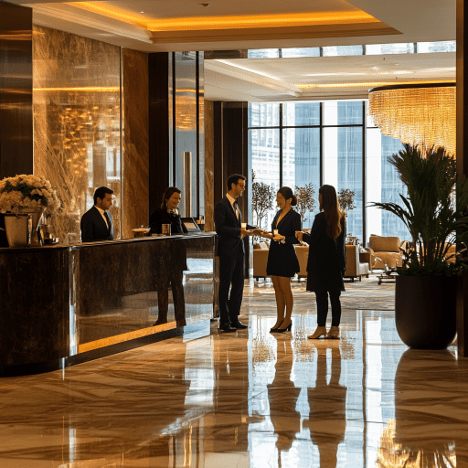
The guest: Immersed. Forming the memories that determine whether they return and what they tell friends. Every detail registers. The check-in warmth, the bed, the shower pressure, the wifi, the staff member who remembered their name.
What most hotels get wrong
They confuse delivering a service with creating an experience. A stay can be technically flawless (right room, right temperature, right amenities) and still feel like a transaction. The gap between a hotel you'd recommend and one you'd merely tolerate is rarely about what went wrong. It's about what didn't feel right.
What to do instead
Win the first fifteen minutes. A warm, efficient check-in where the guest feels recognised, not processed, is disproportionately important. I've written before about a hotel in Palermo that won me over entirely in the first five minutes through a single act of anticipation. In the GCC, where hospitality runs deep as a cultural value, guests notice immediately whether warmth is genuine or performed.
Give front-line staff the authority to fix problems. The most damaging sentence in hospitality is "I'll need to check with my manager." Every hour, a problem goes unresolved, frustration compounds, and the guest is mentally drafting their review. The cost of empowering staff to make things right on the spot is always less than the cost of the review they'd otherwise write.
Let technology be invisible. Smart room controls, mobile keys, and app-based requests are valuable when they remove friction. They're counterproductive when they replace human interaction the guest actually wants, or when they add complexity nobody asked for. Properties in Riyadh and Abu Dhabi are experimenting with what's been called "invisible service": AI and biometric systems that eliminate queues and pre-set preferences without the guest doing anything. When the technology disappears, and only the hospitality remains, you've done it right.
Gather feedback during the stay, not after it. A manager asking "How is everything so far?" on day one, in person, not via survey, catches problems while they can still be fixed. Hotels that rely entirely on post-stay feedback are performing autopsies when they should be doing check-ups. A structured customer journey audit reveals where trust leaks hide between departments.

6. The Post-Stay Phase
The guest: Reflective. Processing the experience. Deciding, consciously or not, whether they'd return.
This is where most hotels stop, and the best ones start. The hotel customer journey doesn't end at checkout. It ends when the guest books their next trip, either with you or with someone else.
What to do instead
Personalise the thank-you. A message that references something specific about their stay (the restaurant they chose, the excursion they booked) transforms a marketing email into a human moment. It takes thirty seconds. It's the difference between a touchpoint and a connection.
Make reviewing effortless. A short, well-timed email with a direct link to Google removes the friction that stops satisfied guests from sharing. Google has overtaken TripAdvisor as the leading review platform globally. Hotels that haven't adjusted their review strategy to reflect this are accumulating a visibility gap they may not notice until it hurts.
Respond to every review well. Not damage control. Demonstration. Future guests reading your responses are evaluating whether the hotel takes feedback seriously. A thoughtful reply to a negative review can improve perception, as I explored in why five-star hotels get one-star reviews. A dismissive one confirms every fear.
You don't need a points programme to build loyalty. At the major chains, loyalty members now account for the majority of room nights booked. Independent hotels can't replicate those numbers, but the principle scales down. A guest recognition programme offering returning guests a guaranteed upgrade, a late checkout, or a personalised welcome doesn't need tiers and points. It needs consistency and sincerity.
The real goal of this phase is to restart the dreaming phase. A well-timed message three months later, sharing something new at the hotel or a seasonal offer, plants the seed. The guest who loved their stay hasn't forgotten you. They've just been pulled back into the current of daily life. Your job is a well-timed tap on the shoulder.
Structural Shifts Reshaping the Hotel Customer Journey in 2026
The OTA question is organisational.
Hotels need OTAs for discovery. But at 15-25% commission per booking, over-reliance turns a distribution channel into a margin problem. The solution isn't simply "drive more direct bookings." It is designing the entire journey, from the stay experience to the post-stay follow-up to the loyalty programme, so that OTA-acquired guests become direct guests on their next trip. That conversion doesn't happen in one phase. It happens across all of them, and it requires departments that rarely coordinate to start working as one.
AI is operational, not theatrical.
The hospitality industry has crossed from debating whether to use AI to figuring out how. The applications that matter aren't the visible ones. They're dynamic pricing, predictive staffing, pre-arrival preference engines, and unified messaging that lets a guest move between WhatsApp and the front desk without repeating themselves. In the GCC, where staffing pressures are mounting alongside a historic supply expansion, these efficiencies are how properties will maintain service quality as competition intensifies.
The risk, as always, is automating the wrong things. Hotels exist to provide hospitality, which is fundamentally a human act. The best implementations handle the mechanical so staff can focus on the personal. The worst replace the human and call it progress.
The GCC supply wave demands journey excellence.
The Gulf hospitality market is in the middle of a transformation unlike anything the region has seen. The MENA hospitality market is projected to grow from $310 billion to over $487 billion by 2032, with Saudi Arabia's Vision 2030 pipeline driving the bulk of new supply. When thousands of new rooms enter Riyadh, Jeddah, and the Red Sea coast, the hotels that survive will not be the ones with the biggest lobbies. They will be the ones who built direct guest relationships through strong hospitality concepts, earned strong reputations through reviews, and created experiences worth returning to.
For hotels operating in the GCC today, the customer journey framework is not a strategic nice-to-have. It is the work that needs to happen now, while you still have the luxury of doing it before the new supply arrives.
A Final Thought on the Hotel Customer Journey
Hotels don't lose loyalty in one dramatic moment. They lose it in dozens of small frictions spread across the space between a traveller's first daydream and their decision about where to stay next time.
The industry talks endlessly about occupancy, ADR, and RevPAR. Those metrics matter. But they measure outcomes, not causes. The cause of a strong hotel business, the thing that makes the numbers work year after year, is a journey designed so carefully that trust accumulates faster than it dissipates.
Most hotels are not bad at any single phase. They are mediocre across the seams. And that quiet mediocrity, invisible on any single dashboard, is where the real revenue walks out the door.
Ali Bahbahani is the Founder of Ali Bahbahani & Partners, a GCC-based consultancy specialising in customer experience and hospitality advisory.