The Business of Goosebumps: Kama Muta and CX
.webp)
 Customer Experience" width="auto" height="auto">
What Moves Customers Can't Be Automated
Nobody ever told your story at a dinner party because the transaction was smooth.
A Horse I've Never Touched Nearly Made Me Cry
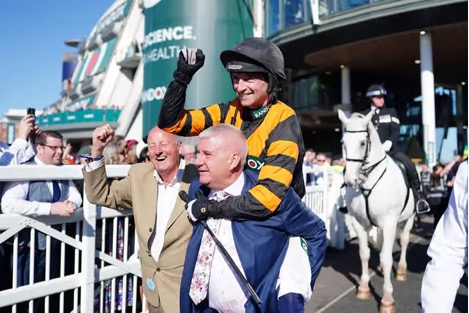
On April 5, 2025, I watched Nick Rockett win the Grand National at 33 to 1. An eight-year-old gelding trained by Willie Mullins and ridden by his son Patrick, an amateur jockey and the most accomplished amateur rider in the history of Irish racing. The horse was still registered in the name of Stewart and Sadie Andrew. Sadie had died of cancer in December 2022, five days after watching Nick Rockett run his first jumps race.
When the horse cleared the last fence and pulled away, my throat closed. Willie Mullins, the most successful trainer in the sport's history, could not get the words out. "It is lovely to be able to give your son a ride in the National. But to be able to win it is just unbelievable." Stewart Andrew carried Patrick on his shoulders into the winner's enclosure. "She's here, she's here," he kept saying. "Sadie would have loved today. She's up there, and she'll have had a tenner each-way, I guarantee you."
I was sitting in Kuwait. I don't own the horse. I've never met Stewart Andrew. I had no money on the race. And I had to put my phone down because my eyes were stinging.
Psychologists have a term for what I felt. They call it "Kama Muta." Sanskrit. It translates roughly to "being moved by love." The sudden rush that hits when you witness a moment of deep connection. The realization that someone is not alone, that love outlasts the person who started it.
We file that feeling under sport, or music, or religion. Somewhere safe. Somewhere separate from commerce. But the companies that learn to create it will outlast every competitor still chasing satisfaction scores and frictionless checkouts. A satisfied customer got what they paid for. A moved customer got something they didn't expect. The first one leaves you for a 5% discount. The second one fights for you.
The $2 Hot Dog
Will Guidara co-owned Eleven Madison Park when it was ranked the best restaurant in the world. In his TED Talk, he tells the story that changed everything for him.
He was clearing plates during a busy lunch when he overheard a table of European tourists. They had eaten at every fine dining restaurant in New York. They were leaving for the airport within the hour. And the one thing they regretted missing was a dirty street hot dog.
Guidara walked out of his Michelin-star restaurant, bought a $2 hot dog from the nearest cart, brought it back to the kitchen, had the chefs plate it with mustard and sauerkraut, and served it as a surprise course.
The guests cried.
Not because of the hot dog. Because someone had been listening. A throwaway comment between courses, and a stranger turned it into a gift. In a restaurant where they were spending hundreds, the thing that broke them open cost two.
13,000 People Singing in French
A few weeks after Nick Rockett, I watched another video that got me.
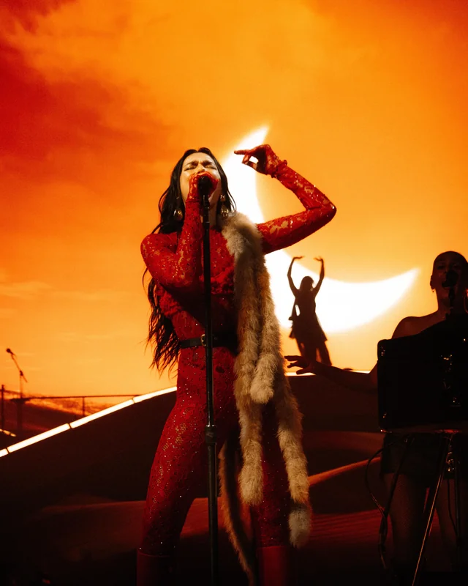
On May 15, 2025, Dua Lipa played the LDLC Arena in Lyon. Over 13,000 people. Sold out. She had already done Melbourne, Madrid, Auckland. The setlist was enough.
But midway through the second act, she stopped. Told the crowd, half in English, half laughing nervously, that she was going to try something. She was going to sing in French.
Then she started singing "Dernière Danse."
If you're not French, you might not know it. It's a 2013 Indila ballad. Every French person knows it the way every Arab knows Fairuz. It plays at weddings and funerals. It belongs to them.
And here was this British-Albanian pop star, standing in their city, singing their song. Not perfectly. Not fluently. But with real nerves and what looked like real care.
What got me wasn't her singing. It was the crowd. Within seconds, 13,000 people were singing with her. Not politely. Full throated. You can hear it in the videos. This wall of voices lifting her up, like they were saying: you tried for us, so we'll carry you. I got chills watching it on a phone screen in my living room in Kuwait.
My wife said something about this that I haven't been able to shake. She said: imagine what the singer feels. Not the crowd. The singer. You step out in front of thirteen thousand strangers, you offer them a song in their own language, and they give it back to you so loud you can't hear yourself anymore. In Kuwait, we know this feeling. Go to any concert in Kuwait City and there are moments where the performer just stops singing and holds the microphone toward the audience, because the crowd has taken over completely. The singer's voice disappears under the weight of all that love being thrown back at them.
That is Kama Muta flowing in both directions. And that's the part businesses miss. The best customer experiences don't just move the customer. They move the company too. When your team sees a customer lose their composure because you did something unexpectedly kind, that changes your people. It rewires what they think the job is for.
She had been doing this at every stop on her Radical Optimism tour. AC/DC's "Highway to Hell" in Melbourne. Manu Chao's "Me Gustas Tú" in Madrid. Nena's "99 Luftballons" in Hamburg. Each time, she picked a song that told the local audience: I didn't just bring my show to your city. I came to learn what you love.
If a pop star can build that kind of loyalty with an arena full of strangers, what is stopping your company from doing it for thirteen customers?
Six Thousand People Holding Their Breath in Tarragona
There is a moment during the Concurs de Castells in Tarragona that I think about a lot.
Every two years, teams from across Catalonia gather in an old bullring to build human towers. Not metaphorical ones. Actual towers, made of people standing on each other's shoulders, eight or nine levels high, sometimes ten. Bankers, mechanics, schoolteachers, teenagers, retirees, all wearing their team's colours. The strongest and heaviest form the base, called the pinya. Layer by layer, the tower narrows. Women climb higher. And then, at the very top, a child.
The child is called the enxaneta. She is usually a girl, maybe seven or eight years old, wearing a helmet. She scrambles up the backs and shoulders of a hundred adults until she reaches the summit, sometimes twelve metres above the ground. When she gets there, she raises one hand with four fingers extended, a salute to the four stripes of the Catalan flag. That is the signal that the tower is complete.
Here is the part that stays with you. As the enxaneta begins to climb, six thousand spectators go silent. Completely silent. No cheering, no music, nothing. Just the sound of the gralla, a wooden flute, playing the Toc de Castells. The whole arena holds its breath. You don't know if the tower will stand or collapse. And then the small hand goes up, and the silence explodes into noise that shakes the walls.
I watched a video of this on a flight once. I had to pretend I was coughing because my eyes were wet. I was watching strangers hold each other up, strangers trust a child to climb to the top of a living building, and strangers lose their minds with joy when she made it.
Why does this move us? Because it is the oldest human story. A community putting everything they have underneath one small person and saying: we've got you, climb. UNESCO declared it Intangible Cultural Heritage for a reason. It is not entertainment. It is a public act of love.
And it maps perfectly onto business, if anyone bothered to notice. Every company talks about teamwork. The Castellers don't talk about it. They build a tower of human beings in front of six thousand people and either hold or fall. That is trust with consequences. That is what a customer wants to feel, even if they can't name it.
When Zomato Treated a Checkbox Like an Ambulance
In April 2021, India was in the grip of its worst Covid wave. Hospitals overflowing. Oxygen running out. Millions of people quarantined at home, sick and unable to cook.
Deepinder Goyal, CEO of Zomato, rolled out a feature in a single day. During checkout, users could tick a box: "This order is related to a Covid-19 emergency." That was it. One checkbox.
But behind that checkbox, everything changed. Zomato gave those orders the fastest rider assignment, dedicated customer support, and priority preparation in restaurant kitchens. Thousands of partner restaurants agreed to move those orders to the front of the line. Every delivery was contactless by default.
Goyal's message to users was simple: "Treat this like an ambulance. Don't misuse it."
No surcharge. No premium tier. No upsell. Just a company recognizing that some orders are more important than others because the person placing them is scared and hungry and alone.
That single feature, built in a crisis, did more for Zomato's brand than years of marketing. Because in a moment when millions of Indians felt invisible, Zomato's system was built to see them.
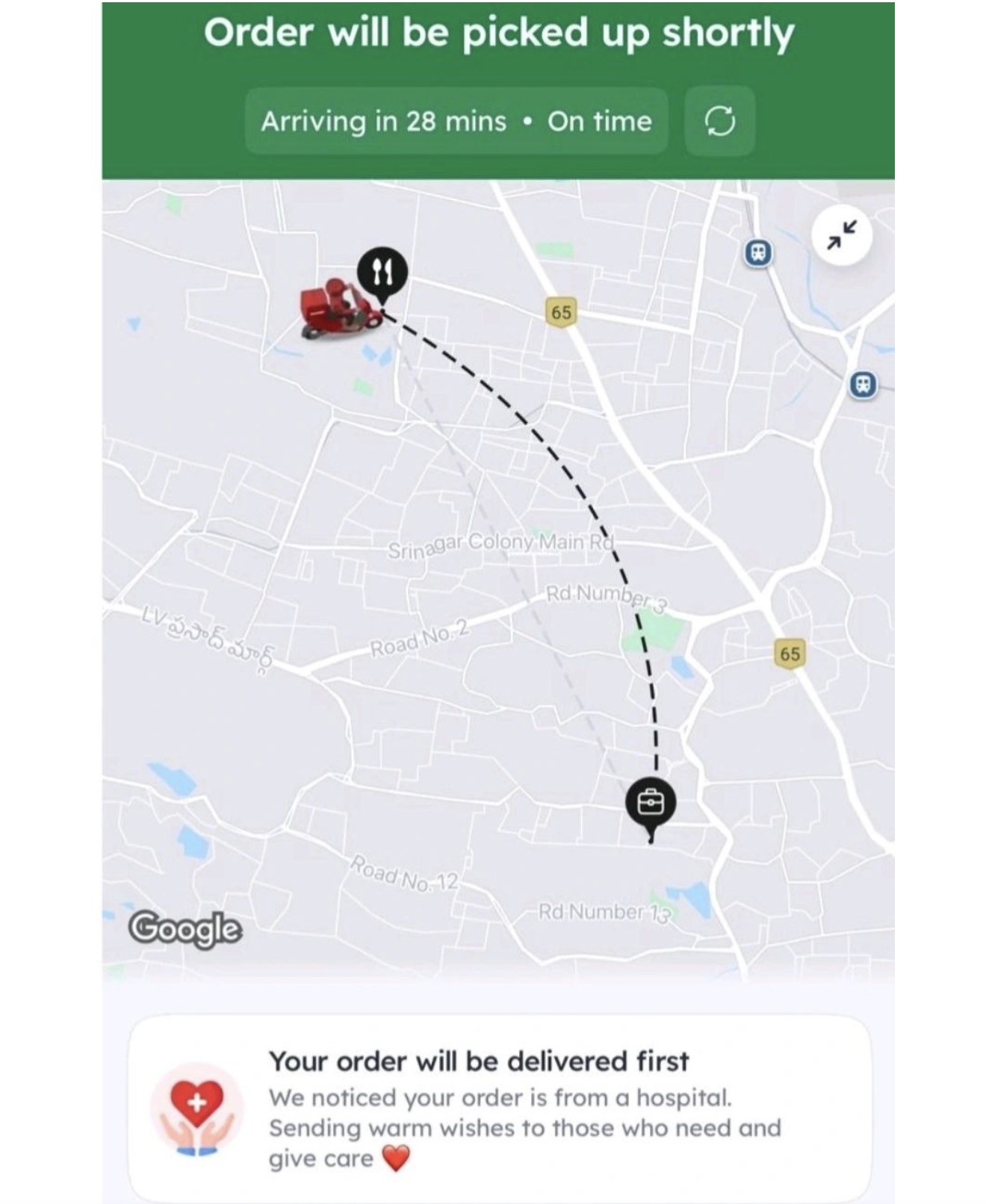
The principle turned out to be permanent. Zomato now automatically detects when an order is being delivered to a hospital. The app shows a quiet notification: "Your order will be delivered first. We noticed your order is from a hospital. Sending warm wishes to those who need and give care." No checkbox needed. No surcharge. The system just sees where you are and decides you matter more right now.
The Reflex, Not the Strategy
None of these stories started with a brief or a budget. The best one I know happened to me.
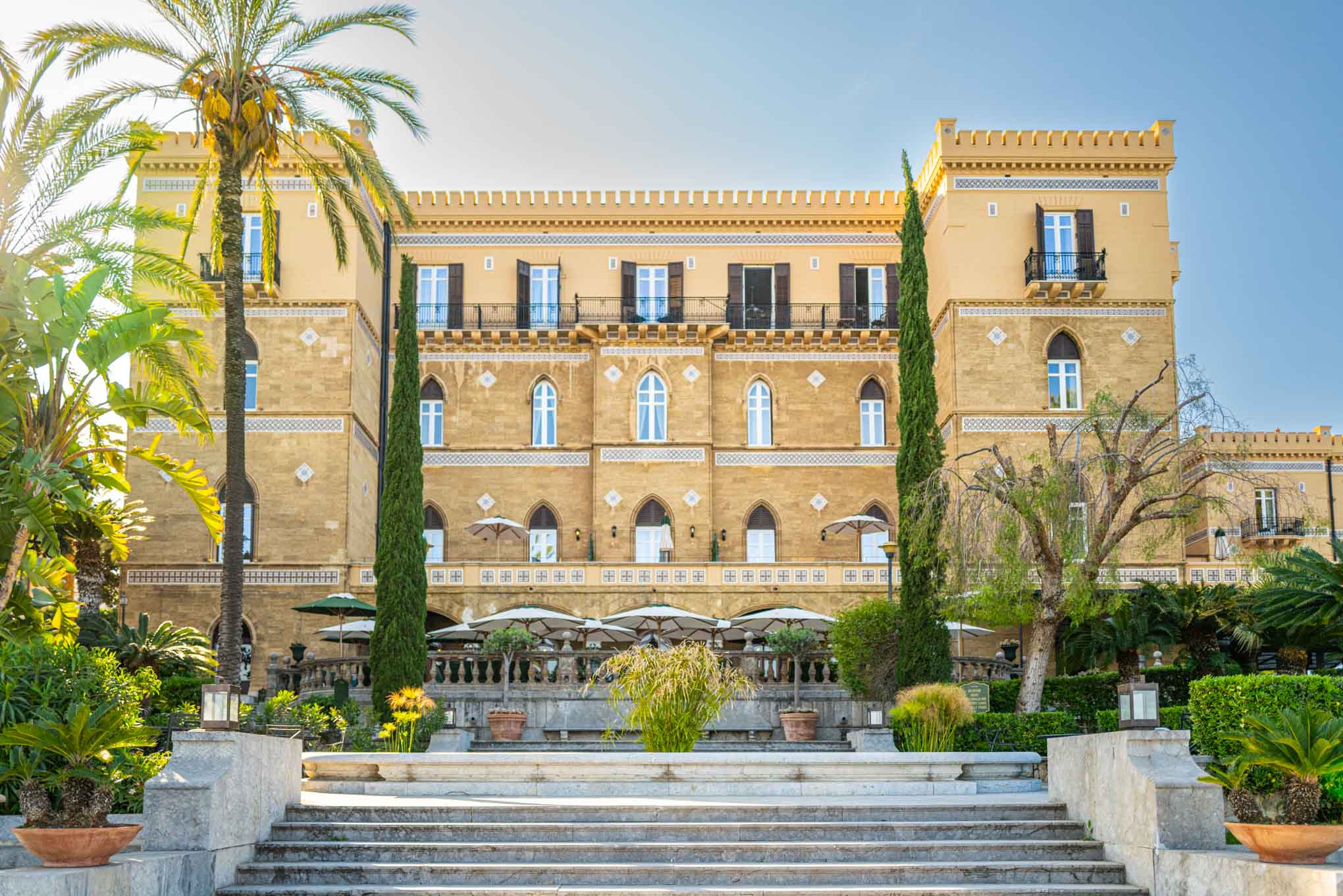
In the summer of 2023, Mount Etna erupted and shut down Catania airport on my last day in Taormina. I drove across Sicily to Palermo, found a flight out the next afternoon, and needed somewhere to sleep. I had never stayed at a Rocco Forte property. Villa Igiea caught my eye. I arrived around ten at night, tired and carrying the whole day in my shoulders.
When I asked about food, the receptionist told me only the outdoor bar was still serving. That sounded fine. I went upstairs to change. By the time I came back down, a table had been set for us. Not grudgingly, not as a favour. With care. The staff had read the situation: two guests who had just driven across an island because a volcano rearranged their plans. Nobody asked us to fill in a survey. Nobody upsold us on the wine list. They just noticed, and they moved. The whole evening cost Villa Igiea almost nothing. But I have not stopped talking about that hotel since. I wrote about it on my site. I recommend it to anyone going to Palermo. They made a lifelong ambassador out of me by offering something simple and free: the feeling that someone was paying attention.
That is the pattern. No marketing budget. No campaign. Just someone on the front line deciding that a guest's state of mind mattered more than the standard operating procedure. Villa Igiea didn't know my booking history or my loyalty tier. The person at reception just looked up. That is the reflex every company should be training for. Not waiting for the accident, but building the conditions so it happens again and again.
The Diwaniya
In Kuwait, we should be the best in the world at this. We already have the culture for it. We just forgot to bring it into our businesses.
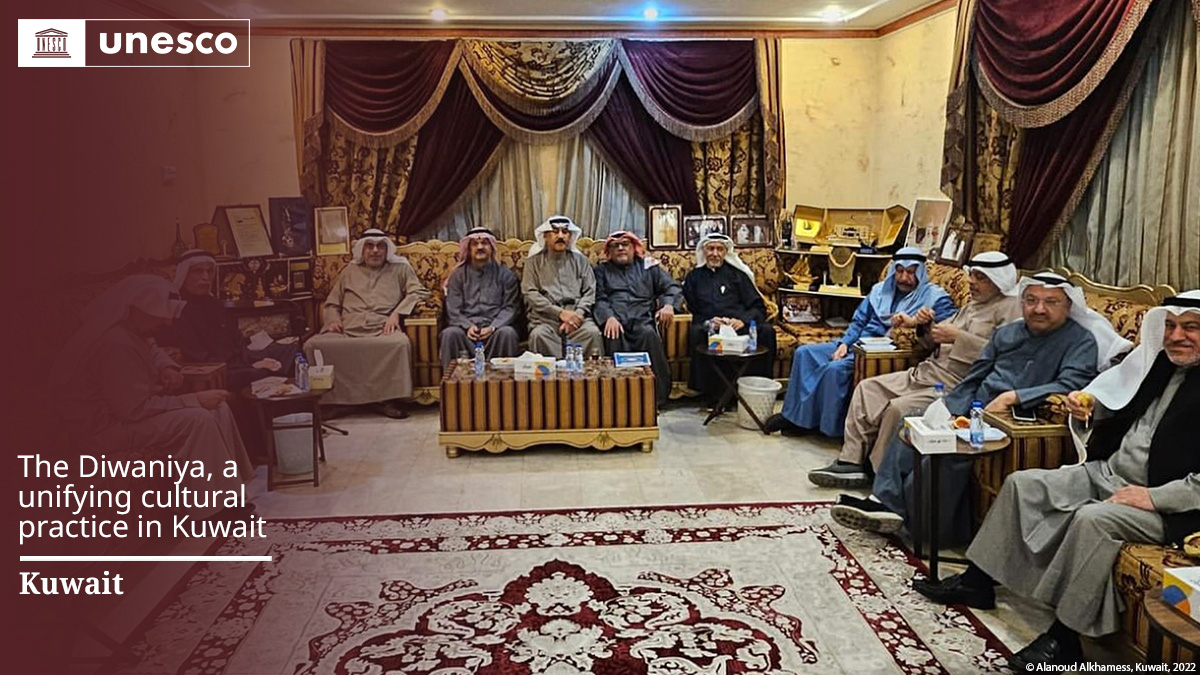
The Diwaniya is the proof. Nobody goes to a Diwaniya to close a deal. People go to belong. The tea arrives before you ask. The host remembers your father, your son's exams, and how you take your sugar. No agenda. No transaction. The whole room runs on attention, memory, and quiet generosity.
That is Kama Muta. We've had it for centuries. We just never called it that.
And yet look at what happens when Kuwaiti businesses digitize. We strip the warmth out. We replace the host with an interface. We optimize for speed and then wonder why nobody stays loyal.
I spent years at Ali Alghanim & Sons Automotive, and the decision I remember most had nothing to do with cars. It started with fuel stations.
The logic was simple. A customer buys a BMW and drives it home. For the next three years, we might see them twice a year for service. That is not a relationship. That is a transaction with a long gap in the middle. So we asked: where is the customer every single week? At the fuel station. What if we were there too?
That one question opened everything. We put service points at fuel stations. We opened a showroom inside the 360 Mall, because families were already there on weekends. We built a 24-hour call centre and a complaints unit with real authority to fix problems. Each decision started from the same place: where is the customer, what are they feeling, and how do we show up before they have to ask?
None of it was revolutionary on paper. But stacked together, it changed what ownership felt like. You weren't just someone who bought a car. You were someone the company kept finding reasons to take care of.
That's the common thread in every story I've told here. Dua Lipa sang a French song to a French crowd to make them feel she belonged to them. Zomato built a checkbox that treated a food order like an ambulance. The Castellers of Tarragona put a hundred bodies underneath one small child and say, climb, we've got you. Villa Igiea set a table for two strangers stranded by a volcano, and turned a disruption into a story I'm still telling. Stewart Andrew kept the horse in Sadie's name.
The Night in Lyon
I keep coming back to one moment.
Dua Lipa starts "Dernière Danse" alone, a little uncertain. And then, maybe ten seconds in, you hear it. Thirteen thousand voices joining her. Not following her. Carrying her. The sound builds until you can barely hear her over them, and she's smiling because she knows what just happened. She offered them something, and they gave it back tenfold.
I watched that on my phone in Kuwait. Goosebumps from my neck down both arms.
That's it. That is the thing every brand is chasing without knowing it. Not satisfaction. Not loyalty. Not engagement. The goosebumps. The lump in your throat. The sting behind your eyes when a stranger does something so human it cuts through everything.
You can't buy it. You can't automate it. You can't fake it.
But you can build a business that makes room for it. And when you do, you won't need to ask people to come back. They'll come back because they felt something with you that they can't get anywhere else.
Every company in Kuwait is trying to be faster, slicker, more digital. Fine. But that race has a finish line, and most of us are already near it.
My Diwaniya is open. Come sit. Let's figure it out.
Ali Bahbahani is the Founder and Managing Partner of Ali Bahbahani & Partners, a strategic advisory firm specializing in customer experience, hospitality consulting, and brand strategy across the GCC. He holds an MBA from EHL Lausanne and has stayed in over 200 hotels worldwide.