Beau-Rivage Palace Lausanne: A Luxury Review
%20(1).avif)
.webp)
The thing you remember about Beau-Rivage Palace is not the lobby, though the lobby does its job. It is not the staff, though the staff are as well-trained as any I have encountered in a 160-year-old European property. It is the view from the room.
I woke up my first morning there to a wall of glass and Lake Geneva behind it. The water was doing that trick Lake Geneva does in the early hours, where it looks completely still but is clearly moving, and the Alps on the far side were in and out of low cloud. I have stayed at The Beau-Rivage Palace in Lausanne a handful of times now, each stay about a year apart, and I have never once walked into the room and not paused at that window for a minute before I put my bag down. That moment is the entire product. Everything else — the Michelin restaurants, the Belle Époque corridors, the concierge who actually knows the city — is earned credibility wrapped around the view.
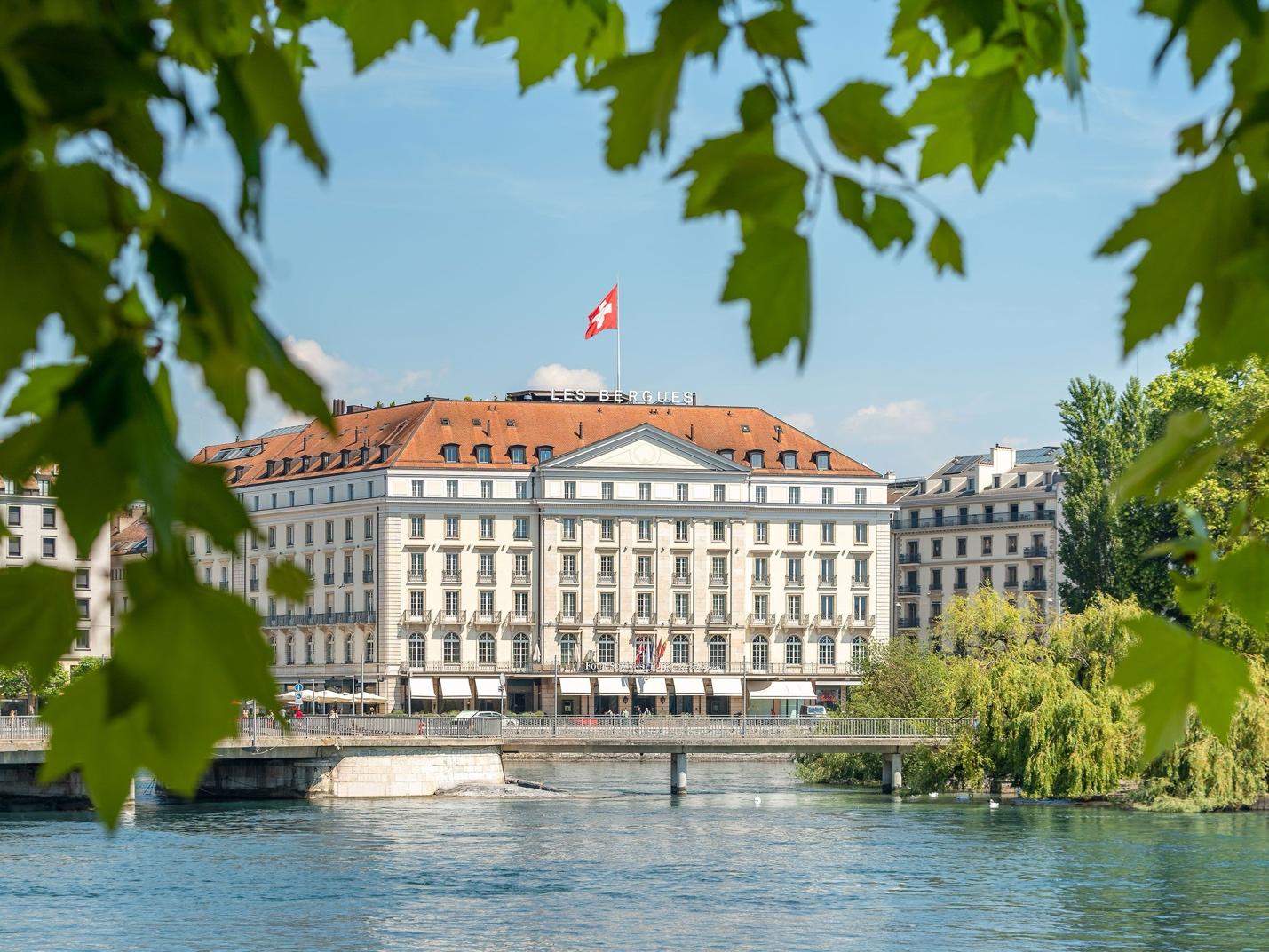
I am going to spend this piece arguing with what Beau-Rivage has gotten right and where I think the property is leaving money and loyalty on the table. I am not going to give you a conventional hotel review. The internet has enough of those. I am going to treat Beau-Rivage as a case study in heritage-property strategy, because that is what it actually is, and that is the conversation I have most often with clients who own or operate properties of this age and type. The question is not "is this a good hotel" — it plainly is. The question is whether a 160-year-old palace on Lake Geneva can keep being relevant to a traveller in their thirties who has never heard of Victor Hugo and is deciding between this and a Chedi Andermatt or a new build in Zurich.
The Arrival That Tells You What Kind of Hotel This Is
Pulling up to Beau-Rivage is deliberate theatre. The driveway is calibrated to give you just enough time to notice the facade before the door opens. The doorman does not rush. The bellhop who takes your bag has been trained in a kind of stillness that you do not see at newer properties — the absence of performative service, which is harder to deliver than the performative kind and more valuable.
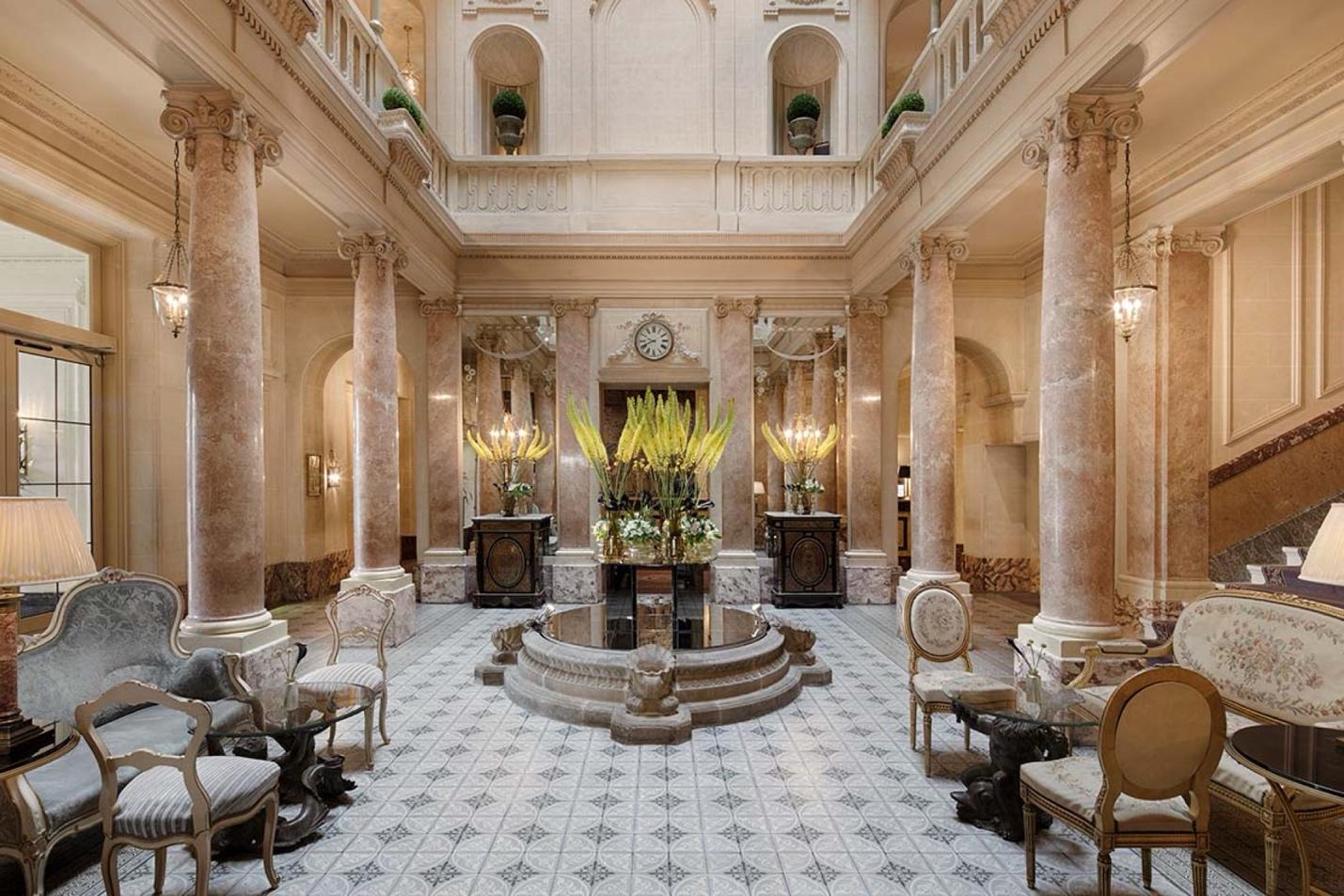
The lobby is where the property begins to tell you its age. The marble floors, the lake-facing windows behind the reception desk, the chandeliers that have been there longer than the chain hotels in Dubai have existed. I have seen hotel brands spend millions trying to reverse-engineer this kind of ambience on opening day, and none of them get it right because it cannot be bought — it has to be lived in. A 160-year-old hotel has been refining the way it welcomes a guest for 160 years, and the compounding effect of that is a thing you notice in the first 90 seconds. Compare it to the arrival experience at Four Seasons Geneva or The Chedi Andermatt, both of which I have also reviewed, and the difference is not in the quality of the materials. It is in the accumulated behavioural knowledge of the staff.
Heritage Is an Asset Until You Treat It Like One
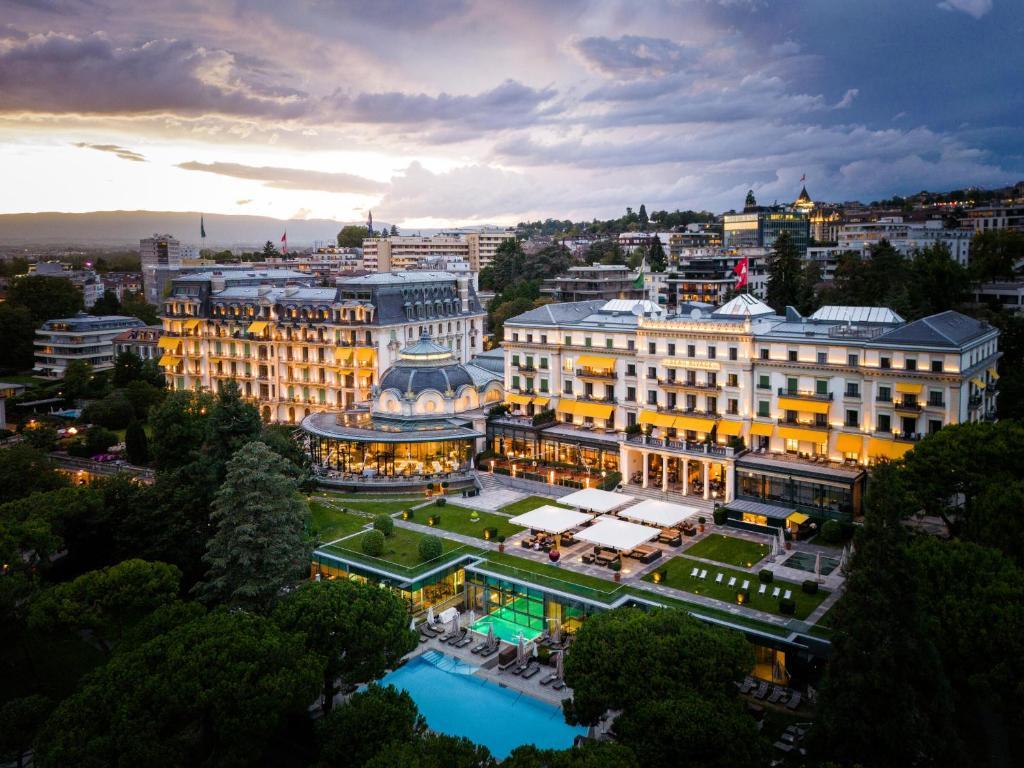
Beau-Rivage Palace's 160-year history is the first thing the property's marketing materials reach for, and for good reason. The guest list alone — Coco Chanel, Victor Hugo, Charlie Chaplin, Nelson Mandela — is the kind of credential no new hotel can manufacture. The 1923 Treaty of Lausanne was signed on the premises. That is not a decorative anecdote, that is a fact about the physical space that gives the rooms a weight you can feel when you walk them.
Here is where I want to be direct with the Beau-Rivage team, because I think the heritage story is not being worked hard enough. Almost every guest who books the property has already decided they value heritage — that is what brought them here in the first place. The opportunity is to take that pre-qualified audience and actually tell them the stories, in specific ways, at specific points in the stay, so they leave with something other than a generic memory of an old building. The Villa Igiea in Palermo does this well — I wrote about the property in a separate review — where the historic murals become something the guest is taken through, not just shown.
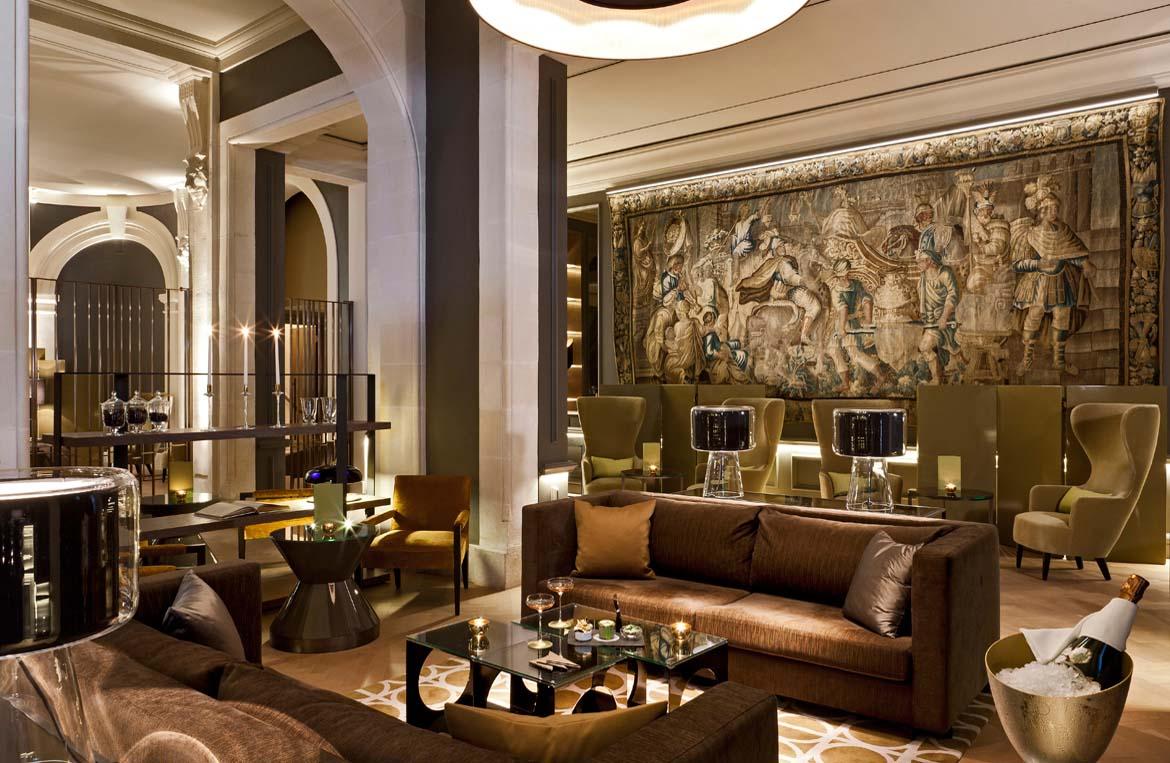
The challenge for any historic property is the one I wrote about when I reviewed Les Armures in Geneva: balancing preservation with innovation. Today's luxury travellers value authentic heritage, and Beau-Rivage has it in abundance, but they also value contemporary amenities and technology. The property has navigated this reasonably well on the hardware side — the wifi works, the in-room tech is current enough, the wellness facilities have been updated — but on the storytelling side, there is a serious gap.
The Room, the View, and What Luxury Actually Costs
A butler-ish staff member walks you to the room on the way up, narrating lightly. The room itself has high ceilings, intricate mouldings, hand-picked furnishings, and the kind of discreetly expensive fabrics that are noticeable only if you are paying attention. The bathroom is a good one — not the best I have seen, but in the top quartile for properties of this age.
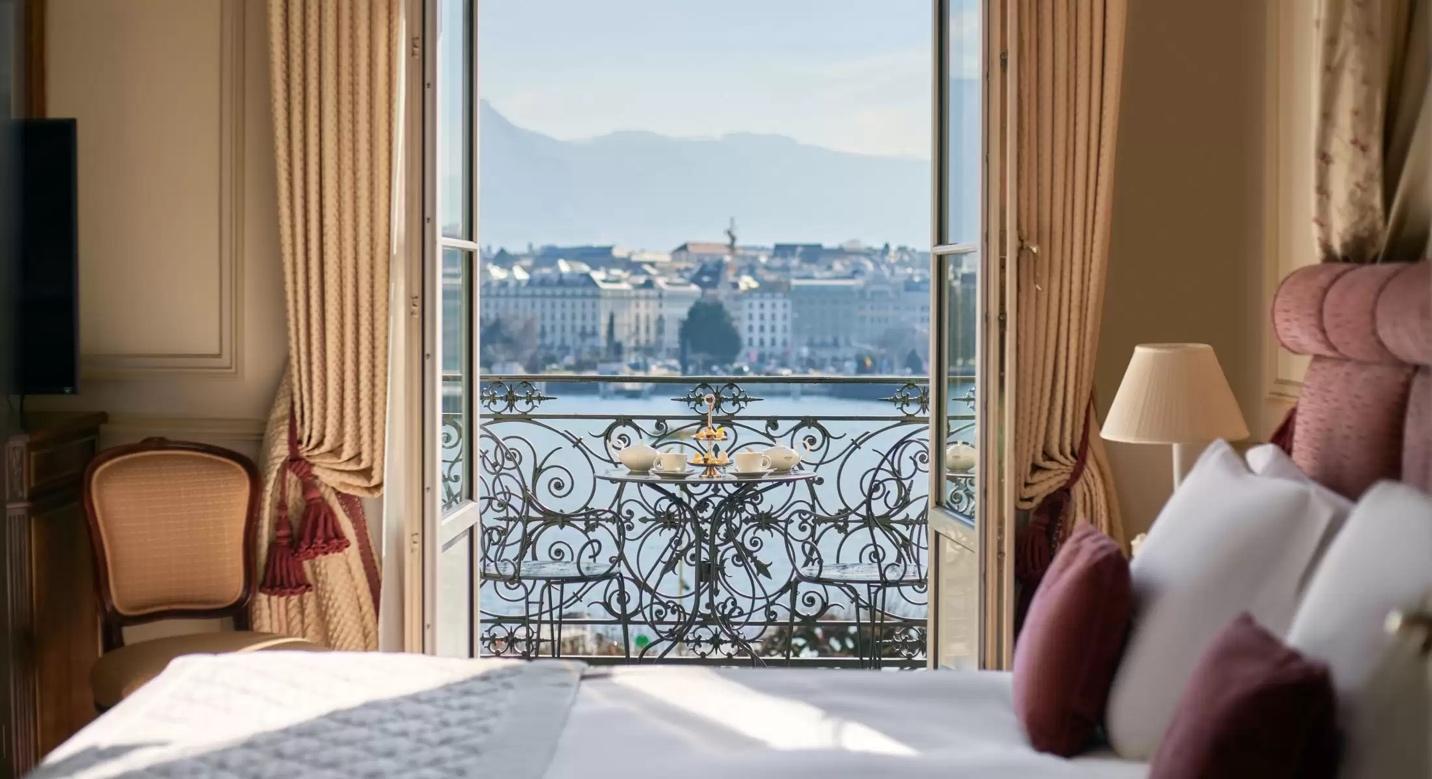
And then there is the balcony, and the view. I keep coming back to it because it is the thing that separates Beau-Rivage from its competitors more reliably than any other feature. The Royal Suite, which I have not stayed in but have walked through, has a balcony that gives you the full sweep of the lake from a height that makes it feel private. The standard lake-view room I actually booked gives you roughly 80% of that effect at a fraction of the price, and unless you need the extra square footage of the suite, the standard lake-view room is the one I would recommend to any first-time guest.
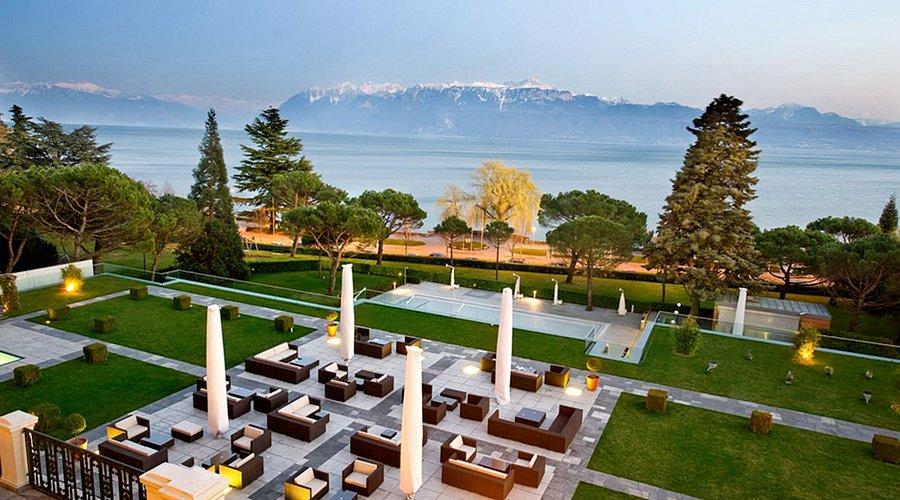
The detail-level service in the room is where the property shines without making a fuss about it. Turndown service anticipates needs rather than performs them. The pillow menu actually gets used by the housekeeping staff — I tested this by requesting a firmer pillow at 11pm on a Tuesday and had it in seven minutes. The mini-bar is stocked with Swiss products that are actually Swiss and not the generic international selection that most hotels at this price default to. These are small things individually. Collectively, they are the reason you remember the property.
Who Beau-Rivage Is For, and Who It Is Not
I want to be honest about the market position because it is where the most interesting strategic question sits. Beau-Rivage is not the right hotel for every luxury traveller. Its core audience is romantic travellers, history enthusiasts, and those seeking authentic Swiss lakeshore experiences — the specific segment that the Skift megatrends report would call "quiet luxury" customers and that I think of as the anti-Dubai segment. These are the guests for whom a Four Seasons in a modern high-rise feels soulless, and for whom the absence of an Instagram-bait feature is a positive rather than a negative.
The guest Beau-Rivage loses, and should be fine with losing, is the one who wants rooftop infinity pools, beach-club access, and a DJ at dinner. That is the typical city-centre luxury property customer, and Beau-Rivage is the opposite of that property. The mistake would be to try to serve both segments. The property has largely resisted this temptation, which is a decision I admire.
What I would push the property to do more aggressively is build out the curated experiences at the top of the stack. A Chanel-inspired suite that pays homage to Coco Chanel's connection to Lake Geneva and her documented visits to the property. A literary residency that makes something of the Victor Hugo and Vladimir Nabokov angles. A partnership with a local vintner for an in-room Swiss wine experience that genuinely means something. None of these require physical investment. All of them would differentiate the property from the competitive set in a way that "we have a historic building" cannot.
The Restaurants, and What a Two-Michelin Property Has to Live Up To
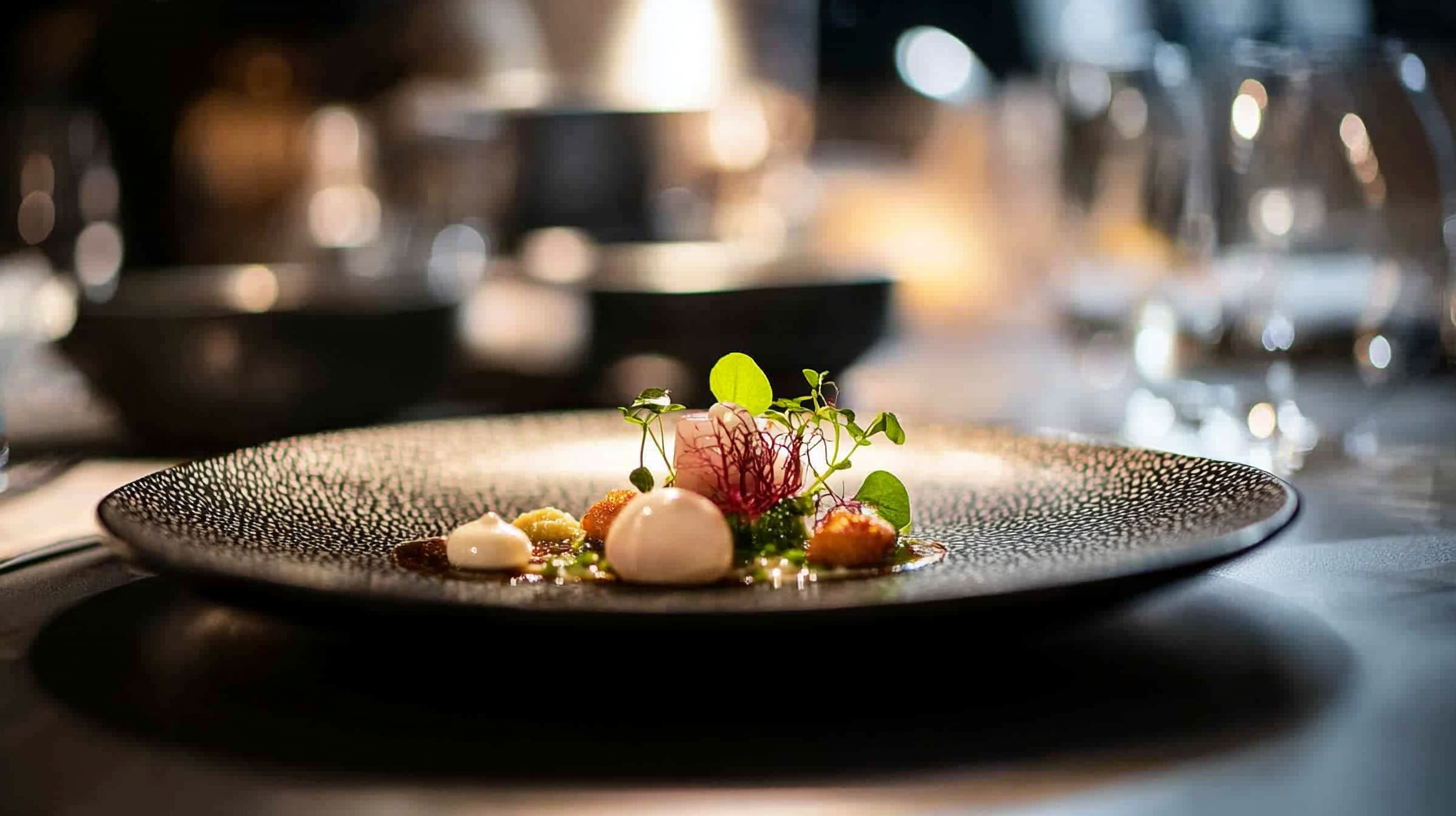
Beau-Rivage houses Anne-Sophie Pic's two-Michelin-starred restaurant, which is the headline culinary credential and the one most guests mention when they review the property. I will say this about Pic's Lausanne outpost: it is as good as the reputation suggests, and the tasting menu is worth the visit in its own right. The problem that any property with a two-Michelin room has is that every other meal in the hotel now has to live in its shadow, and most hotels with this setup do not maintain the standard.
Beau-Rivage does better than most but not as well as it should. The breakfast, which is where every hotel actually lives or dies with its regular guests, is good. The casual lunch service is good. The room service is fine. But none of these rise to the level that the Pic restaurant deserves as its internal benchmark, and the gap between the signature dining and the everyday food is the one thing I would flag to anyone considering a longer stay.
For hospitality professionals, this is the recurring lesson of legacy properties: consistency is the differentiator that separates the memorable stay from the forgettable one. A single underwhelming meal at a two-Michelin property is not a neutral event, it is a minor betrayal of the expectations the property itself has set. I have seen this pattern at half a dozen heritage hotels in the region and in Europe. The solution is not complicated — it is a willingness to apply the standard of the signature restaurant to every other culinary touchpoint in the hotel — but it is expensive, and most properties quietly decide not to do it.
Service, and the Difference Between Trained and Practised
Service excellence is the thing every luxury hotel claims and few actually deliver at the level the price tag implies. Beau-Rivage operates at the high end of that band, but not always at the absolute top. The arrival was impeccable. The concierge interactions were substantive — the hotel's concierge recommended a vineyard tour I would never have found on my own, and the wine I brought home from it was the best Swiss wine I have ever tasted. The front-of-house staff recognised me on the second day, which is a small thing but the correct small thing.
Where the service showed its age, and I use "age" here as a neutral observation rather than a criticism, was in the micro-consistency. The bar had a bartender on Wednesday night who was attentive in a way that made the drink memorable, and a different bartender on Thursday night who was perfectly adequate but did not elevate the interaction. At a property of this class and price, the guest expects both shifts to deliver the Wednesday experience. That is the operational challenge of every luxury hotel and it is the harder thing than getting the Wednesday shift right in the first place.
Forbes Travel Guide's five-star standards evaluate properties primarily on service execution and consistency, and this is the framework I think Beau-Rivage should be internally measuring itself against, because it has the ingredients to hit them and the occasional dip below them is the thing holding the property back from the very top tier of its category.

The Brand Story Beau-Rivage Has Not Written
Every iconic hotel needs a brand narrative that works in 2026 as well as it worked in 1926, and this is where I think Beau-Rivage has the most room to grow. The current narrative is heritage-first, elegance-first, Lake-Geneva-first, and it is a good narrative. It is not a distinctive narrative. Most of the palace hotels in Europe tell a version of this story, and the guest who is comparing Beau-Rivage to, say, the Badrutt's Palace in St. Moritz or the Hotel de Paris in Monaco is being told roughly the same thing by all three properties.
The way to differentiate is to make the narrative specific. Not "heritage" in the abstract, but the specific story of what the 1923 treaty signing felt like in the rooms where it happened. Not "notable guests" as a list, but the specific story of which suite Coco Chanel preferred and why. Not "views of Lake Geneva" as a generic amenity, but the specific story of why the property was built exactly where it was built, in 1861, and what that decision reveals about how its original operator understood the difference between a hotel with a view and a hotel whose entire reason for existing is the view.
The second thing I would push on is the contemporary cultural programming. A Coco Chanel-inspired suite is an easy brand-activation moment. A literary partnership is easy. A wellness programme that draws on Swiss-specific traditions and ingredients is easy. None of these require physical investment in the property, and each of them gives the brand a reason to appear in cultural conversations rather than just hotel rankings. The property that stops competing on "best luxury hotel in Switzerland" and starts competing on "the specific thing Beau-Rivage is known for in 2026" will have done the hardest brand work in its category.

Personalisation, Sustainability, and What Actually Moves the Needle
Personalization and sustainability have become the two most-cited trends in luxury hospitality and the two most often mishandled. The luxury traveller who has stayed at ten five-star properties in a year does not want to be surveyed about their preferences before arrival and then handed back a manufactured "personalised" experience that was clearly assembled by a system. They want the property to notice them, without being told, and to respond without making a fuss about it. The Italian small hotel where the receptionist remembers your wife's coffee order on day two is the gold standard, and the Beau-Rivage is close enough to that standard that it should be measuring itself against it.
On sustainability, the same principle applies. The guest at this price point is done with paper straws and towel reuse cards as evidence of a sustainability programme. They want to know that the ingredients on the breakfast menu are sourced in a way that respects the region, that the wellness products are formulated by real producers in Switzerland or the neighbouring region, that the property's energy use is genuinely being addressed at the systems level. Forward-thinking properties now incorporate AI-driven guest services, comprehensive sustainability initiatives, and hyper-personalized experiences. Heritage hotels cannot afford to lag behind these developments to remain competitive with the Chedi Andermatts and the Gstaad Palaces, and Beau-Rivage has the resources to move faster on these conversations than it currently is.
What Other Heritage Hotels Should Steal From Beau-Rivage
For any property I work with that is in the heritage-hotel category, Beau-Rivage is one of the properties I reference most often, because it does the hardest thing in this category well — it does not apologise for its age, it does not try to pretend to be a new hotel, and it does not let the age become an excuse for falling behind on the things that need to be current. The specific lessons:
- Heritage as differentiation, not decoration. Beau-Rivage integrates its history into the guest experience at the operational level, not just the marketing level. Other properties should learn from this.
- Location as product. The entire hotel orients toward Lake Geneva. Every design decision is made in service of the view. This kind of ruthless prioritisation is rare and it is what makes the property memorable.
- Service consistency as the long game. Beau-Rivage gets this right more often than not, and the places where it falls short are the ones that competitor properties should be studying most carefully — because those are the exploitable gaps.
- Culinary integration. Having a two-Michelin room is not enough. The rest of the food operation has to live up to it, and this is the part that even legacy properties tend to get wrong.
- Evolving the storytelling. The heritage is the starting material, not the finished product. A property that stops refreshing the narrative is a property that becomes a museum, and museums do not book rooms at Beau-Rivage prices.
%2520(4).png)
The Part I Will Remember
I have stayed at a lot of hotels. I have reviewed enough of them on this site that the pattern of what I look for is probably obvious by now. What I look for, at the end of a stay, is the specific moment I will tell my friends about when they ask where I stayed. For most hotels, that moment is nothing — you remember the price, the city, maybe the breakfast, and you move on. For Beau-Rivage Palace, the moment is the lake view at six in the morning from the balcony of a lake-view room, and the specific way the light moves on the water when the mist lifts. That is not a line I made up for this piece. It is the thing I would tell a friend if they asked whether Beau-Rivage Palace was worth it. It is. And the view, alone, would be worth it, but the rest of the hotel is good enough that you do not have to pretend the view is the only reason.
At Ali Bahbahani & Partners, we work with heritage properties and luxury hospitality operators on exactly the kinds of questions I have raised in this piece — the gap between what a property has and what it is using, the difference between heritage as a decoration and heritage as an operational asset, the specific work of turning a guest into a returning guest. If you run a property in this category and any of this has resonated, contact us. If you want to see my reviews of the sibling properties I have referenced, the Les Armures Geneva review, the Four Seasons Cap Ferrat review, and the Les Airelles Val d'Isère review are all on this site.
Beau-Rivage Palace: At a Glance
- Established: 1861
- Last major renovation: 2014
- Rooms & suites: 168
- Notable guests: Coco Chanel, Charlie Chaplin, Victor Hugo, Nelson Mandela, Vladimir Nabokov
- Signature restaurant: Anne-Sophie Pic (two Michelin stars)
- Most valuable feature: the lake-view room balcony at sunrise