Women's Sports in Kuwait and the GCC: The Case
%201-min.avif)
.webp)
Women's sport in Kuwait does not need another report making the case for it. The case has been made for decades, in numbers that get cited at conferences and then ignored in the next quarter's budget meeting. What women's sport in this country actually needs is for the people who write the cheques — the sponsors, the government, the family-owned businesses that dominate our consumer market — to stop treating it as charity and start treating it as the business opportunity it plainly is.
I am going to take a harder line in this piece than I usually do, because the soft version of this argument has been in circulation for ten years and has not moved the needle. The numbers below are real. The opportunity is real. The reason it is not being captured is not a market failure — it is a failure of imagination and a failure of nerve.
The Numbers That Should Have Ended This Debate Years Ago
The 2023 FIFA Women's World Cup drew a global audience of around 2 billion viewers across the tournament. That is more than most men's events outside of the men's World Cup itself. The Women's Super League in England now sells out stadiums that would have been embarrassing to book a decade ago. The WNBA's 2024 season posted record attendance and the first nationally televised women's basketball ratings that exceeded the equivalent men's games in the same week.

I am not going to dwell on the global numbers because they are not the argument I am making. I am making the argument that the global shift has already happened, and the question for this region is no longer whether to get involved but whether we get involved before or after the price of entry doubles. Sponsorship deals in women's sports are still, for the moment, a fraction of the cost of equivalent men's deals for comparable reach. That gap is closing fast. Every year the GCC waits, the discount gets smaller.
Nike Did Not Sponsor Women's Football Out of Kindness
Nike's relationship with the US women's national team is cited in every article about women's sports sponsorship, and it is usually framed as a feel-good case study. That framing misses the point. Nike signed the US women because the economics made sense. Women's football was undervalued relative to the audience it was building, Nike's brand had a specific affinity with the story, and the deal was priced in a way that gave Nike upside the men's game no longer offered. It was a business decision that happened to also be a cultural one, and it made Nike a lot of money.

The lesson for brands in Kuwait is not that Nike is admirable. The lesson is that the returns on a well-structured women's sports sponsorship are higher per dollar than the equivalent men's deal right now, and that will not be true forever. Any GCC brand that wants to capture this gap needs to do it in the next 24 months, not the next five years.
The Apparel Market Is Already Bigger Than Most People Realise
Women's sportswear as a global category was valued at around 220 billion dollars in 2023 and is growing at a high single-digit rate year on year. Footwear alone is tracking above that. The athleisure wave — sportswear worn in non-sporting contexts — is no longer a trend, it is a permanent feature of how women in major consumer markets dress. The question for anyone in Kuwait or the wider GCC is whether our retail ecosystem is capturing that spend or losing it to online sales and travel shopping.
My read is that we are losing it. The Avenues has some decent women's activewear options, but the supply is a fraction of what a comparable consumer in London or Dubai can access. Kuwaiti consumers who want performance-grade women's sportswear still route most of their spending through Net-a-Porter, Farfetch, or a summer trip to Harrods. That is a leakage of real money from our retail economy to someone else's, and it is the kind of leakage that does not show up in a single quarterly report because it is distributed across thousands of individual orders.

The Cultural Argument, Answered
I want to address the cultural part of this directly because I have heard it said in enough meetings that it deserves a clean answer. The cultural argument against investing in women's sports in Kuwait goes something like: "The local market is not ready. Our traditional values do not support it at scale. The consumer behaviour is not there yet." I think this is wrong on every count, and I think the people making the argument have not looked at what is actually happening on the ground in the region.
Saudi Arabia, which for years was cited as the hardest case for women's sports in the region, now has women attending football matches in major stadiums, women participating in marathons, a women's professional football league, and a women's basketball programme that is receiving serious government funding. This is not a prediction — it has already happened. If Saudi Arabia can do it at the pace it has done it, the idea that Kuwait is somehow culturally constrained from doing the same is not a cultural argument, it is an alibi.

The UAE has gone further, with consistent women's sports policy, investment in infrastructure, and a visibly growing consumer market for women's performance products. Qatar, despite its conservative reputation, has used the post-World Cup moment to fund women's sports participation at scale. Even Oman has a well-subscribed women's athletics programme. The GCC country that is most conspicuously absent from this conversation is Kuwait.

What Kuwaiti Women Actually Buy When They Buy Sports
Research on GCC women's consumer behaviour consistently shows three things that matter for this conversation. First, GCC women are willing to spend disproportionately on quality when the product meets their specific requirements — performance, fit, and the kind of modest styling that a global brand cannot design without genuine regional input. Second, they are deeply brand-loyal once a brand has earned that loyalty, which means the first-mover advantage in this market is real. Third, they make brand decisions socially, in groups, which means a single high-status endorsement moves a disproportionate volume of sales compared to a scattered digital campaign.
If you put those three facts together, the playbook almost writes itself. A brand that understands GCC women's sport properly will over-invest in product design for this specific market, lock in loyalty early with a small number of high-visibility partnerships, and build a community presence that is physical and social rather than algorithmic. Almost no brand in Kuwait is doing any of this. The ones that are doing it halfway are doing it as marketing. The ones that will win are going to do it as strategy.
The Infrastructure Is Catching Up. The Private Sector Is Not.
I want to give credit where it is due. Kuwait's public sector has done more for women's sports infrastructure in the last five years than in the thirty before combined. There are more training facilities, more government-funded programmes at the school level, more visible representation in national sports bodies, and a meaningful increase in participation rates at the amateur level. That is real progress and I do not want to diminish it.
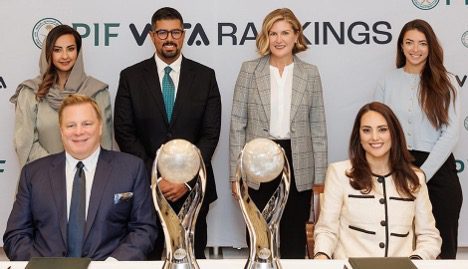
But infrastructure without private-sector engagement produces a ceiling. Athletes trained in public facilities need brands to sponsor them. Leagues need broadcasters to carry them. Events need corporate partners to fund them. The Kuwaiti private sector is still largely watching this from the sidelines, and the companies that are technically "engaged" are mostly sending token CSR cheques that do not translate into meaningful support. The Barclays deal with the Women's Super League — roughly £10 million a year in title sponsorship — is the kind of commitment that actually moves the needle. Kuwait does not have a single deal at that scale in women's sports. Not one.

What Kuwaiti Businesses Should Actually Do
I am going to be specific because general calls-to-action in this space have produced general non-action for a decade. Here is what I would do if I were running the sports-adjacent marketing budget of a Kuwaiti corporate today.
1. Sign a Title Sponsor Deal Before the Prices Go Up
A Kuwaiti bank, insurance company, or telecom should title-sponsor a regional women's competition within the next 18 months. Not a one-off tournament. A multi-year title. The cost of entry today is a fraction of what it will be in 2028, and the brand association that deal creates will be impossible for a late entrant to buy at any price. If you are running a consumer-facing brand in Kuwait and you are not actively building this deal right now, you are leaving a strategic asset on the table.

2. Build a Product Line for GCC Women, Not a Localised Global SKU
The sportswear opportunity in this market is not solved by importing a global range and putting Arabic labels on it. The women in this region have specific product requirements — around fit, around modest performance wear, around the interaction between sportswear and cultural expectations — that global brands do not get right. A Kuwaiti or GCC-based sportswear brand that invests in genuine product design for this specific consumer has a defensible moat. A Kuwaiti retailer that stocks and buys with this consumer in mind has a pricing advantage. Neither of these requires permission from anyone.
3. Put the Marketing Budget Where the Attention Is
The second-biggest waste of marketing money in this category is targeting women's sports interest with generic "empowerment" campaigns that could run in any market in the world. The consumer recognises them as inauthentic in the first three seconds. The real marketing leverage comes from partnering with the specific creators, athletes, and trainers that this audience already follows on Instagram and TikTok, and giving them creative freedom to make content that actually lands. I have seen this work, when it was done properly, and I have seen it fail every time it was run through a traditional agency.

4. Engage the Grassroots Properly
There is a difference between funding a women's running club as a CSR line item and building a serious, sustained community presence at the amateur participation level. The first one produces a photo for the annual report. The second one produces the genuine brand equity that Nike built in the US women's football story. Kuwaiti brands that want the payoff of that second version need to accept that it takes three to five years and is not going to generate quarterly wins.
5. Treat Digital Content as a Product, Not a Campaign
The women's sports content that performs globally — the 90-second highlight reel, the documentary-style athlete profile, the first-person training diary — is not expensive to produce and it builds long-tail brand equity that paid advertising cannot. Most Kuwaiti brands still outsource this to an agency that produces content on a campaign schedule. The brands that will win in this space treat content as an ongoing product, staffed internally, measured on organic reach and saved posts rather than paid impressions.
6. Stop Calling It CSR
The single worst thing that has happened to women's sports investment in this region is that it has been bucketed under corporate social responsibility. CSR budgets are the smallest in the corporate hierarchy and the first ones cut in a downturn. When Barclays title-sponsors the WSL, they do not call it CSR. They call it marketing, because it is marketing, and the ROI framework is marketing ROI. The Kuwaiti company that stops classifying women's sports as a charitable activity and starts classifying it as a marketing investment will unlock 10 times the budget overnight.

The Parts That Are Genuinely Hard
I am not going to pretend this is simple. There are real obstacles to moving quickly on women's sports investment in Kuwait, and some of them are not going to resolve in the next year regardless of how motivated the private sector becomes.
The talent pipeline is thin. Kuwait does not have enough women athletes competing at a level that makes a global marketing deal obvious. The regional professional leagues are in early stages. The broadcast infrastructure is not where it needs to be. Some of the cultural push-back is still real, even if less than it was a decade ago. All of this is true. And none of it changes the basic argument, which is that the cost of getting involved now is lower than the cost of getting involved in three years, and the brand that moves first will have an advantage that nobody can buy back.
The Closing Argument
Women's sports in Kuwait and the GCC are the single clearest case I know of a market where the commercial upside has been visible for years and the private-sector response has been slower than it should have been. This is not a moral argument — I am not telling Kuwaiti businesses they have a duty to invest in women's sports. I am telling them that the math works, the math has worked for a while, and the math is going to stop being this favourable soon.
At Ali Bahbahani & Partners I work with clients on exactly this kind of market-entry analysis — where the spreadsheet says there is an opportunity but the organisational habits of the company make it hard to act on. The women's sports conversation is a version of that problem that I have had with clients repeatedly. If you are a Kuwaiti or GCC brand thinking about your options in this space and you want a second opinion before you commit a budget, get in touch. If you want to read related work on Kuwait's economic diversification or on sports fan journeys, both are on this site.