Kuwait's 2025 Expat Health Insurance: The Data

.webp)

On December 23, 2025, Kuwait implemented its first major overhaul to expatriate health insurance fees in 25 years. The reform is straightforward on paper: a flat KD 100 per person annually, replacing the old tiered system. But the implications for businesses, families, and Kuwait's economic landscape are anything but simple.
We analyzed PACI and Central Statistics Bereau data covering 3.55 million expatriates to understand what this reform really means. Here's what we found.
How the Forecast Was Built
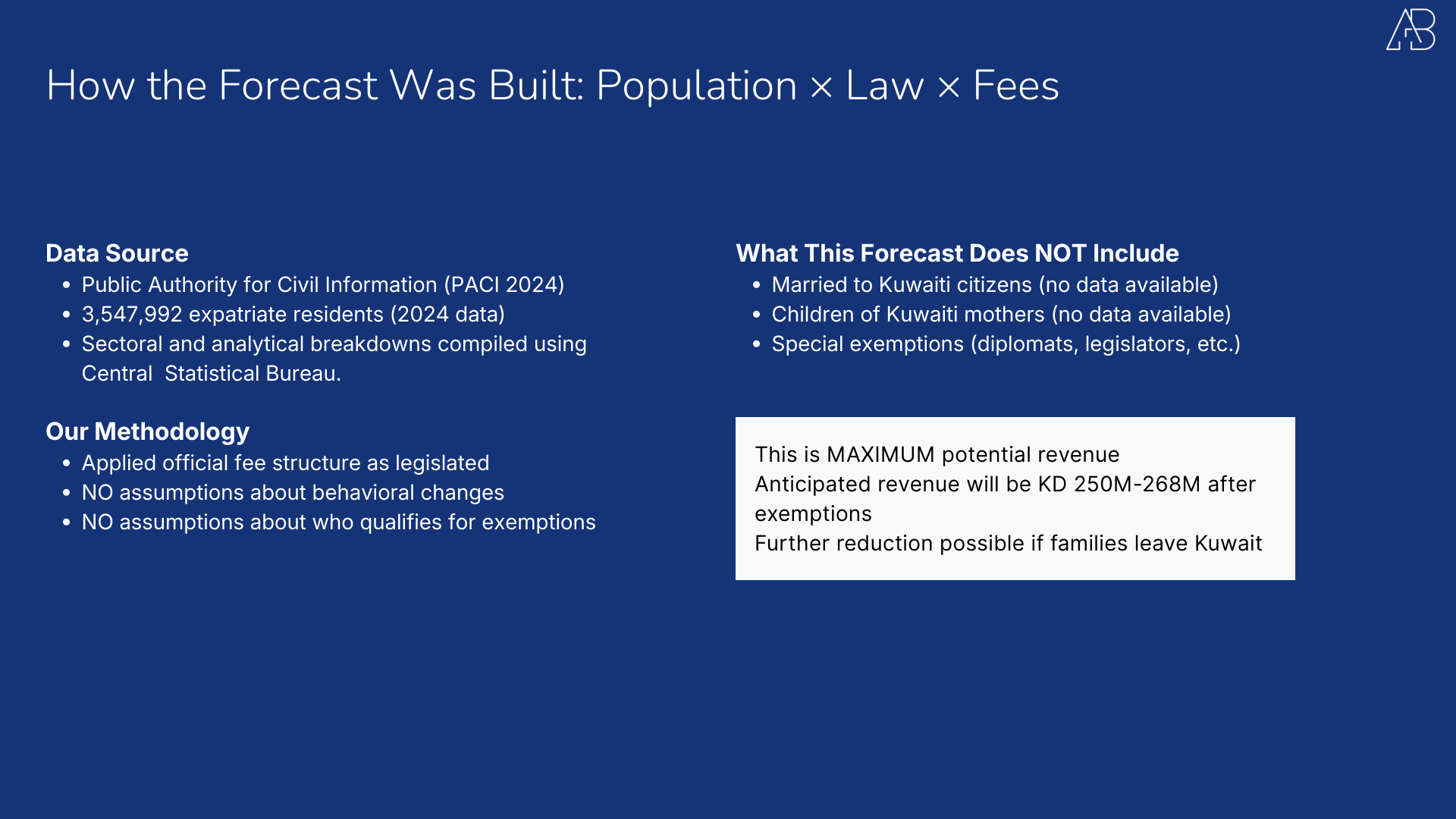
Our analysis draws on official PACI (Public Authority for Civil Information) 2024 data covering 3,547,992 expatriate residents, with sectoral breakdowns compiled using the Central Statistical Bureau.
Our methodology applied the official fee structure as legislated, with no assumptions about behavioral changes or exemption qualifications. This produces a maximum potential revenue figure. Anticipated revenue will be KD 250-268 million after exemptions, with further reduction possible if families leave Kuwait.
Four Pillars That Redefine the System
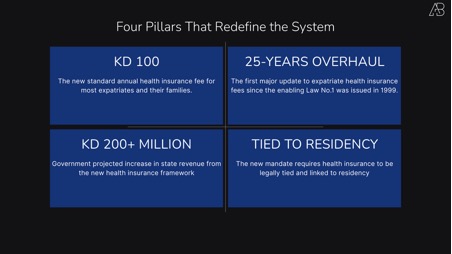
The reform rests on four interconnected pillars:
• KD 100: The new standard annual health insurance fee for most expatriates and their families
• 25-Year Overhaul: The first significant update since Law No.1 was issued in 1999
• KD 200+ Million: Government projected increase in state revenue
• Tied to Residency: Health insurance is now legally linked to residency status
The Headline Numbers

The new fee structure eliminates the complexity of the old system:
Before: Primary sponsor paid KD 50, spouse KD 40, each child under 18 KD 30.
After: Everyone pays KD 100. No age distinctions. No relationship discounts.
Who pays KD 100? Government sector employees, private sector employees, family dependents, investors and partners, students, self-sponsored residents, foreign property owners, including former illegal residents with foreign passports, and foreign religious workers.
Strategic Exemptions Are a Feature, Not a Loophole
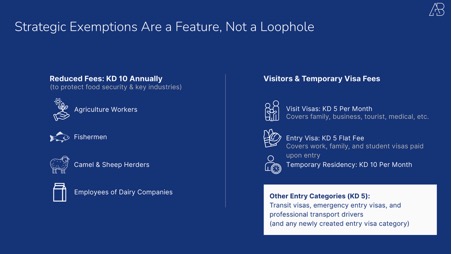
Reduced Fees (KD 10 annually): Agriculture workers, fishermen, camel & sheep herders, and employees of dairy companies, protecting food security and key industries.
Visitor & Temporary Visa Fees: Visit visas KD 5/month, entry visas KD 5 flat fee, temporary residency KD 10/month, transit and emergency entry visas KD 5.
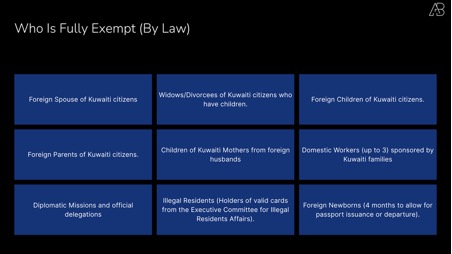
Full exemptions apply to: Foreign spouses of Kuwaiti citizens, widows/divorcees of Kuwaitis with children, foreign children and parents of Kuwaiti citizens, children of Kuwaiti mothers from foreign husbands, domestic workers (up to 3) sponsored by Kuwaiti families, diplomatic missions, illegal residents with valid cards from the Executive Committee, and foreign newborns (4-month grace period).
Maximum potential government revenue? KD 268 million annually, up from KD 111.9 million in 2025. That's a possible increase of KD 156.1 million, assuming no behavioral changes.
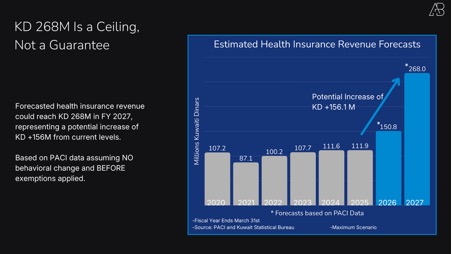
But here's the catch: that KD 268 million figure assumes everyone stays. And that assumption deserves scrutiny.
The Population Base: 3.55 Million Expatriates
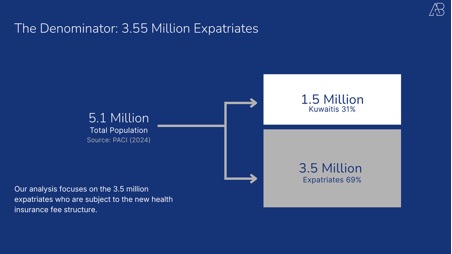
Kuwait's total population stands at 5.1 million. Of this, 1.55 million are Kuwaiti citizens (31%) and 3.55 million are expatriates (69%). Our analysis focuses entirely on the expatriate population subject to the new fee structure.
Where the Money Actually Comes From
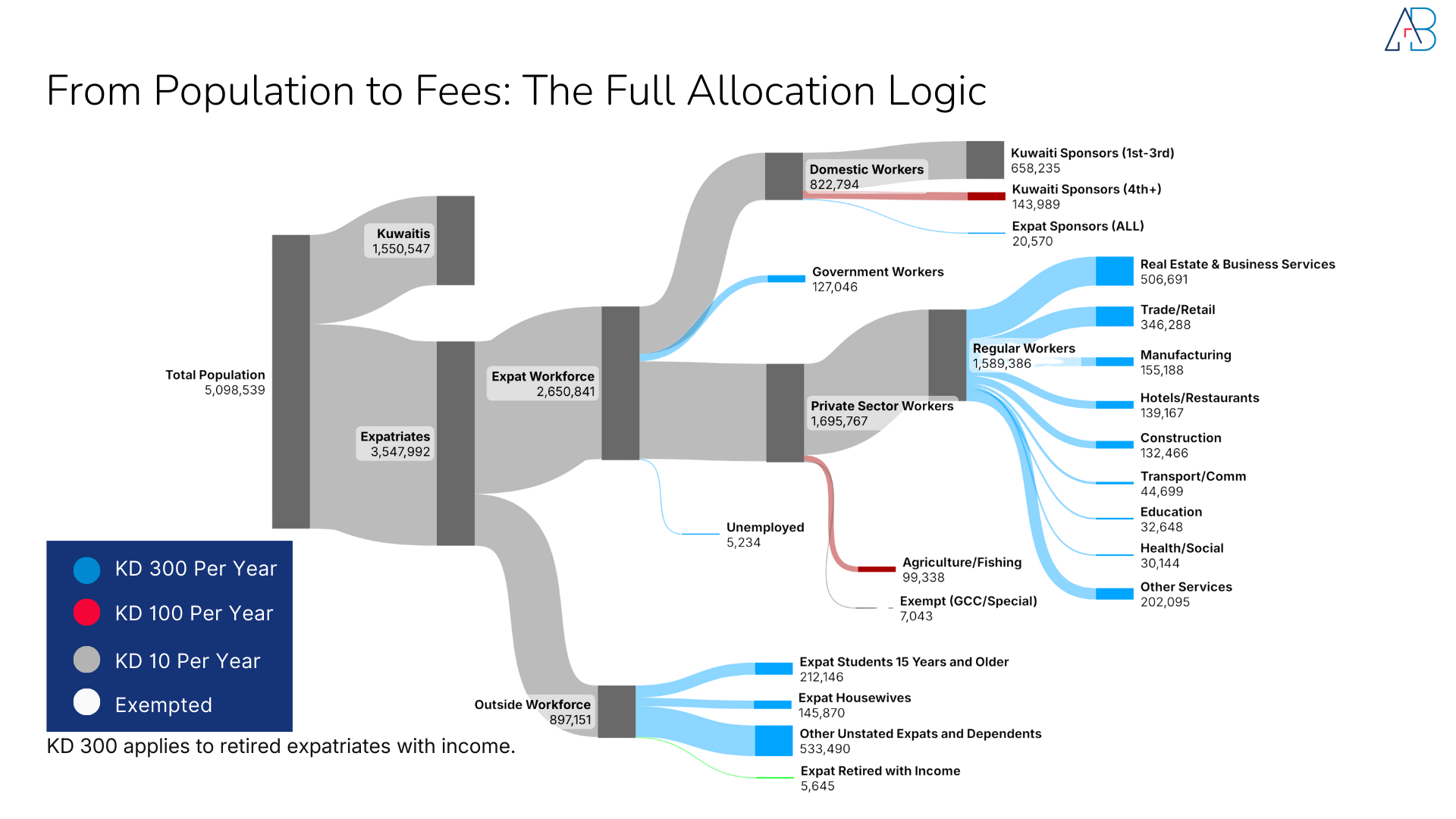
When you break down the revenue sources, the picture becomes clearer:
Workers Are the Revenue Engine
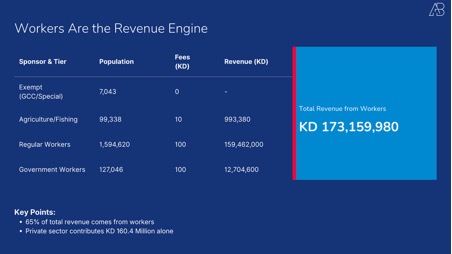
Private sector workers contribute 60% of projected revenue (KD 160.4 million). This includes regular private-sector workers (KD 159.5M) plus agriculture/fisheries (≈KD 1.0M). This is the stable base, people with jobs, tied to employers, unlikely to leave over a KD 50 annual increase.
Government sector workers add another 5% (KD 12.7 million). Similarly stable.
Agriculture/Fishing workers pay only KD 10 each, contributing KD 993,380 (less than 1% of total).
Domestic Workers: Political Sensitivity, Minimal Revenue
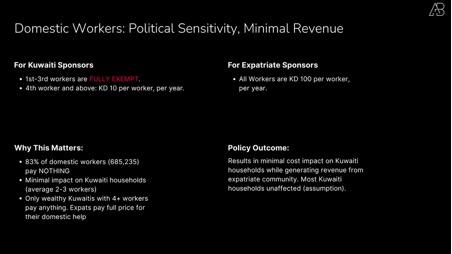
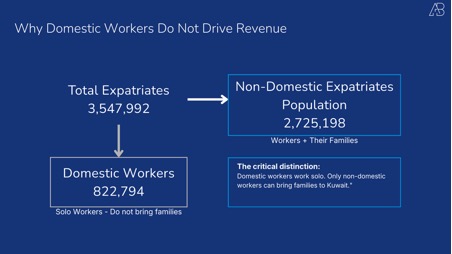
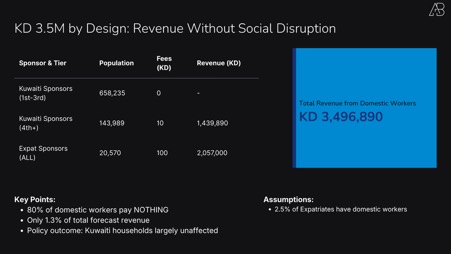
Domestic workers contribute just 1.3% (KD 3.5 million). Why so little?
For Kuwaiti sponsors: The first three domestic workers are FULLY EXEMPT. Only the 4th worker and beyond pays KD 10 per year.
For expatriate sponsors: ALL workers pay KD 100 per year.
80% of domestic workers (658,235) pay NOTHING. Only wealthy Kuwaitis with 4 or more workers pay anything. The policy outcome: minimal cost impact on Kuwaiti households and revenue generated from the expatriate community.
Dependents: The Swing Variable
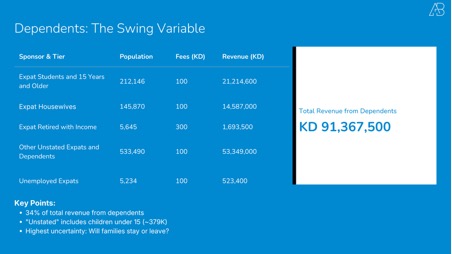
Dependents, including spouses, children, students, and housewives, account for 34% (KD 91.3 million). This is where the uncertainty lives.
The breakdown: Expat students 15+ (KD 21.2M), expat housewives (KD 14.6M), expat retired with income at KD 300/year (KD 1.7M), other unstated expats and dependents, including ~379K children under 15 (KD 53.3M), unemployed expats (KD 0.5M).
Highest uncertainty: Will families stay or leave?
Building to KD 268M: The Complete Picture

The revenue waterfall: Private Sector Workers +KD 159.5M (59.7%) → Government Workers +KD 12.7M (4.7%) → Agriculture/Fisheries +KD 1M → Domestic 4th+ +KD 1.4M → Domestic Expat +KD 2.1M → All Dependents +KD 91.3M (34%) = KD 268 Million Total
The Family Math Changes Everything
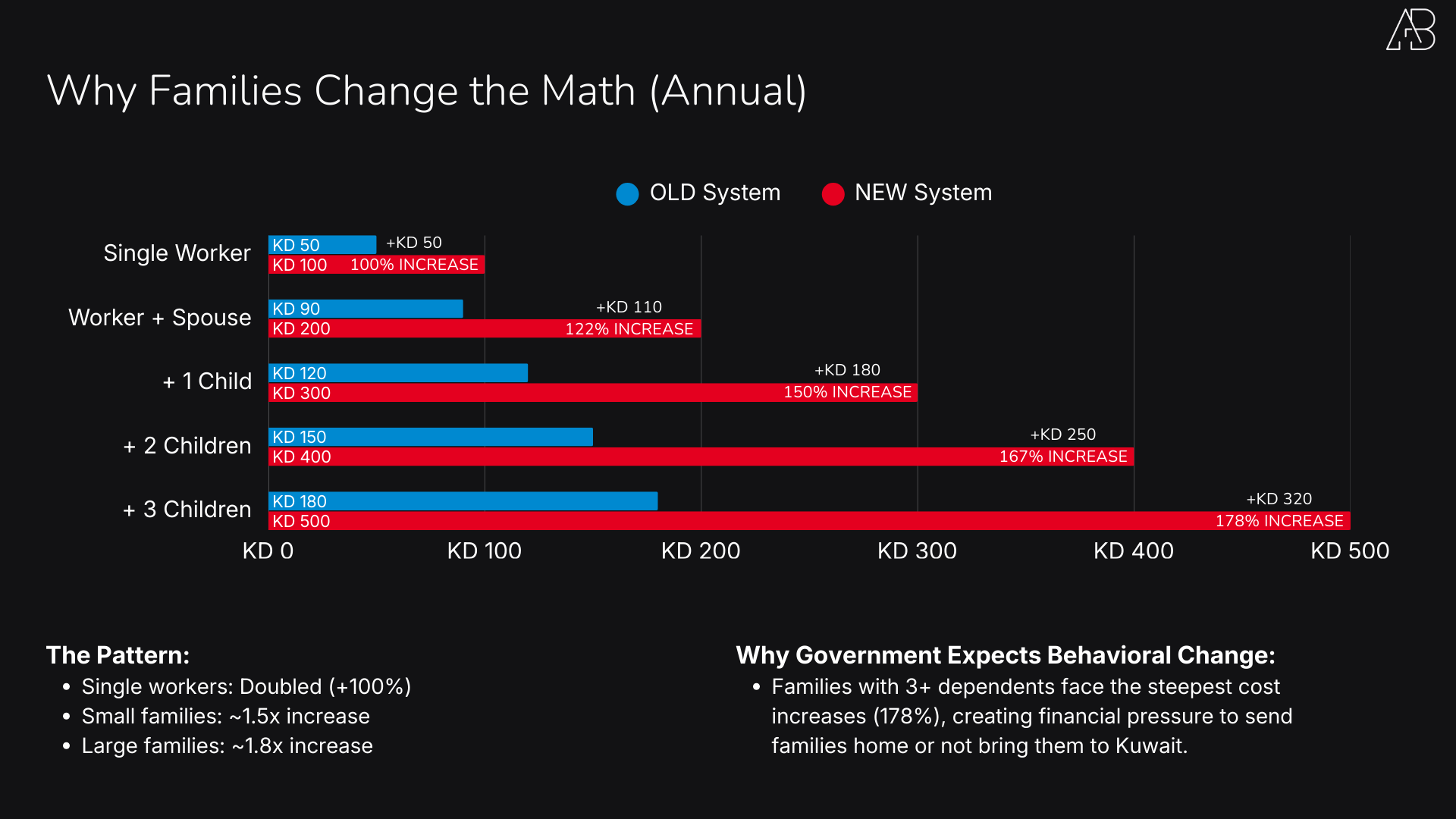
For a single worker, the increase is manageable: KD 50 becomes KD 100. A 100% increase, yes, but still just KD 50 more per year.
For families, the math compounds quickly:
• Single Worker: KD 50 → KD 100 (+100%)
• Worker + Spouse: KD 90 → KD 200 (+122%)
• + 1 Child: KD 120 → KD 300 (+150%)
• + 2 Children: KD 150 → KD 400 (+167%)
• + 3 Children: KD 180 → KD 500 (+178%)
The pattern is clear: larger families face the steepest percentage increases. A family of five now pays KD 500 annually, up from KD 180. That's an additional KD 320 per year.
For mid-income families already managing school fees, rent, and cost of living, this creates real financial pressure. The question isn't whether the reform will cause some families to reconsider their presence in Kuwait; it's how many.
Direct Consequences for Employers and Families
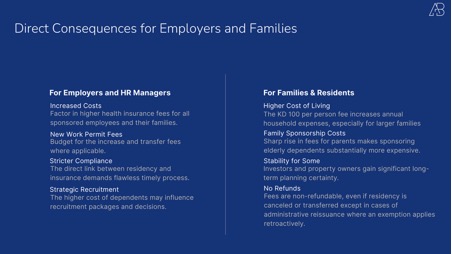
For Employers and HR Managers: Factor in higher health insurance fees for all sponsored employees and their families. Budget for the increase and, where applicable, transfer fees. The direct link between residency and insurance demands flawless, timely processing. The higher cost of dependents may influence recruitment packages and decisions.
For Families & Residents: The KD 100 per person fee increases annual household expenses, especially for larger families. Sharp rise in costs for parents makes sponsoring elderly dependents substantially more expensive. Investors and property owners gain significant long-term planning certainty. Fees are non-refundable, even if residency is canceled or transferred, except in cases of administrative reissuance where an exemption applies retroactively.
What This Means for Employers
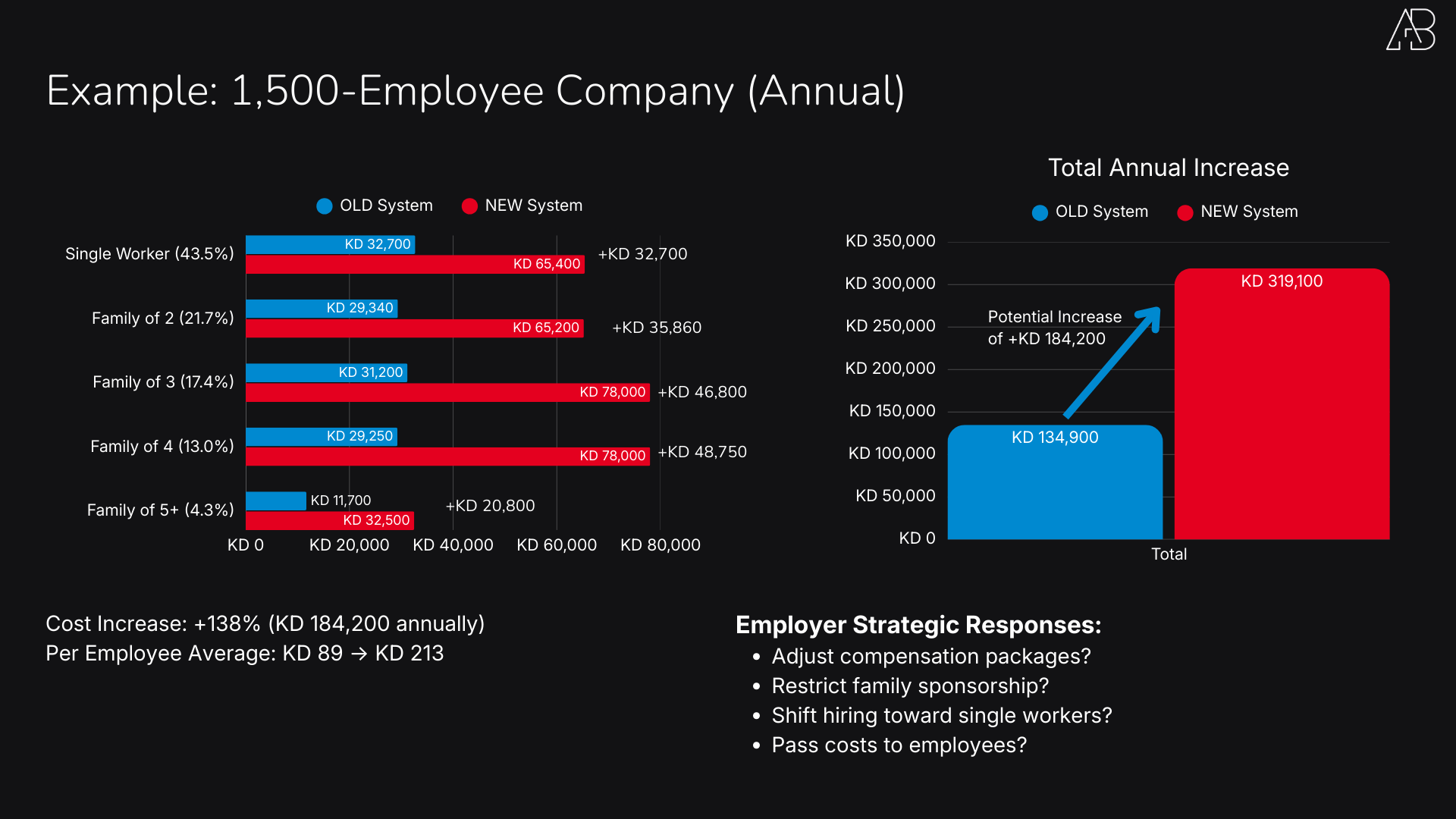
Let's make this concrete. Consider a company with 1,500 expatriate employees. Using typical family distribution patterns in Kuwait:
• Old annual health insurance cost: KD 134,900
• New annual cost: KD 319,100
• Increase: KD 184,200 (+138%)
Per employee, that's an average jump from KD 89 to KD 213 annually.
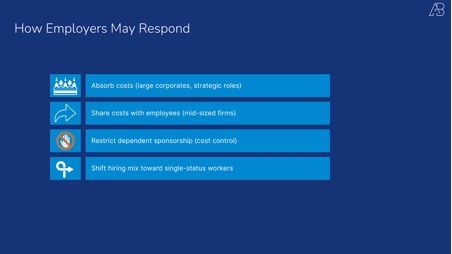
How will companies respond? We see four likely strategies:
1. Absorb costs entirely (large corporates, strategic roles)
2. Share costs with employees (mid-sized firms, negotiated arrangements)
3. Restrict dependent sponsorship (cost control measure)
4. Shift hiring toward single-status workers (long-term workforce composition change)
The third and fourth options have demographic implications that extend beyond individual companies.
Industry Impact Is Uneven
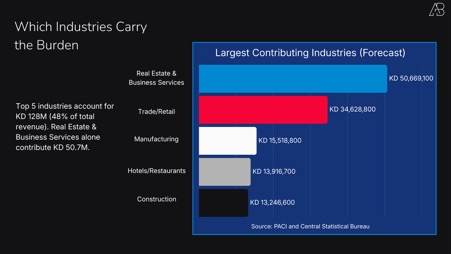
Not all sectors face an equal burden. Based on PACI workforce data, the top 5 industries account for KD 128M (48% of total revenue):
• Real Estate & Business Services: KD 50.7M
• Trade/Retail: KD 34.6M
• Manufacturing: KD 15.5M
• Hotels/Restaurants: KD 13.9M
• Construction: KD 13.2M
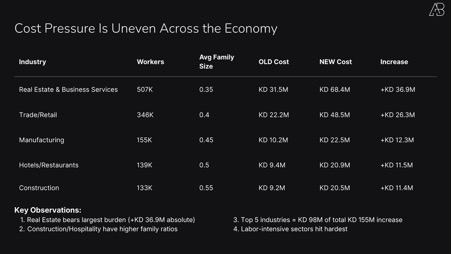
Looking at cost increases rather than total contributions:
• Real Estate & Business Services: +KD 36.9M
• Trade/Retail: +KD 26.3M
• Manufacturing: +KD 12.3M
• Hotels/Restaurants: +KD 11.5M
• Construction: +KD 11.4M
Construction and hospitality sectors, already navigating significant structural challenges, face proportionally steeper increases due to higher average family ratios among workers. Labor-intensive sectors operating on thin margins are hit hardest.
The Business Community Response
Public statements reported in local media reflect a range of concerns.
Economists have highlighted the challenge for companies tied to government tenders. Those with existing contractual obligations can't simply pass increased costs to clients. They're caught between fixed revenue and rising expenses.
Real estate sector leaders have acknowledged the government's right to adjust fees while cautioning that some expatriates "may think about alternatives or even leave the country."
Why the State Is Doing This
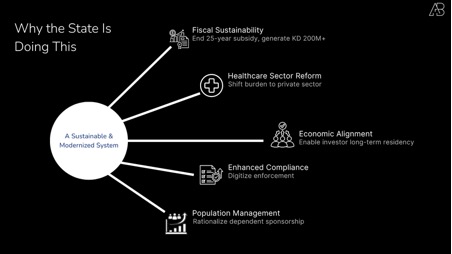
The reform serves five strategic objectives:
1. Fiscal Sustainability: End 25-year subsidy, generate KD 200M+
2. Healthcare Sector Reform: Shift burden to private sector
3. Economic Alignment: Enable investor long-term residency
4. Enhanced Compliance: Digitize enforcement
5. Population Management: Rationalize dependent sponsorship
What We Don't Know
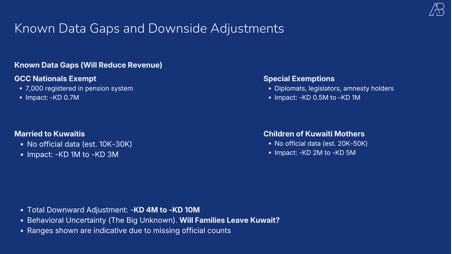
Our analysis is built on PACI data and official fee structures. But several factors could significantly affect actual outcomes:
Exemption populations we can't quantify:
• GCC Nationals Exempt: ~7,000 registered in pension system (-KD 0.7M)
• Married to Kuwaitis: No official data, est. 10K-30K (-KD 1M to -KD 3M)
• Children of Kuwaiti Mothers: No official data, estimated. 20K-50K (-KD 2M to -KD 5M)
• Special Exemptions: Diplomats, legislators, amnesty holders (-KD 0.5M to -KD 1M)
Total Downward Adjustment: -KD 4M to -KD 10M
Behavioral response: Will families leave? Will workers stop bringing dependents? Will some choose other GCC destinations? No predictive model captures human decision-making under financial pressure.
Quality of care: The reform ties health insurance to residency (no insurance = no visa renewal). But will the healthcare experience improve proportionally to the fee increase? That remains to be seen.
The Bigger Picture: One Control System, Not Multiple Policies
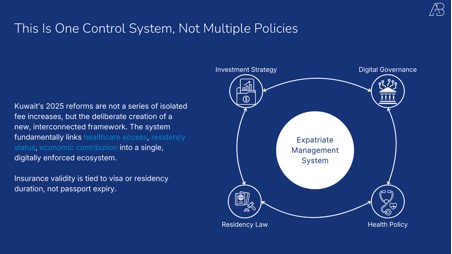
Kuwait's 2025 reforms are not a series of isolated fee increases, but the deliberate creation of a new, interconnected Expatriate Management System. The system fundamentally links:
• Healthcare access
• Residency status
• Economic contribution
...into a single, digitally enforced ecosystem.
Insurance validity is tied to visa or residency duration, not passport expiry. Compliance is enforced automatically; there is no insurance, no renewal.
For businesses operating in Kuwait, this signals a direction. Expatriate-related costs are rising. The regulatory framework is tightening. Planning assumptions from as far back as two years ago need revision.
For expatriate families, it's a cost-of-living calculation that just changed. Kuwait remains an attractive destination for many reasons. But the financial equation now includes an additional KD 250-400 annually for a typical family, on top of whatever healthcare costs the insurance doesn't fully cover.
What the Data Actually Tells Us
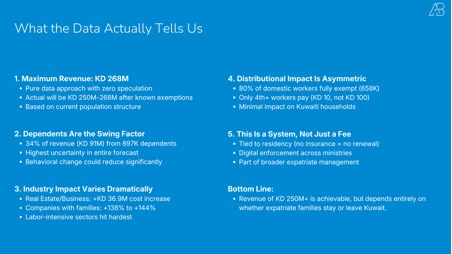
1. Maximum Revenue: KD 268M. Pure data approach with zero speculation. Based on current population structure.
2. Dependents Are the Swing Factor. 34% of revenue (KD 91M) from 897K dependents. Highest uncertainty in entire forecast.
3. Industry Impact Varies Dramatically. Real Estate/Business: +KD 36.9M cost increase. Labor-intensive sectors hit hardest.
4. Distributional Impact Is Asymmetric. 80% of domestic workers fully exempt. Minimal impact on Kuwaiti households.
5. This Is a System, Not Just a Fee. Tied to residency. Digital enforcement. Part of broader expatriate management.
Our Take
The KD 268 million maximum is a ceiling, not a guarantee. After exemptions and likely behavioral adjustments, anticipated revenue will be KD 250-268 million. Still a significant increase. Still a meaningful policy shift.
The structure generates revenue while resulting in minimal direct cost impact on Kuwaiti households. On those terms, it is likely to meet its fiscal objective. The question is whether the secondary effects, on talent attraction, family demographics, and business competitiveness, outweigh the fiscal benefits.
We'll be watching the PACI data closely over the coming quarters. The numbers will tell the story.
What Happens Next Depends on Human Behavior

For Employers:
• Budget for 100-150% health insurance cost increases
• Reassess recruitment strategies (single vs. family)
• Review compensation packages for family workers
• Plan for FY 2026/27 implementation
For Expatriate Families:
• Expect KD 300/year in insurance fees for typical family of 3
• Parent sponsorship now KD 300 per person
• Consider impact on long-term Kuwait plans
• No refunds if you cancel residency
The Uncertainty Factor: This reform will test whether economic pressure changes expatriate family behavior. The KD 200M vs KD 268M question will be answered by human choices, not spreadsheets.
The reform prices healthcare for expatriates. For citizens, health remains one line in a far larger lifetime package: KD 344,554 of the KD 2.16 million in net public support per household that we modelled in The Kuwaiti Dream, Priced.
At Ali Bahbahani & Partners, we help businesses navigate regulatory changes, optimize operations, and build resilient strategies for Kuwait's evolving landscape. If your organization needs to quantify the impact of these reforms on workforce costs, family sponsorship policies, or recruitment strategy, reach out to us.