
GCC Airline Mobile Bookings: Revenue Case Study
In the fast-evolving airline industry, maximizing mobile and web booking revenue is no longer optional; it’s essential. With soaring online booking abandonment rates and the growing dominance of mobile-first travellers, airlines must refine their digital booking experiences to convert lookers into bookers. This case study delves into the booking strategies of thirteen GCC airlines, analyzing their user experience, upselling tactics, loyalty integrations, and overall mobile responsiveness. By uncovering best practices and common pitfalls, we provide actionable insights to help airlines optimize their digital sales funnel, enhance ancillary revenue, and elevate customer engagement.
%20(3).avif)
Services: Customer Journey Audit, Digital CX Optimization
Introduction
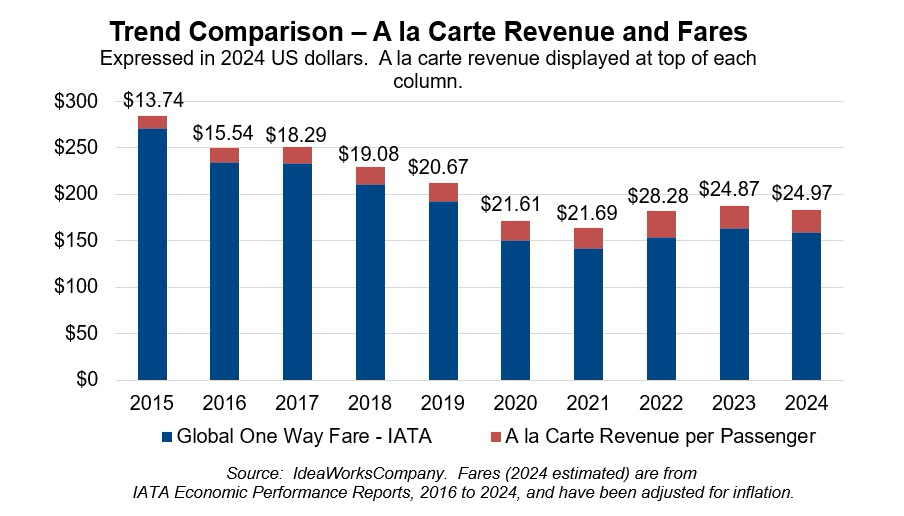
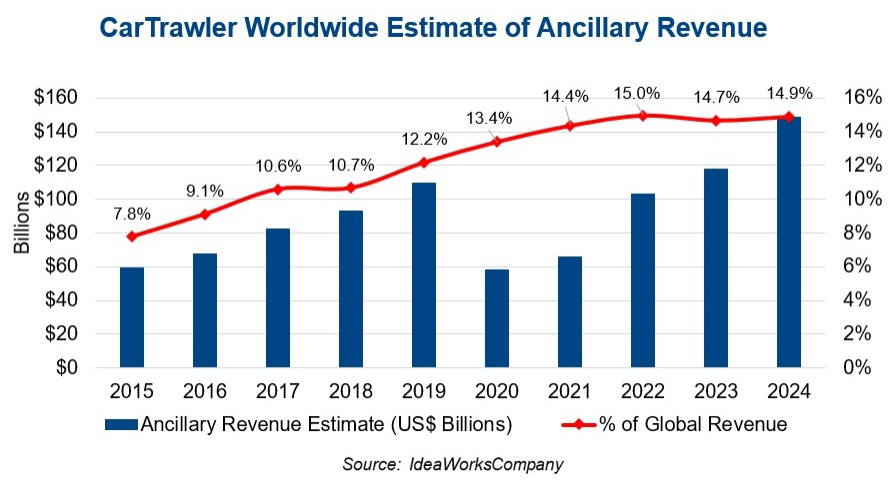
Booking abandonment rates on airline sites run at 80% or higher across the industry. Every extra step in the flow pulls that number up. Carriers that get upselling right, seat selection, baggage, meals, insurance, lounge access, now pull 40–50% of total revenue from ancillaries.
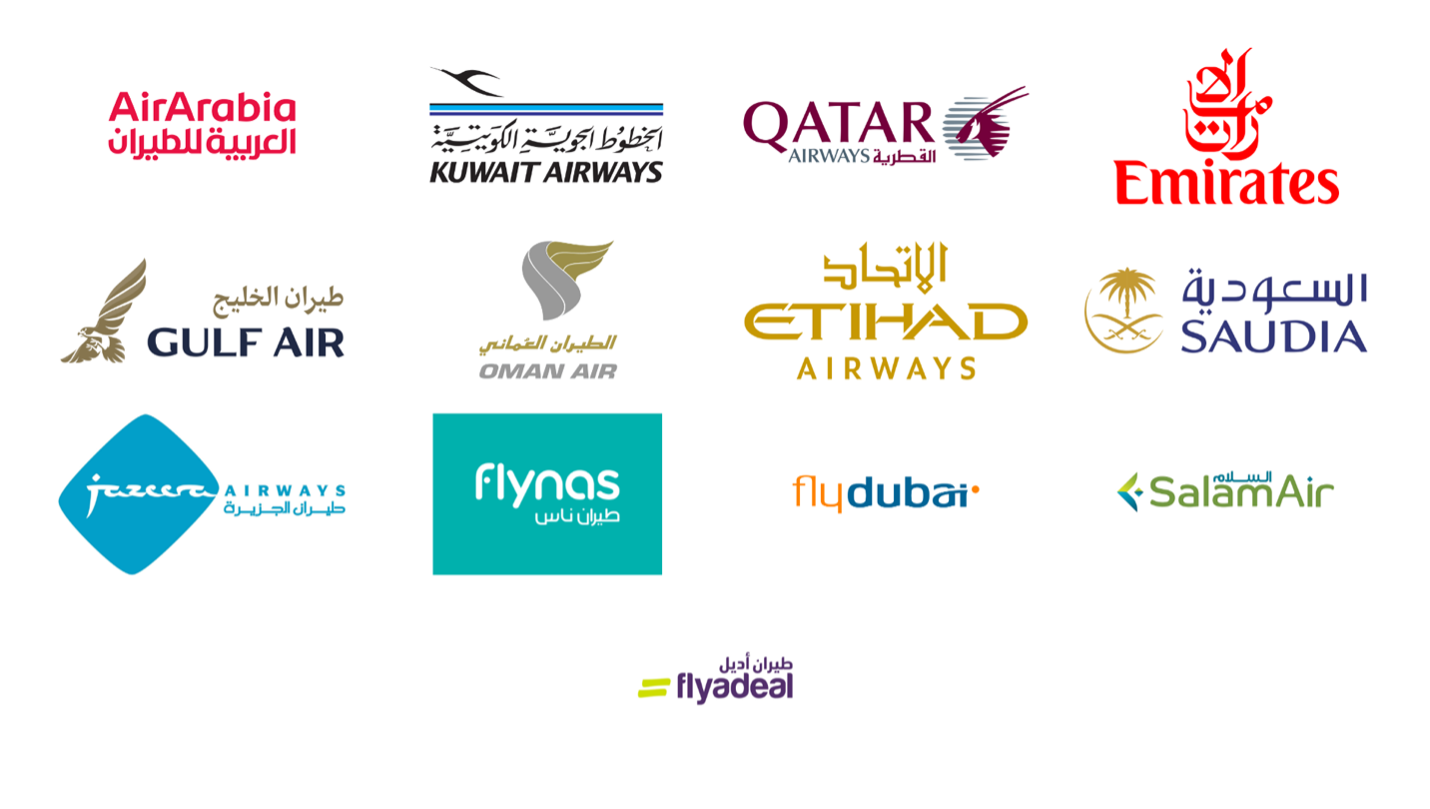
We reviewed thirteen GCC and regional airlines on mobile. The question was simple: how many of them have actually built for the device most of their customers use to book.
We looked at four things for each carrier:
- Booking flow length, from search to payment
- Upsell mechanics for seats, baggage, meals, and stopovers
- Loyalty prompts and data capture
- Responsive design and friction points
Four Things We Saw Across the Region
1. Booking Flow Length
Most carriers run 5 to 7 screens. Low-cost carriers like flynas, SalamAir, and flyadeal carry an extra step or two to push ancillaries. Full-service carriers including Qatar, Emirates, and Etihad stay tight at 5 to 6 screens while still embedding premium cross-sells such as Doha Stopover or Chauffeur Drive.
2. Upselling
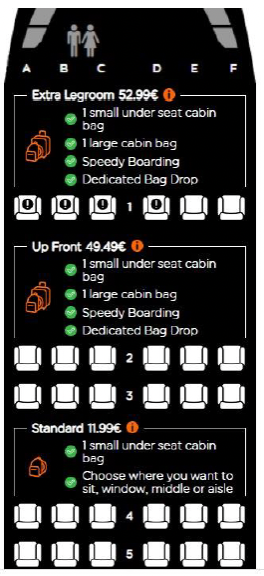
Colour-coded fare bundles (Basic, Flex, Premium) work well. Travellers see seat and baggage trade-offs immediately. flyadeal and Jazeera Airways do this cleanly. Dynamic pricing and in-path upgrades remain underused across the region. Qatar Airways offers seat-fee discounts for loyalty members, which is closer to the model easyJet has been refining for years. Hotels, tours, and stopovers show up mostly in the premium carriers.
3. Loyalty and Email
Qatar, Emirates, Etihad, and Saudia put loyalty inside the booking flow. Miles potential or partial redemption shows up at the right moments. flydubai and flynas mention loyalty but soft-pedal it. SalamAir and Jazeera barely surface it. Saudia and flynas send abandonment emails. That single tool typically recaptures 10–15% of lost bookings.
4. UI and Friction
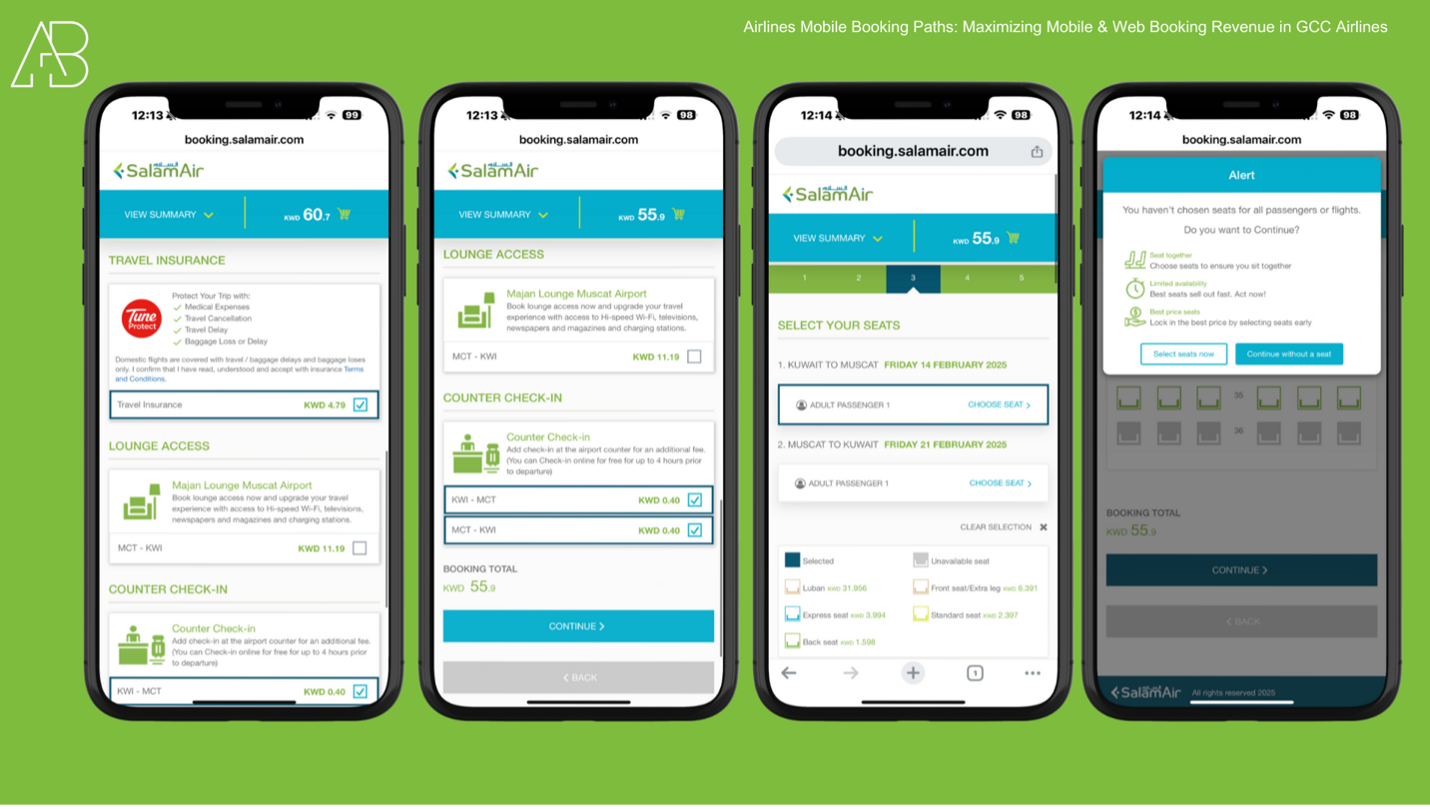
Fare hold (flydubai, Emirates) converts hesitant buyers. SalamAir and flynas overload the user with multiple add-on pop-ups in sequence, when one consolidated page would convert better. Seat maps stay underused as a second upsell moment. easyJet treats the seat map as a place to offer one more fare upgrade. Most GCC carriers treat it as data entry.
Carrier-by-Carrier Review
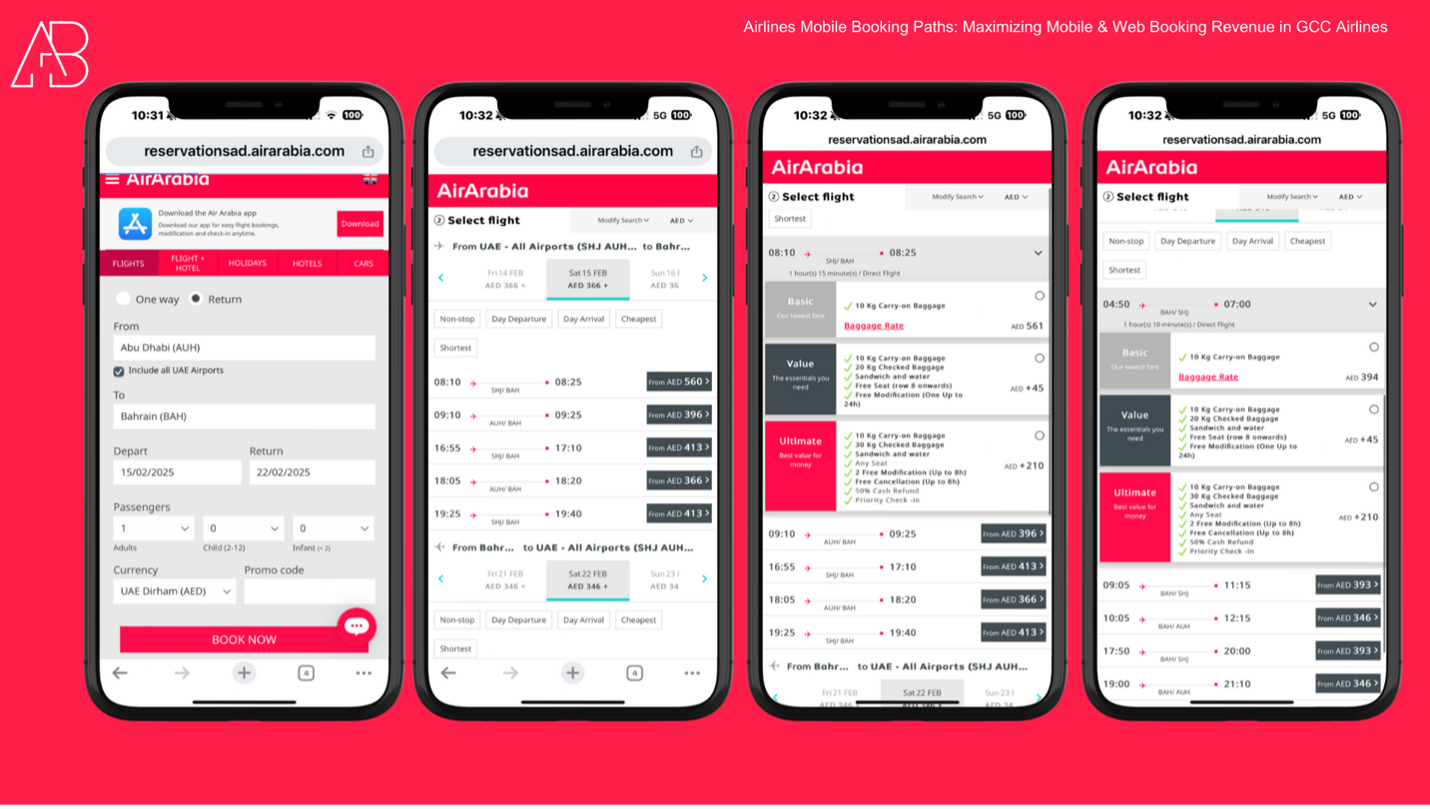
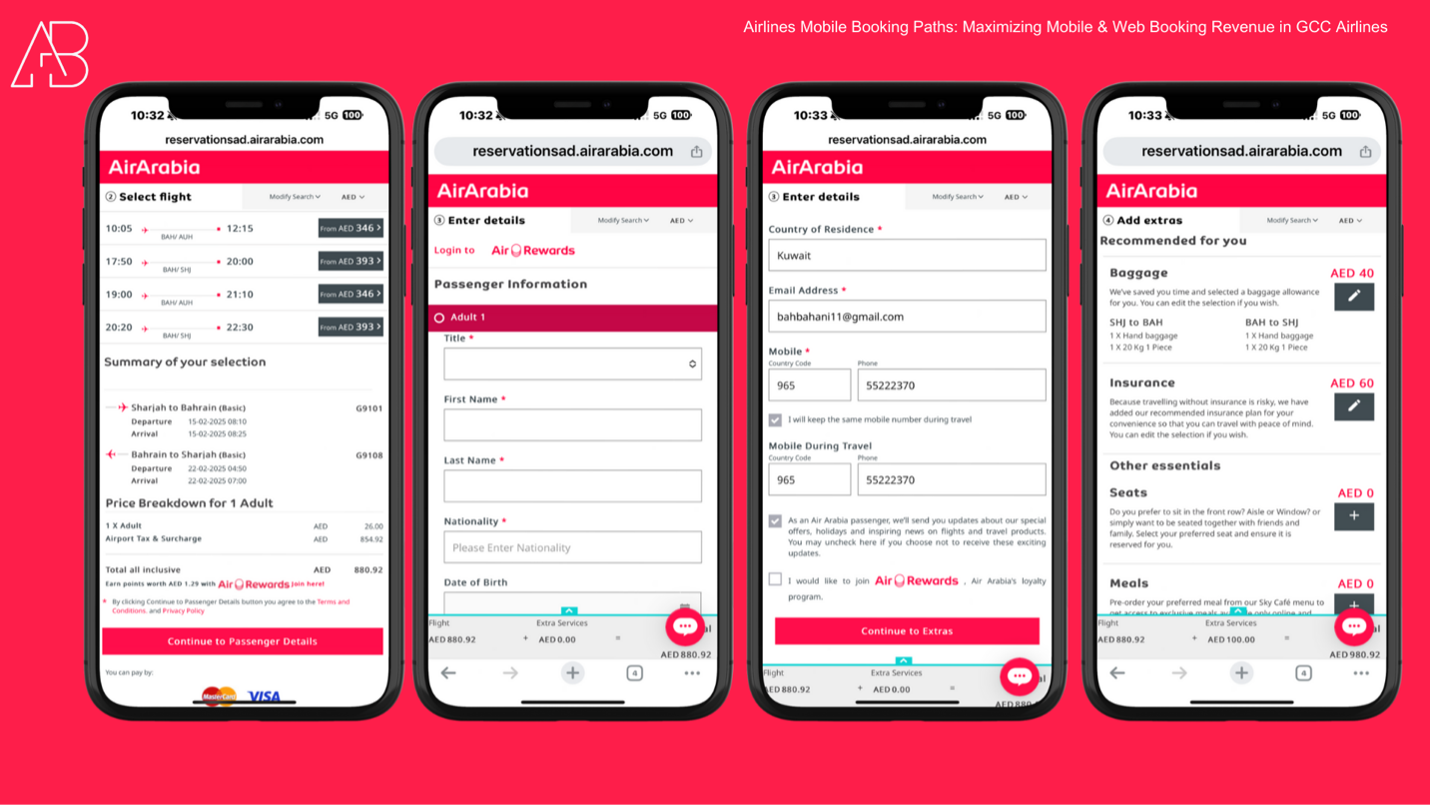
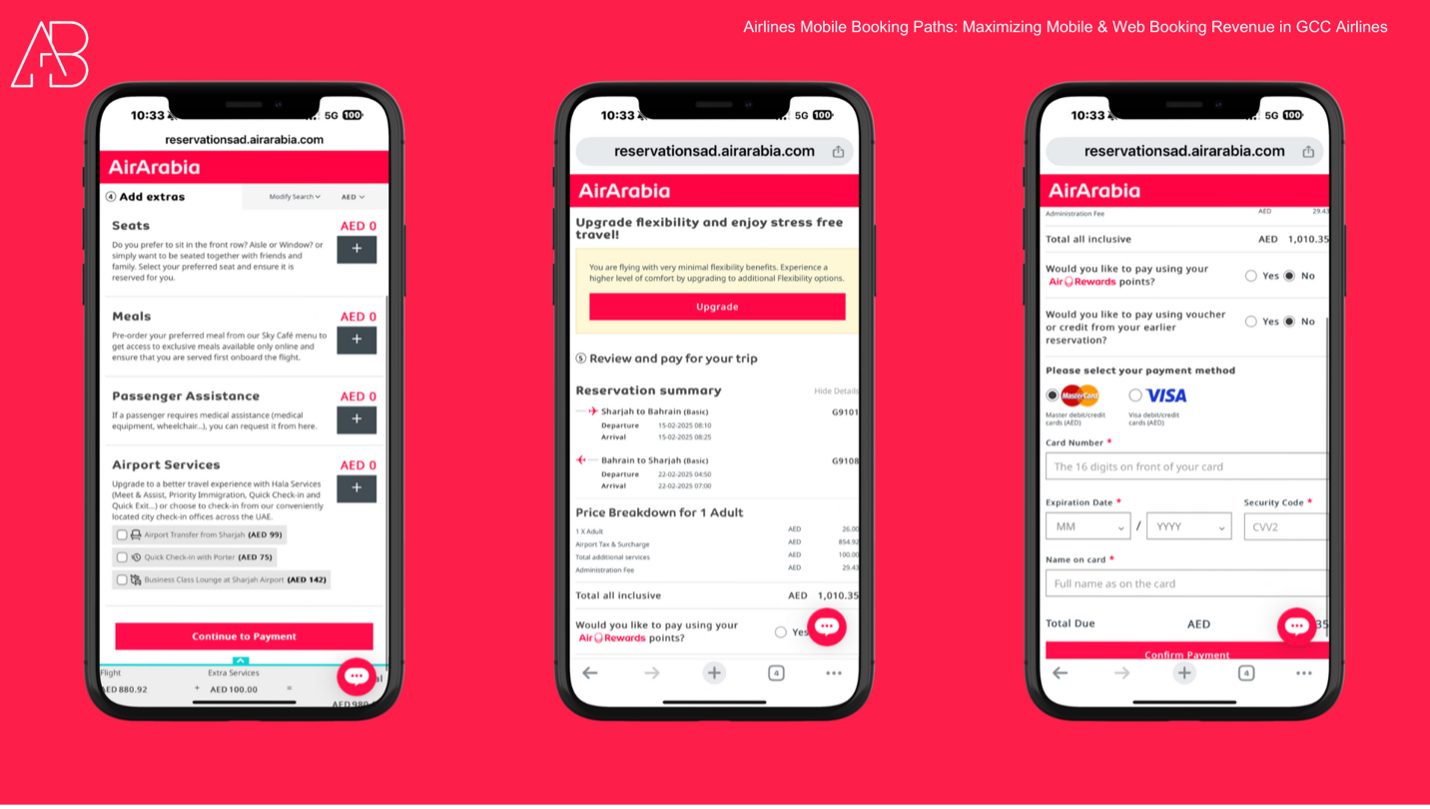
1. Air Arabia
- Flow: 5–6 steps. Clean.
- Upsells: Basic, Value, Ultimate fare families. Limited personalisation.
- Loyalty: No frequent flyer programme. Basic data capture.
- What would help: Fare hold. A loyalty or repeat-booker programme.
2. Kuwait Airways
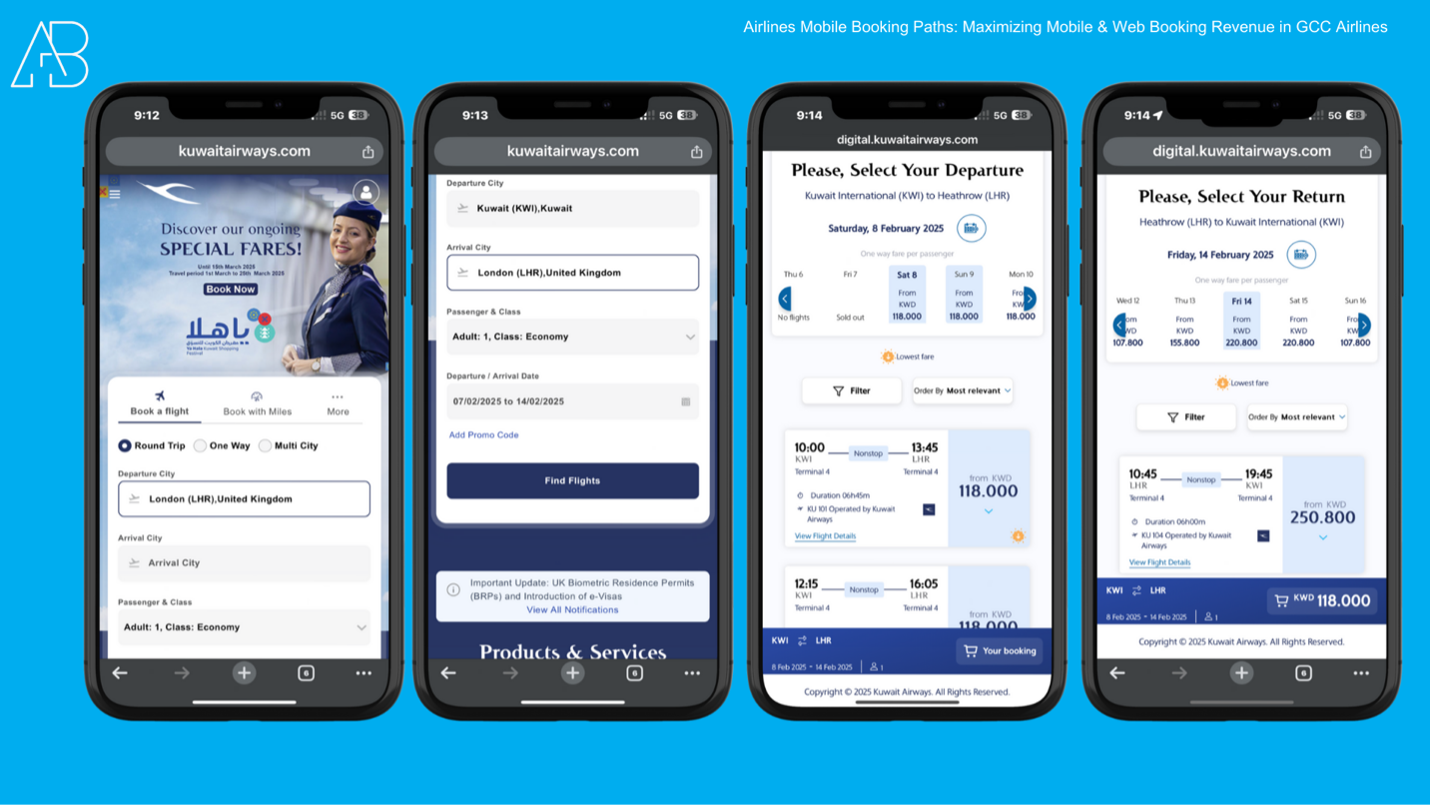
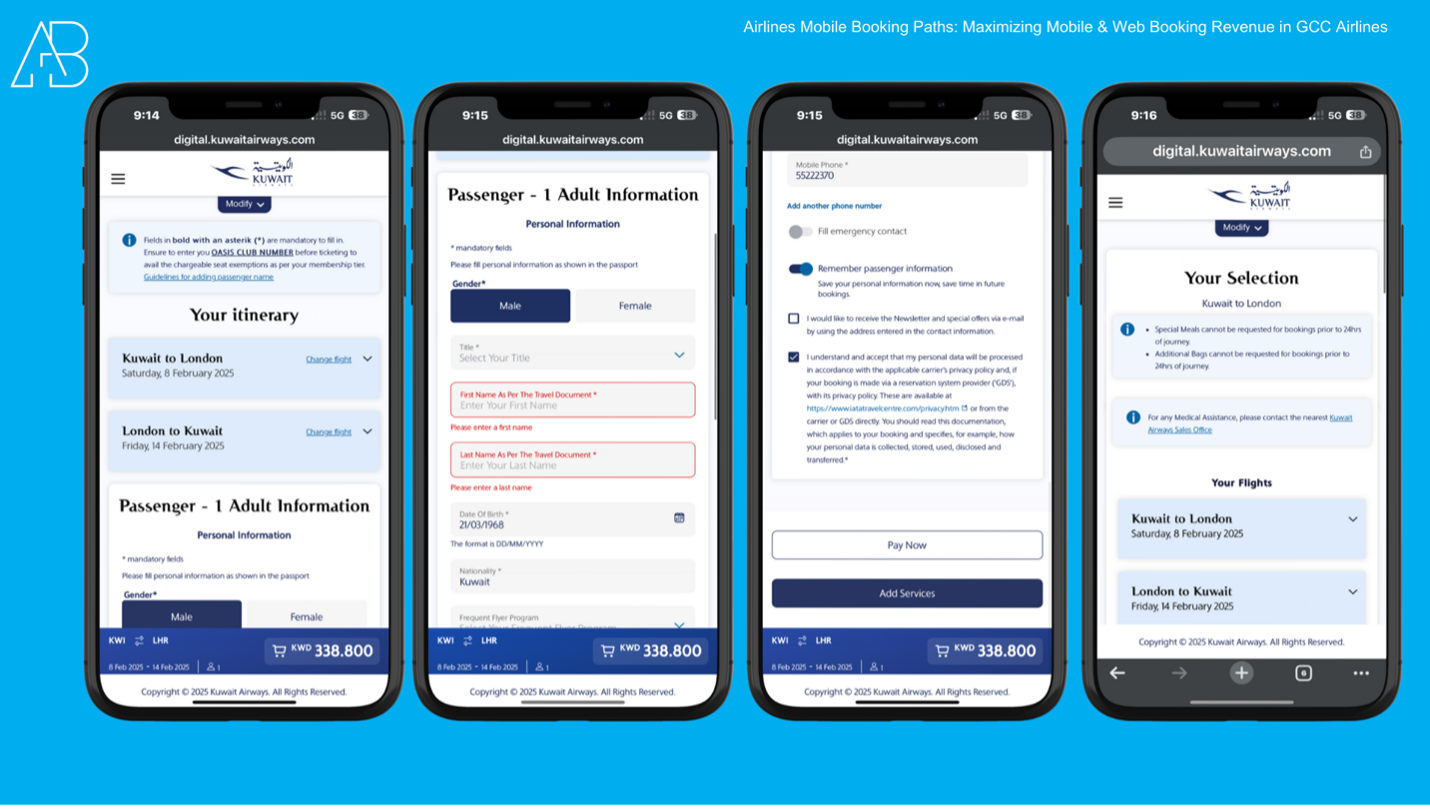
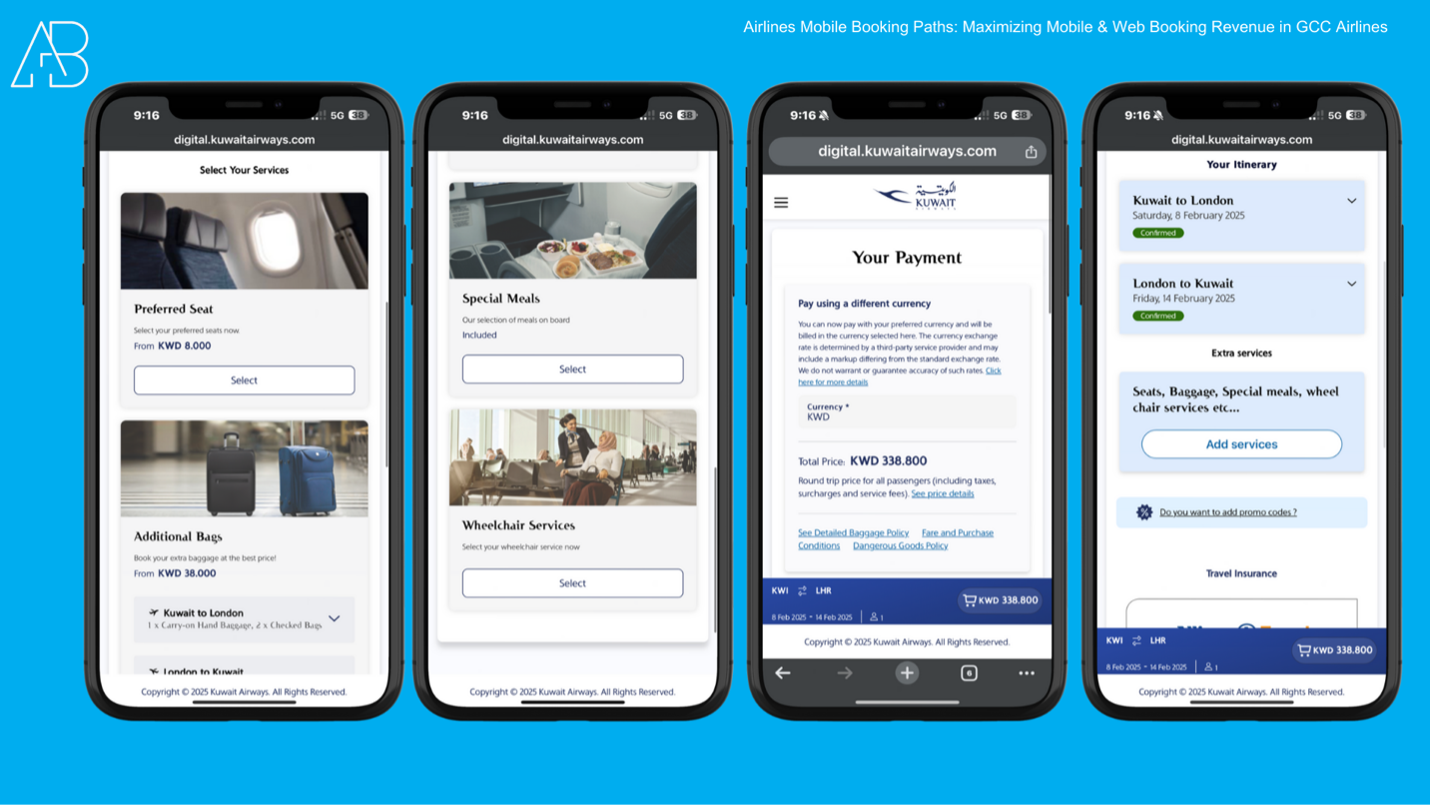
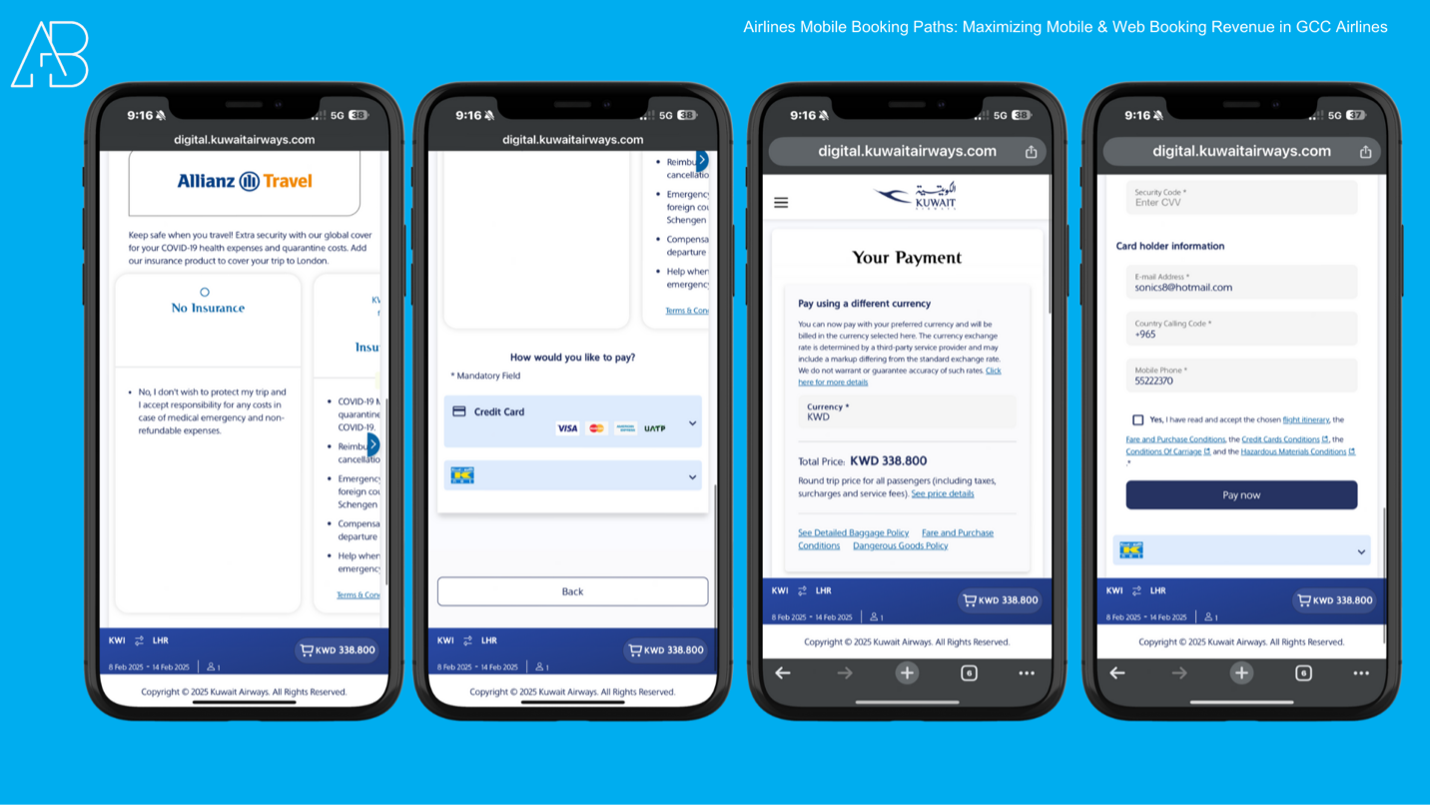
- Flow: 6–7 steps. Slightly long.
- Upsells: "Just Upgrade" bid for business. Seat fees. Bundled ancillaries are weak.
- Loyalty: Oasis Club prompt is too quiet. No clear member benefits surfaced in the flow. KNET supported. No Apple Pay, Google Pay, or PayPal.
- What would help: Consolidate seat and baggage on one screen. Add a fare calendar for price-flexible bookers.
Explore our case study for an in-depth analysis of Kuwait Airways' customer experience.
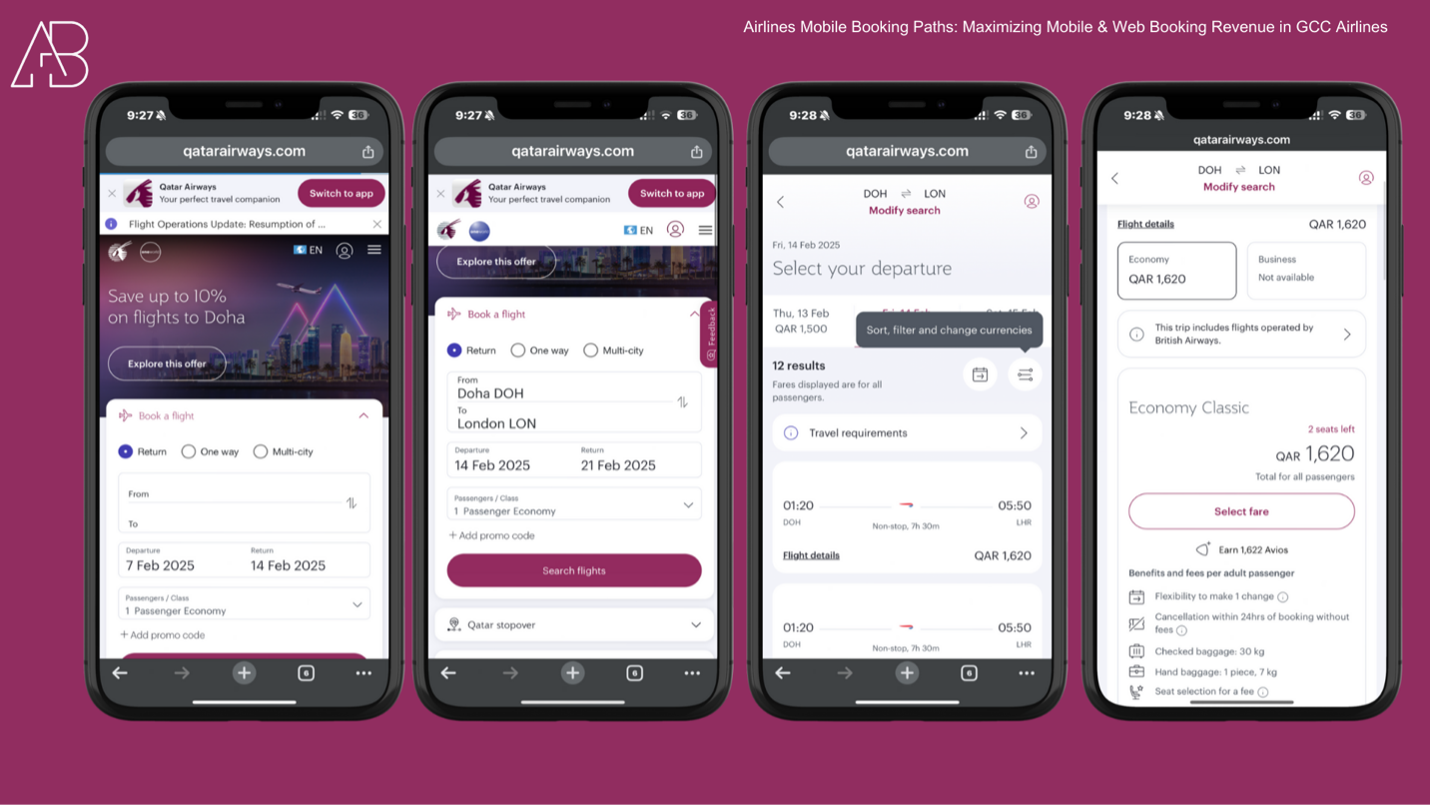
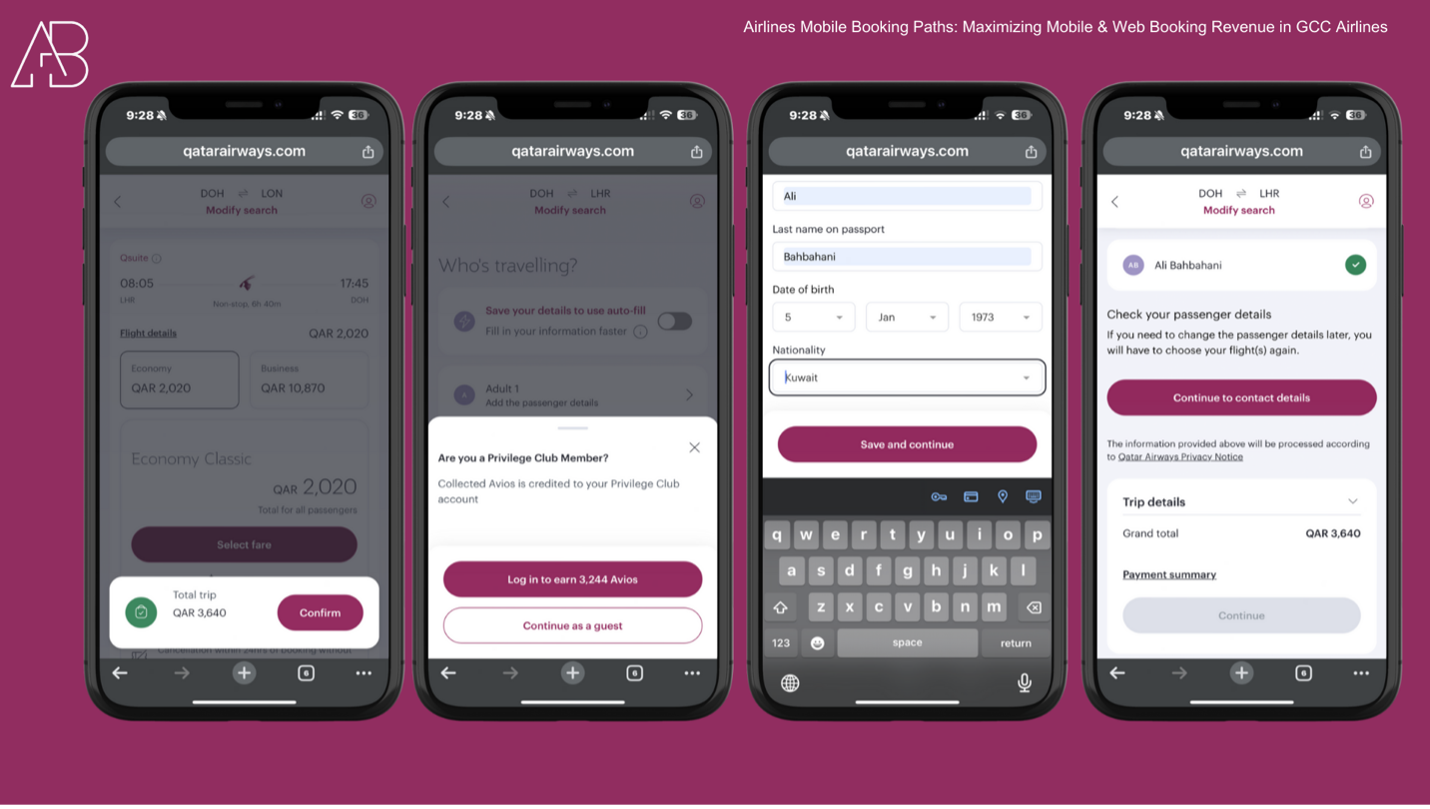
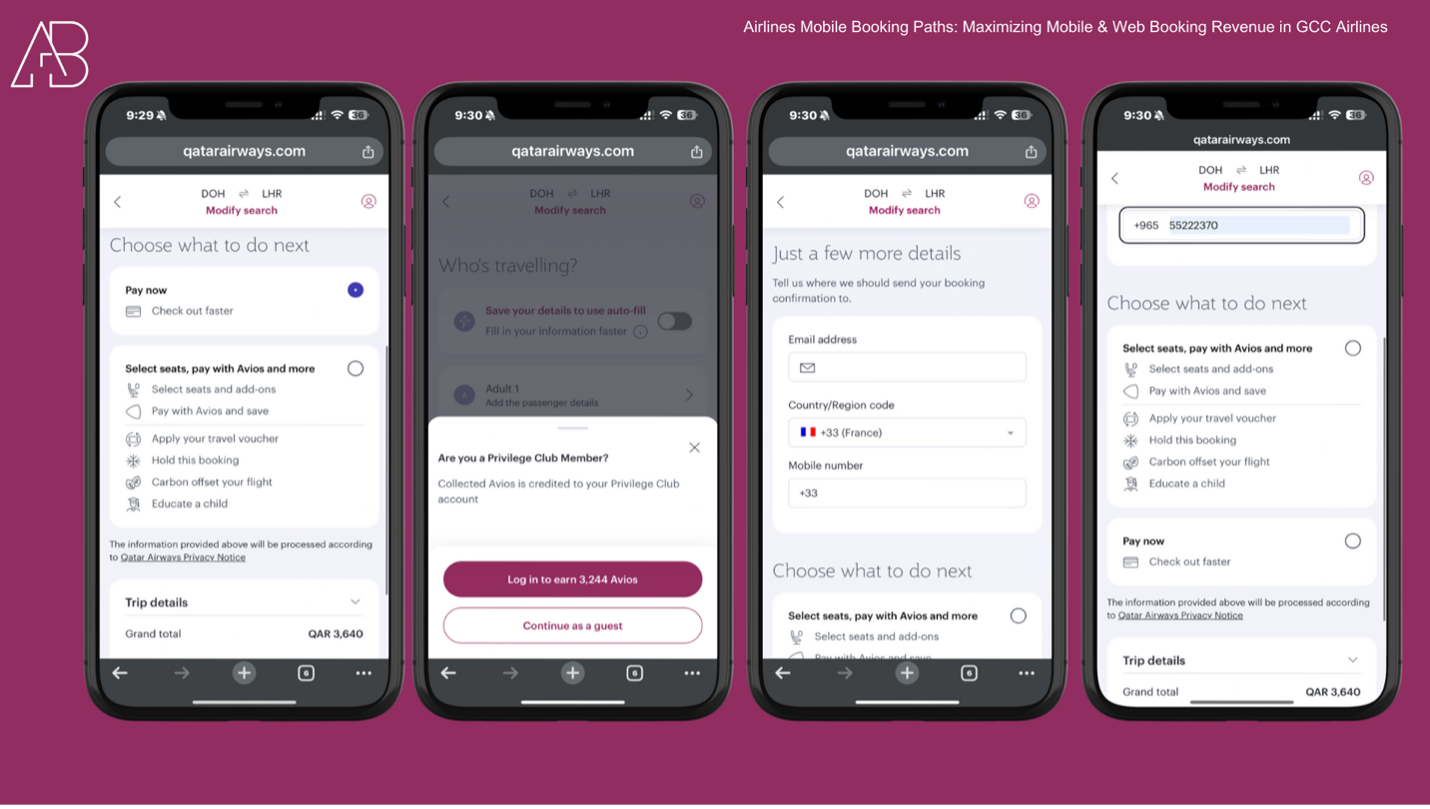
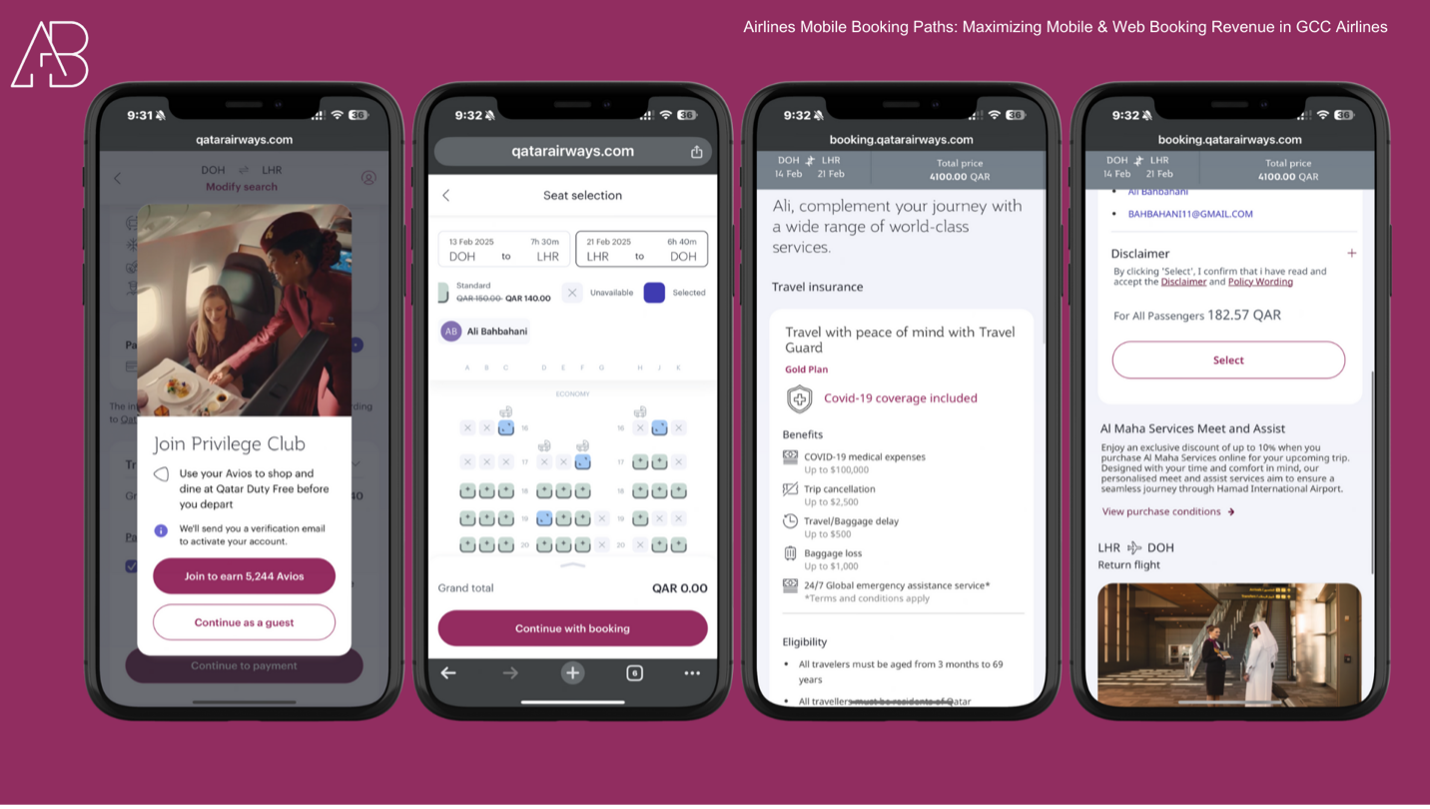
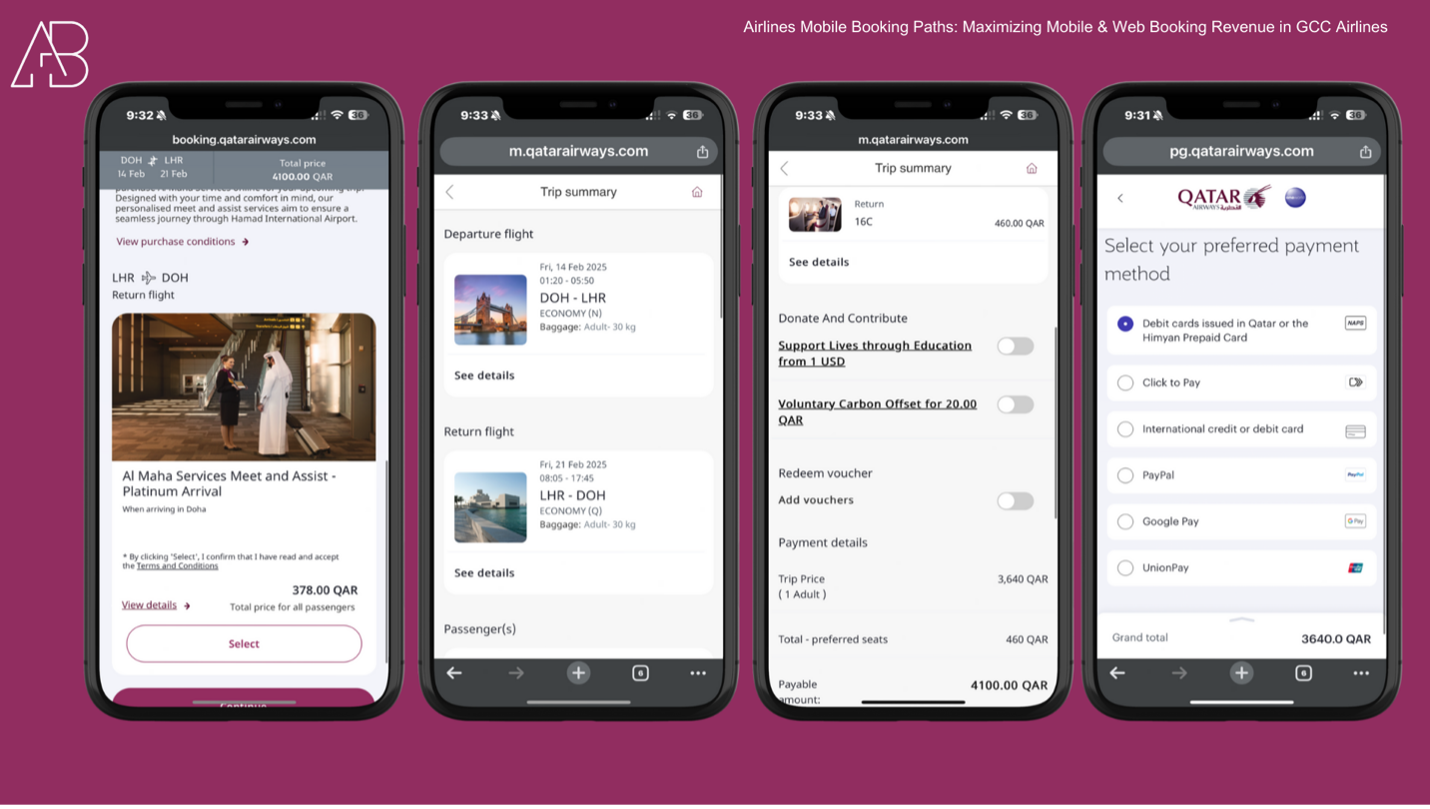
3. Qatar Airways
- Flow: 5–6 steps. Date grid for flexible dates.
- Upsells: Seat upgrades, meet and greet, lounge passes, extra baggage. Privilege Club members get seat fee discounts.
- Loyalty: Privilege Club (Avios) integrated throughout. Passport details captured for faster check-in.
- What would help: Family-friendly prompts such as child meal options. The Doha Stopover product is the regional benchmark for cross-sell.
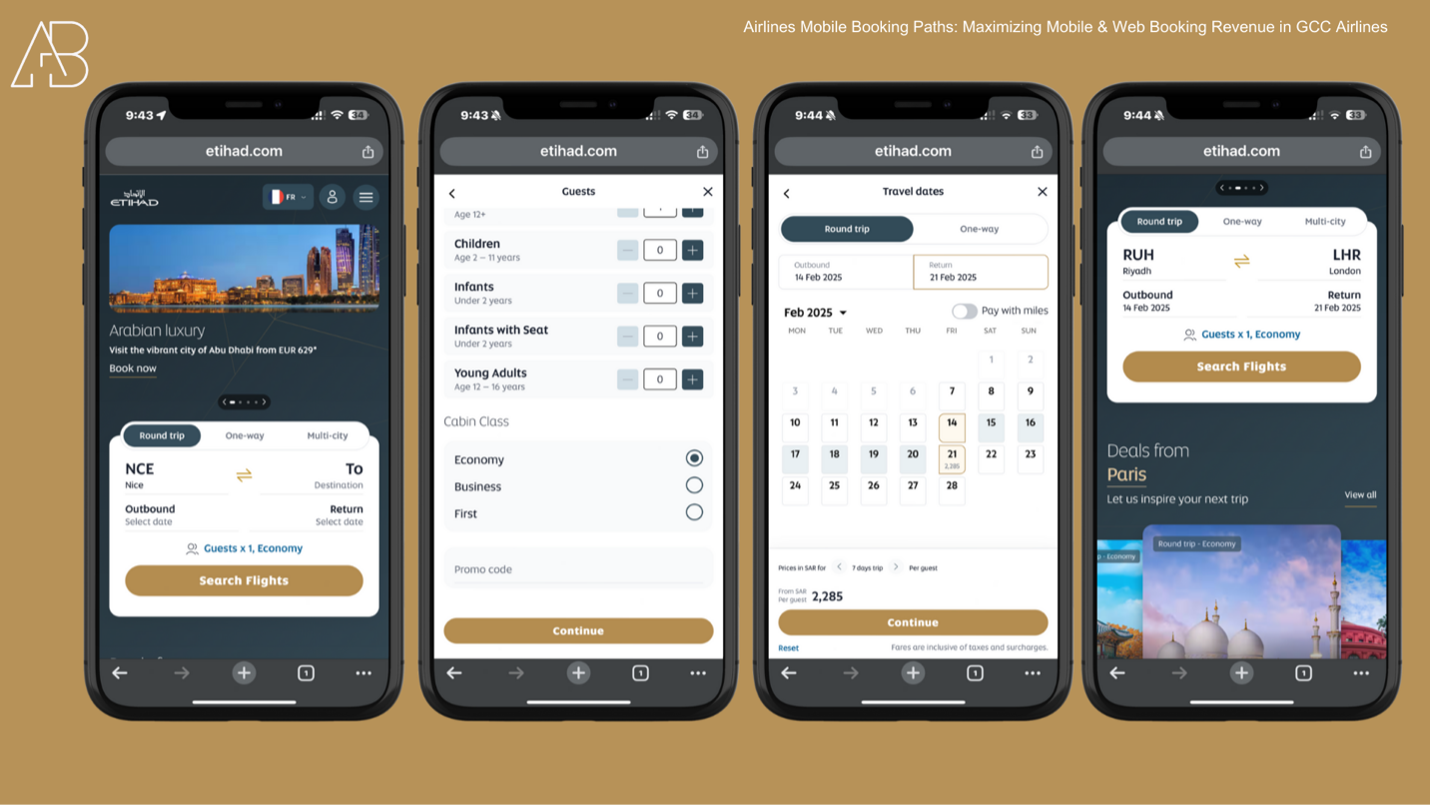
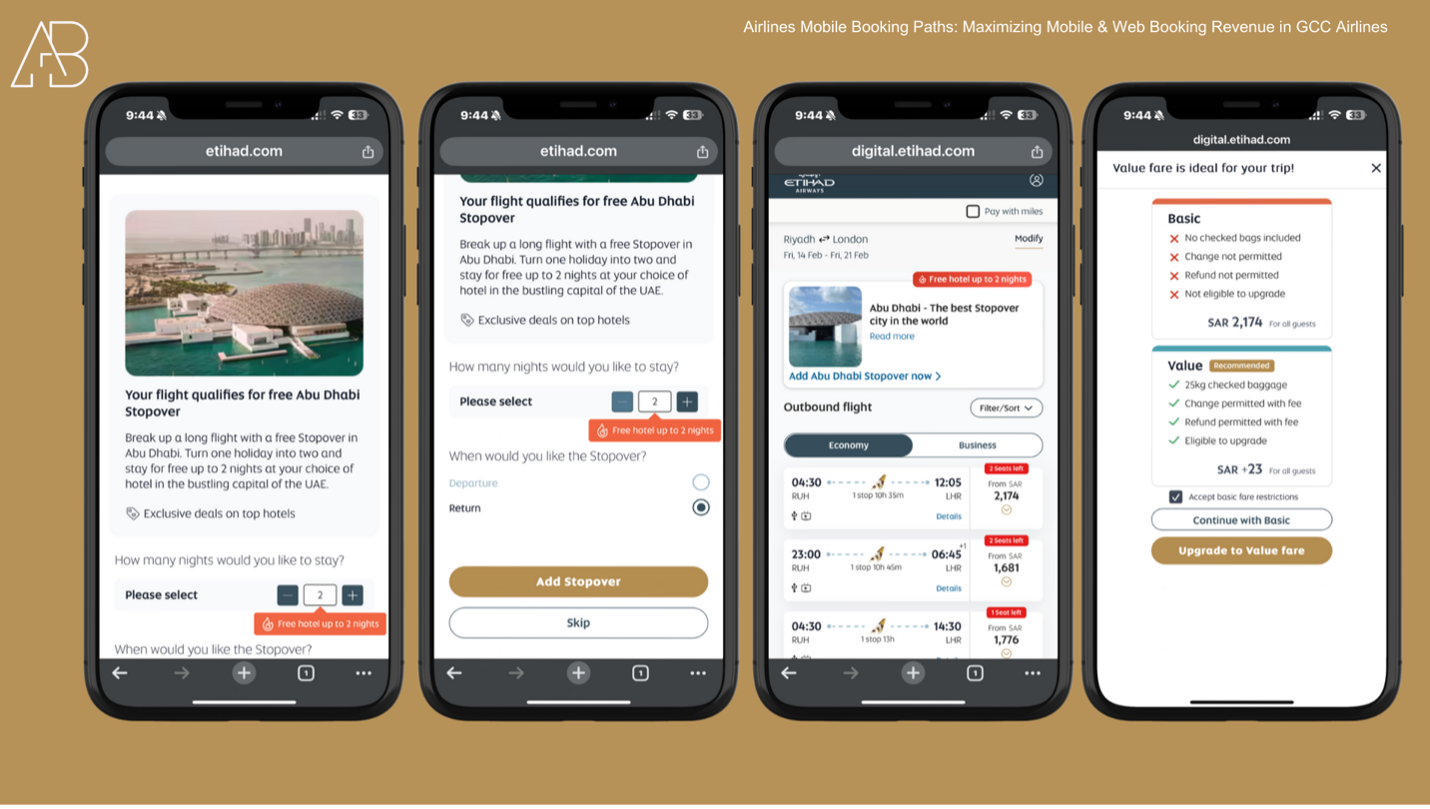
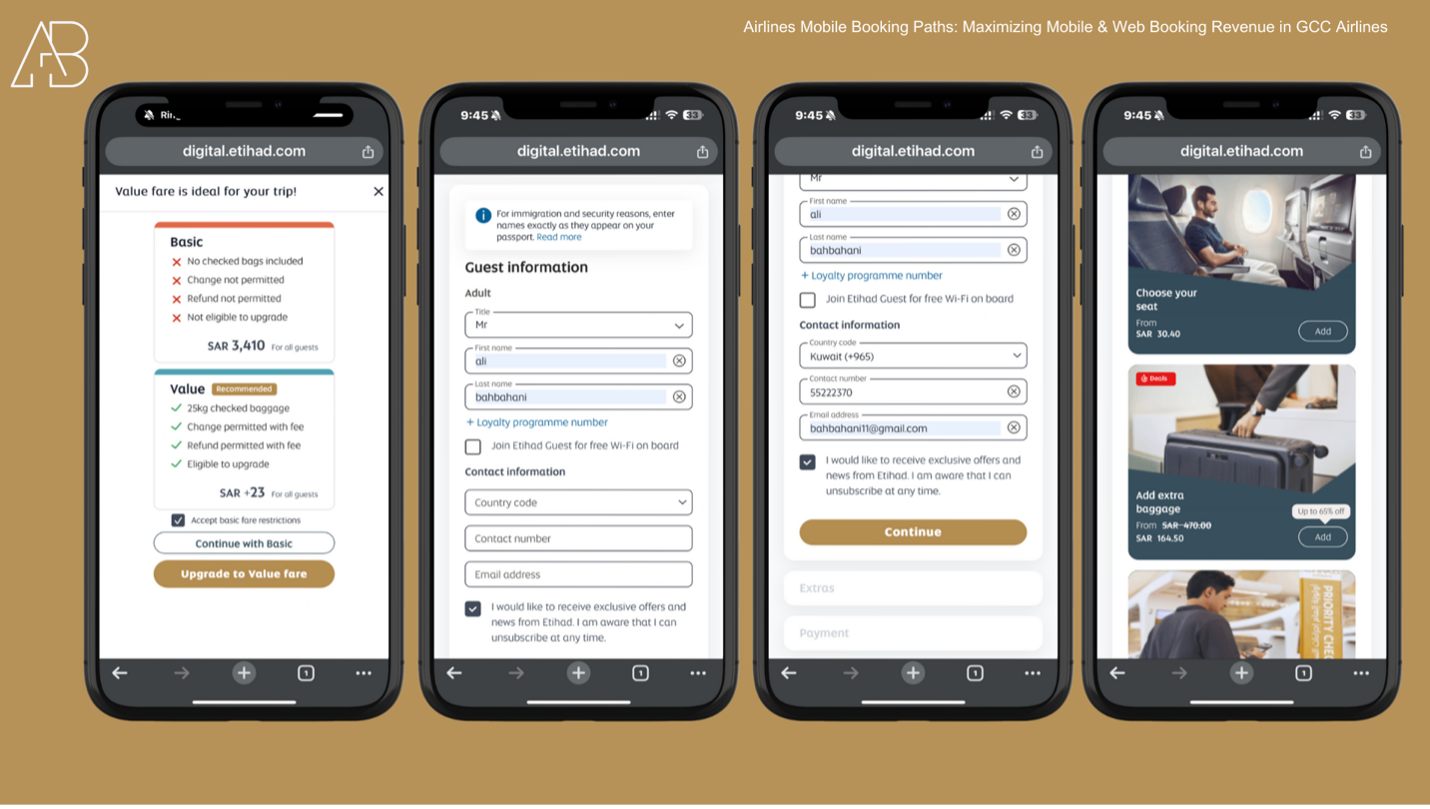
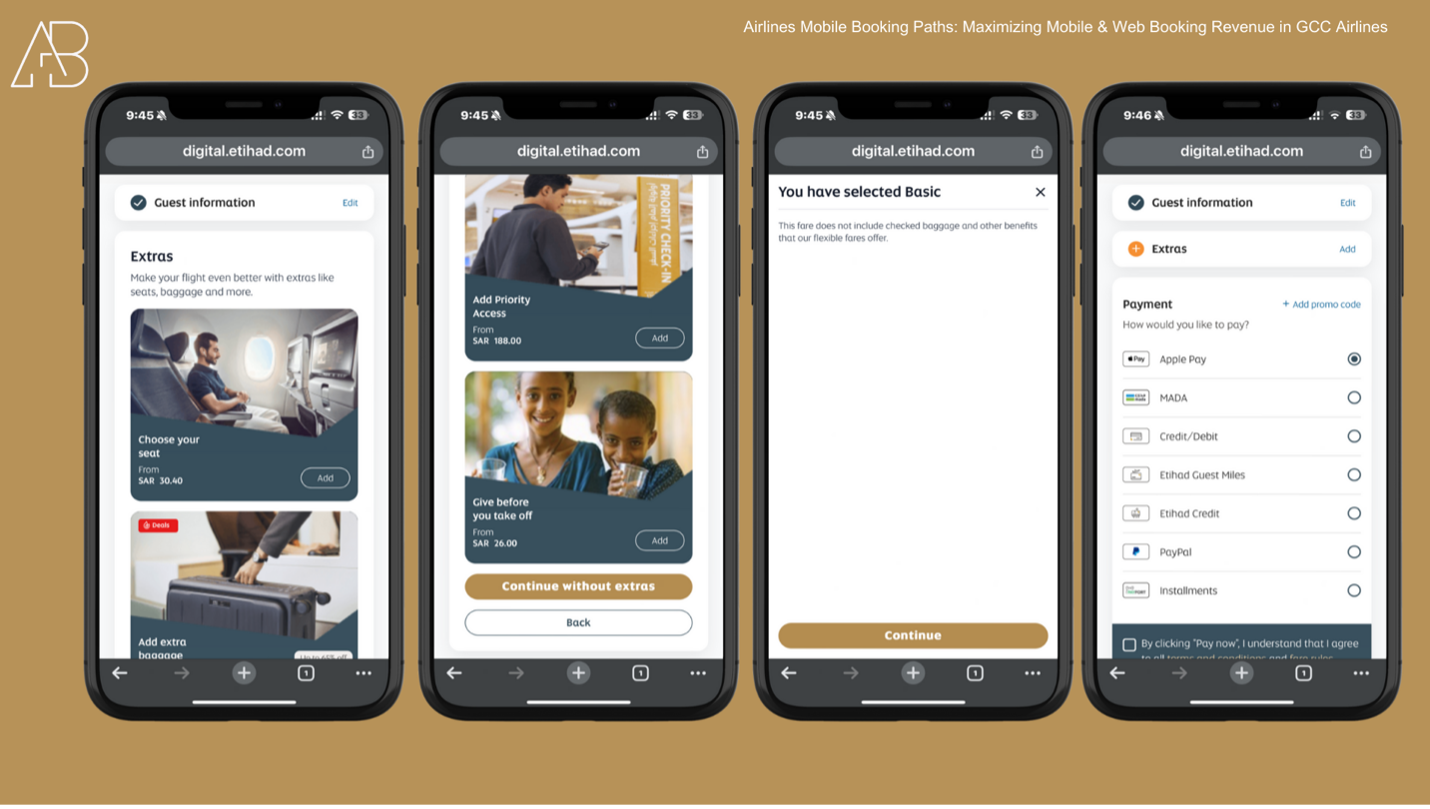
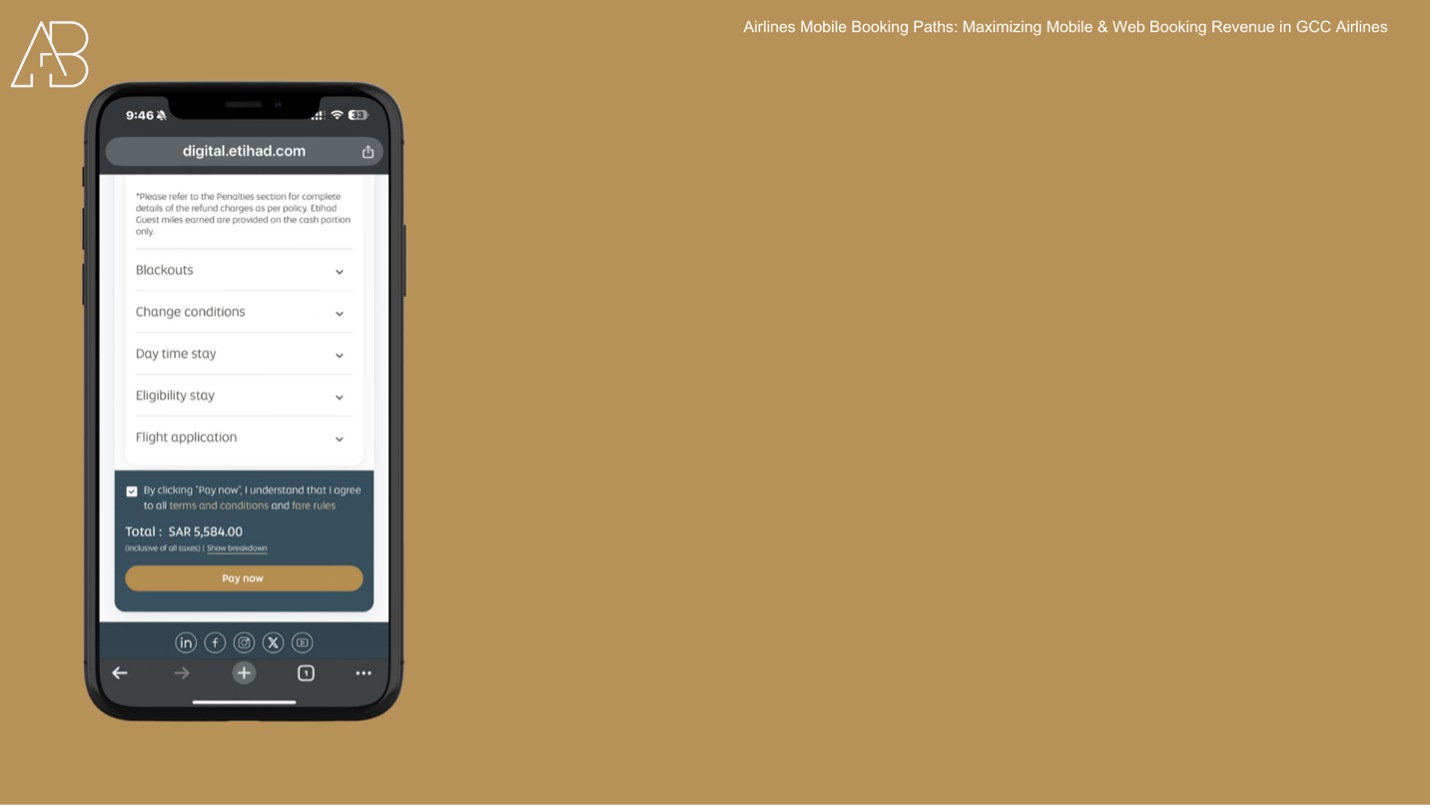
4. Etihad Airways
- Flow: 7–8 screens. Minimalist look but longer than peers.
- Upsells: Extra baggage, seat selection, neighbour-free seat, Abu Dhabi Stopover.
- Loyalty: Etihad Guest benefits are not surfaced in the booking flow. Local wallets, cards, and instalments accepted.
- What would help: Lounge pass prompts are too quiet. Seat, baggage, and lounge should fold into fewer steps.

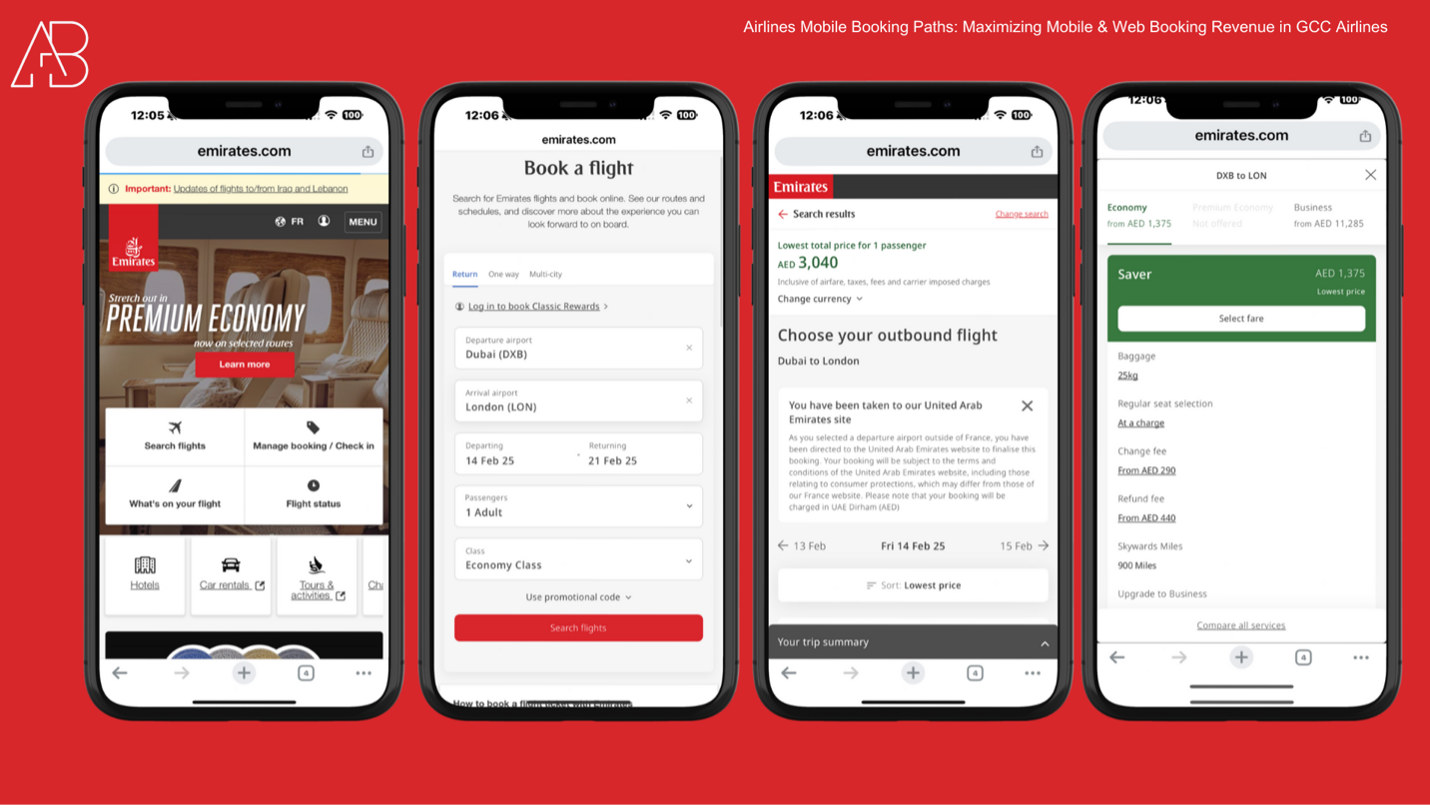
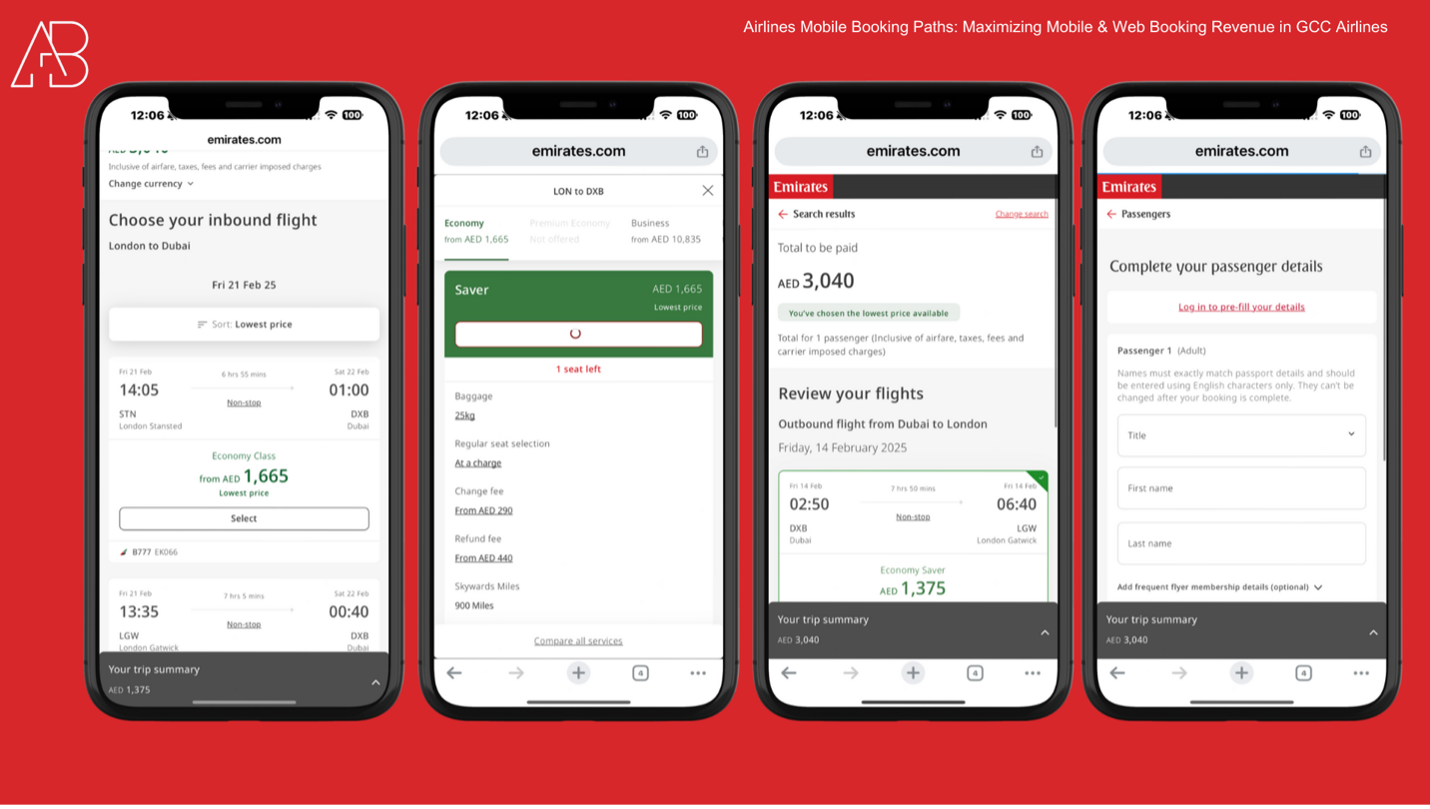
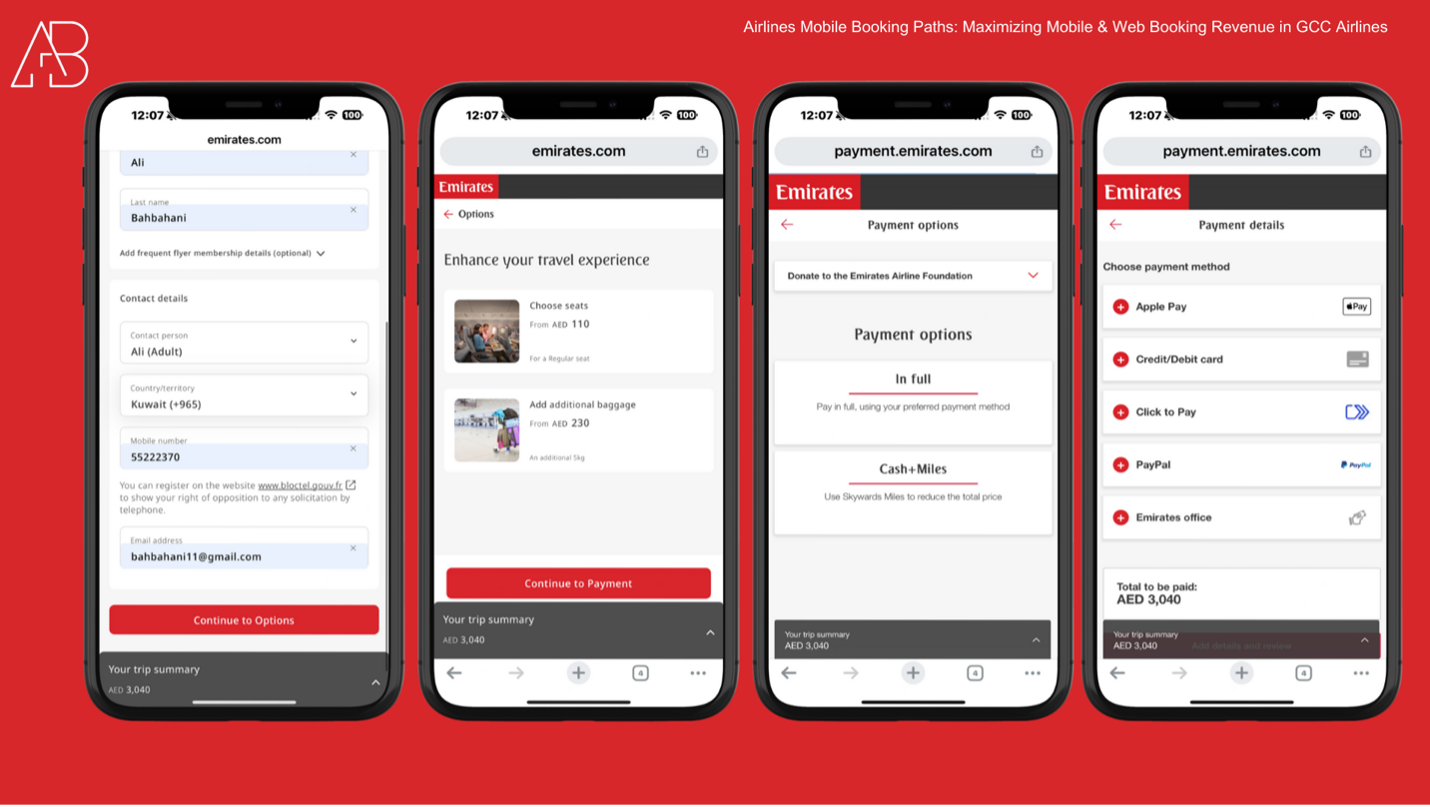
5. Emirates
- Flow: 5–6 pages. Fare calendar for flexible search.
- Upsells: Seat upgrades, baggage, Chauffeur Drive, Dubai stopover, insurance and tours on relevant routes.
- Loyalty: Skywards is not actively promoted in the flow. Apple Pay and PayPal supported.
- What would help: Family pricing and child meal options would round out the strong premium cross-sell.

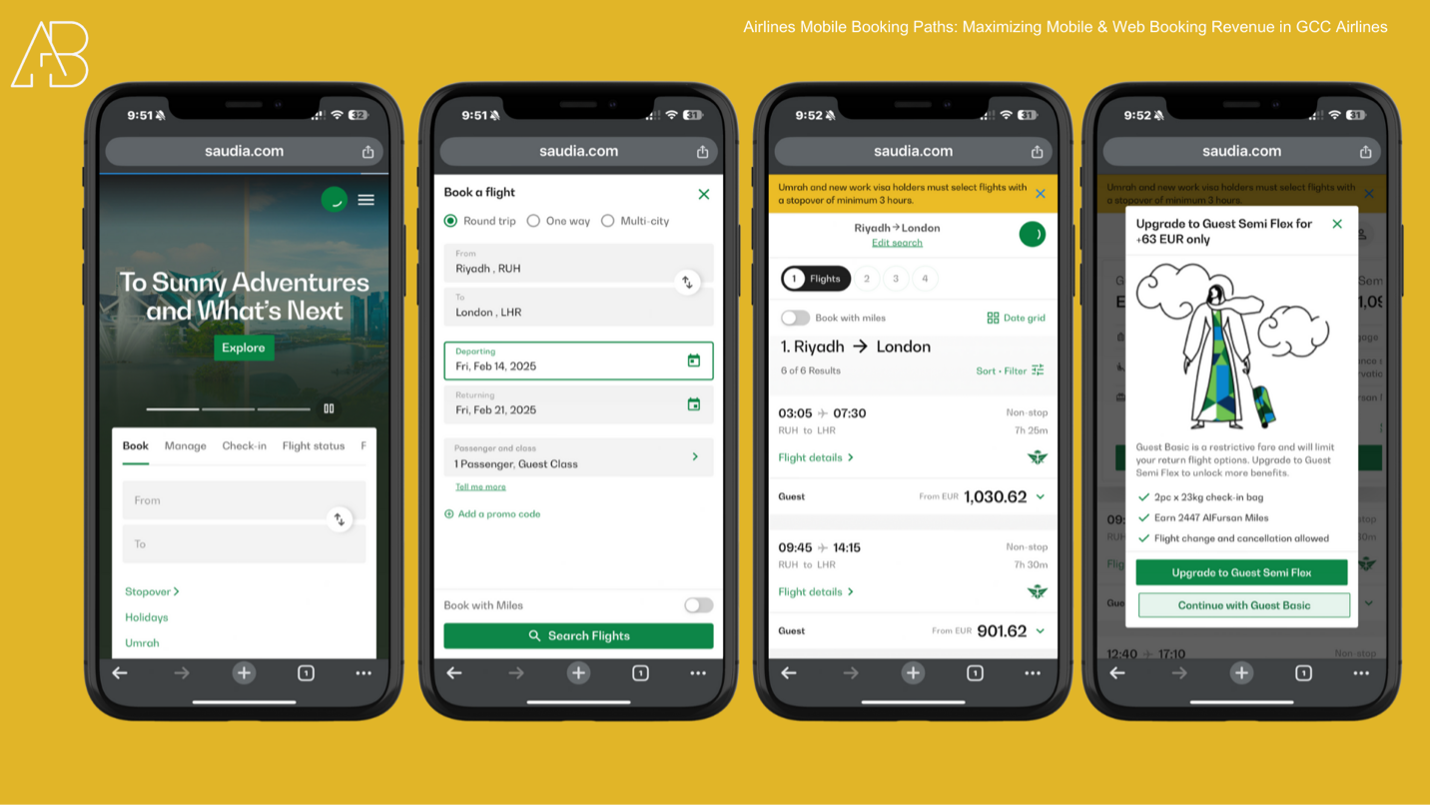
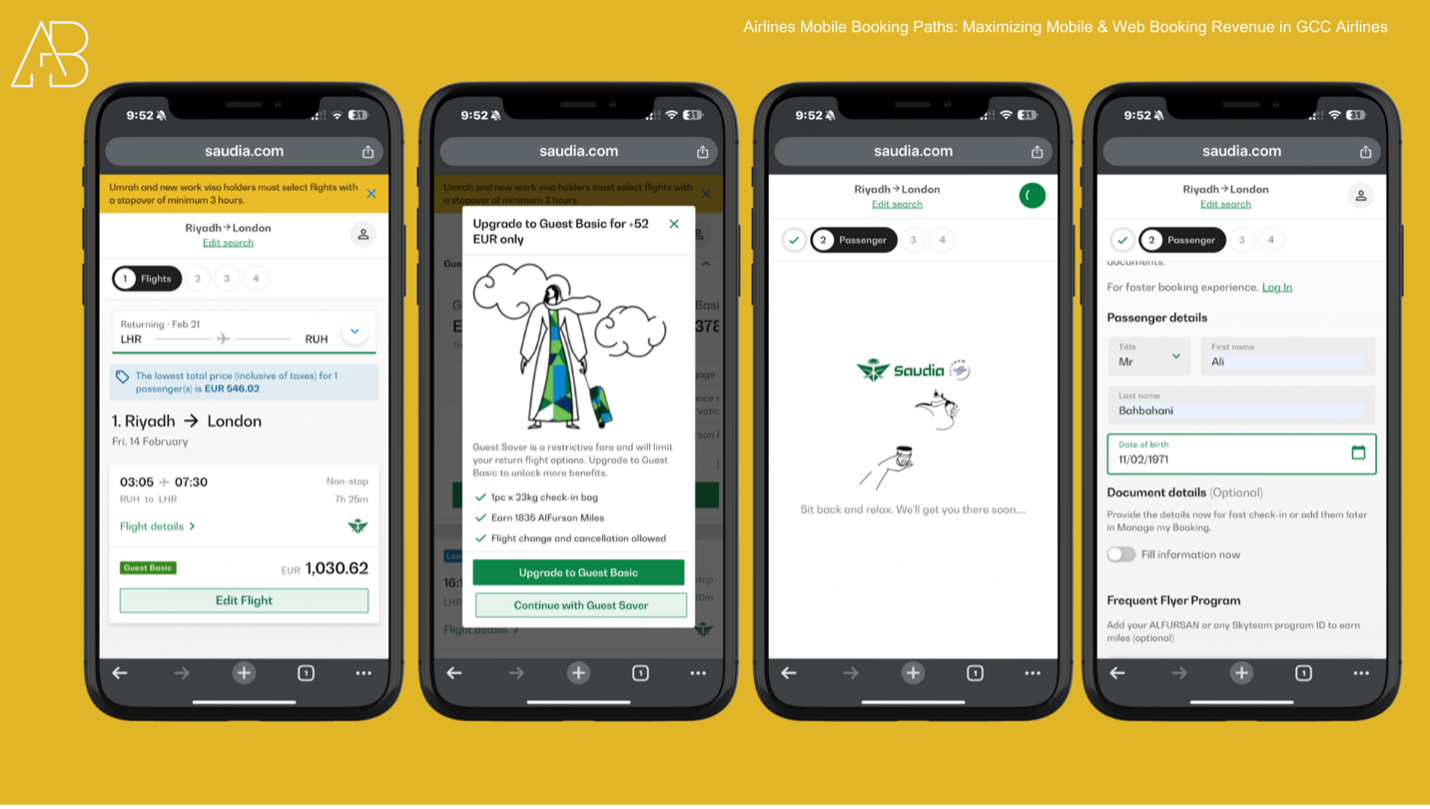
6. Saudia
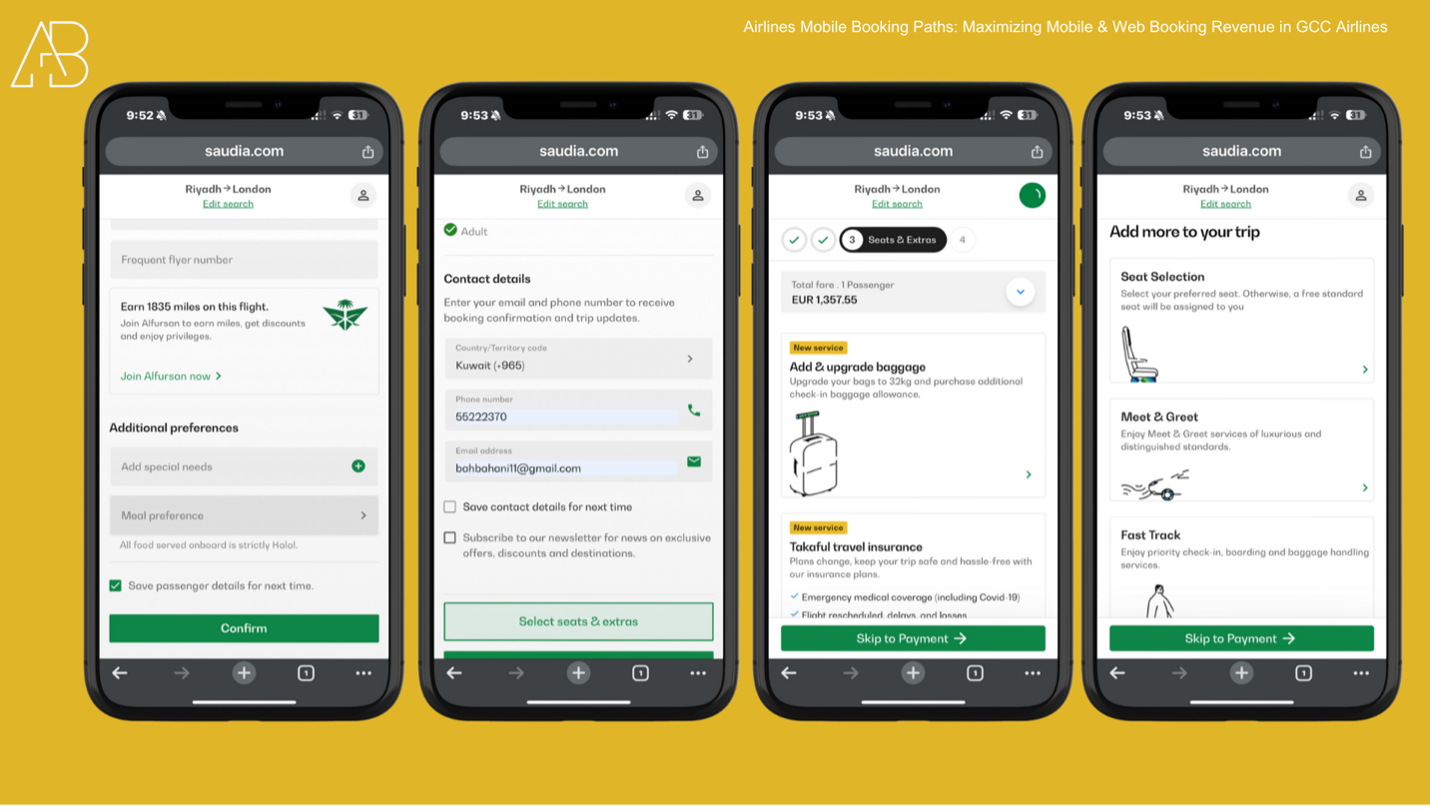
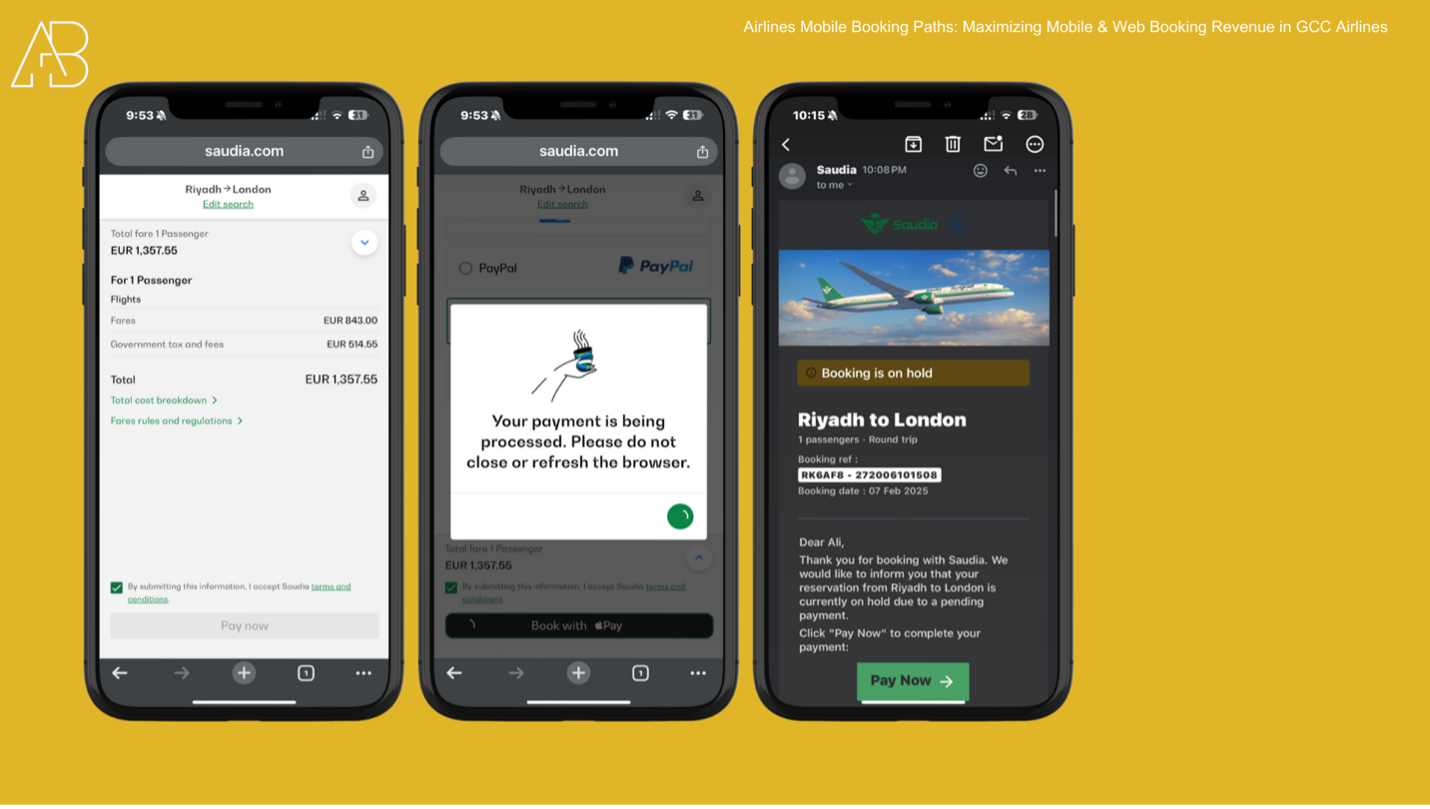
- Flow: 7–8 screens. Multiple fare families (Guest Basic, Guest Saver, and others).
- Upsells: Baggage, seat, Takaful insurance, meet and greet. Abandonment emails active.
- Loyalty: Al Fursan prompt visible. SADAD and cards.
- What would help: Merge baggage and insurance pop-ups. Highlight family seating which already exists but is buried.
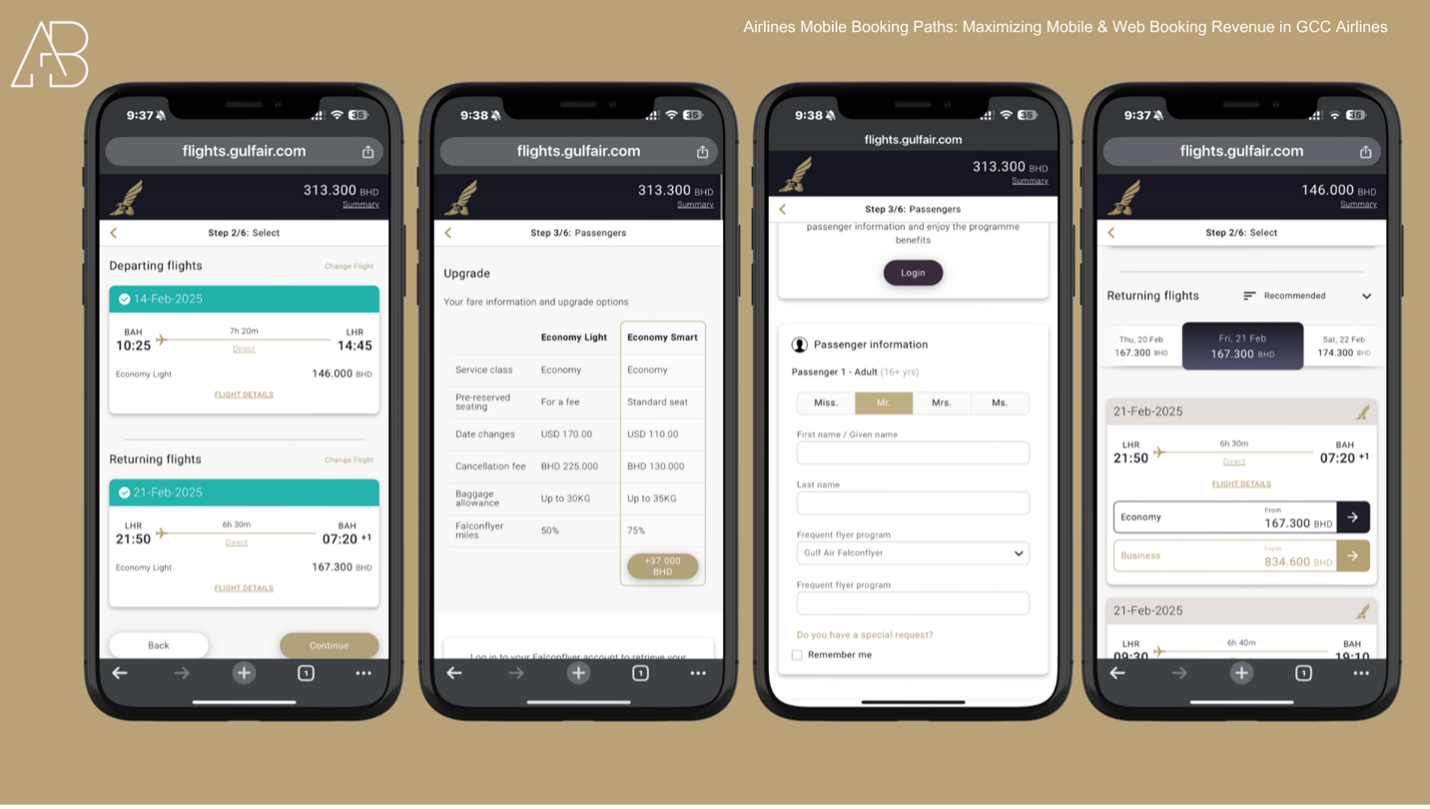
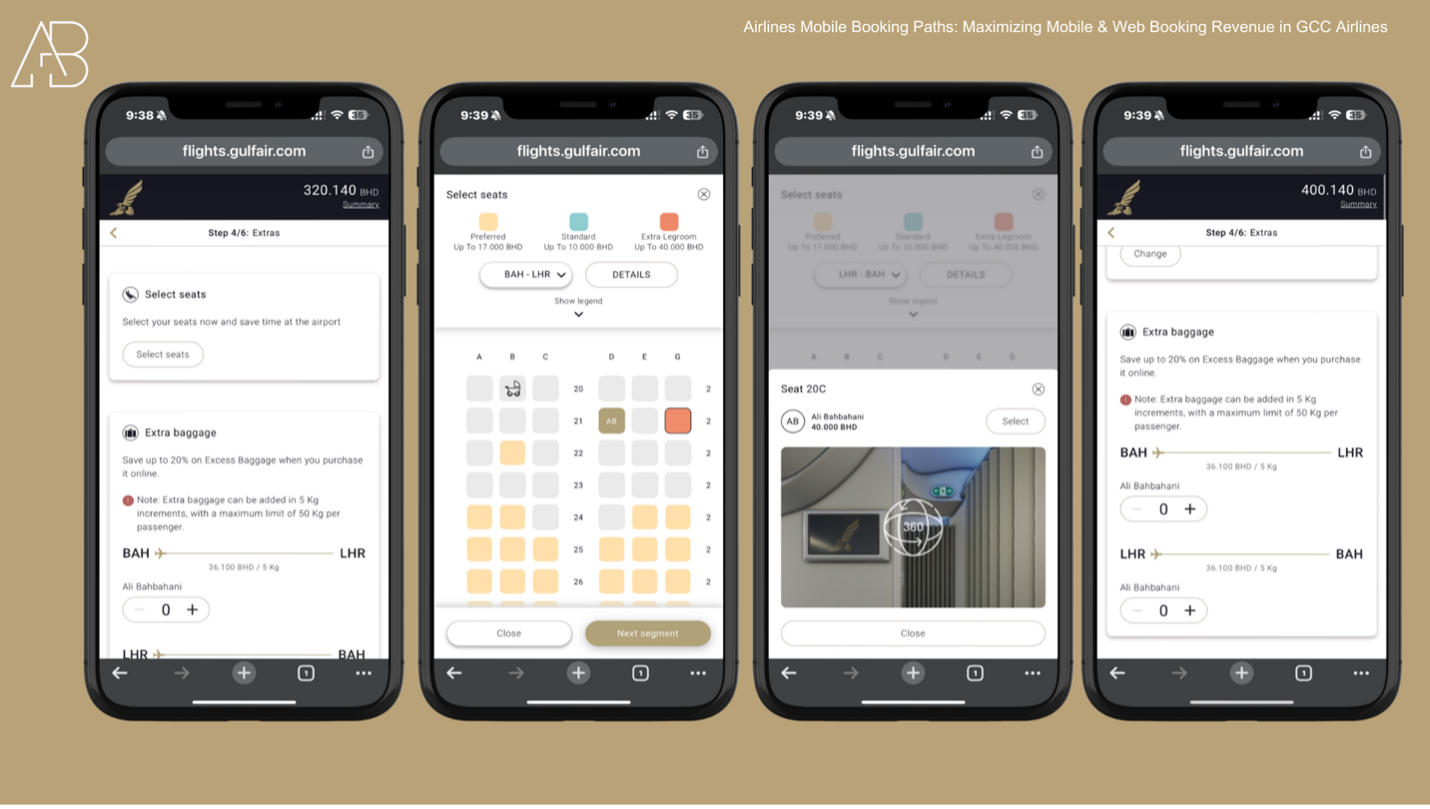
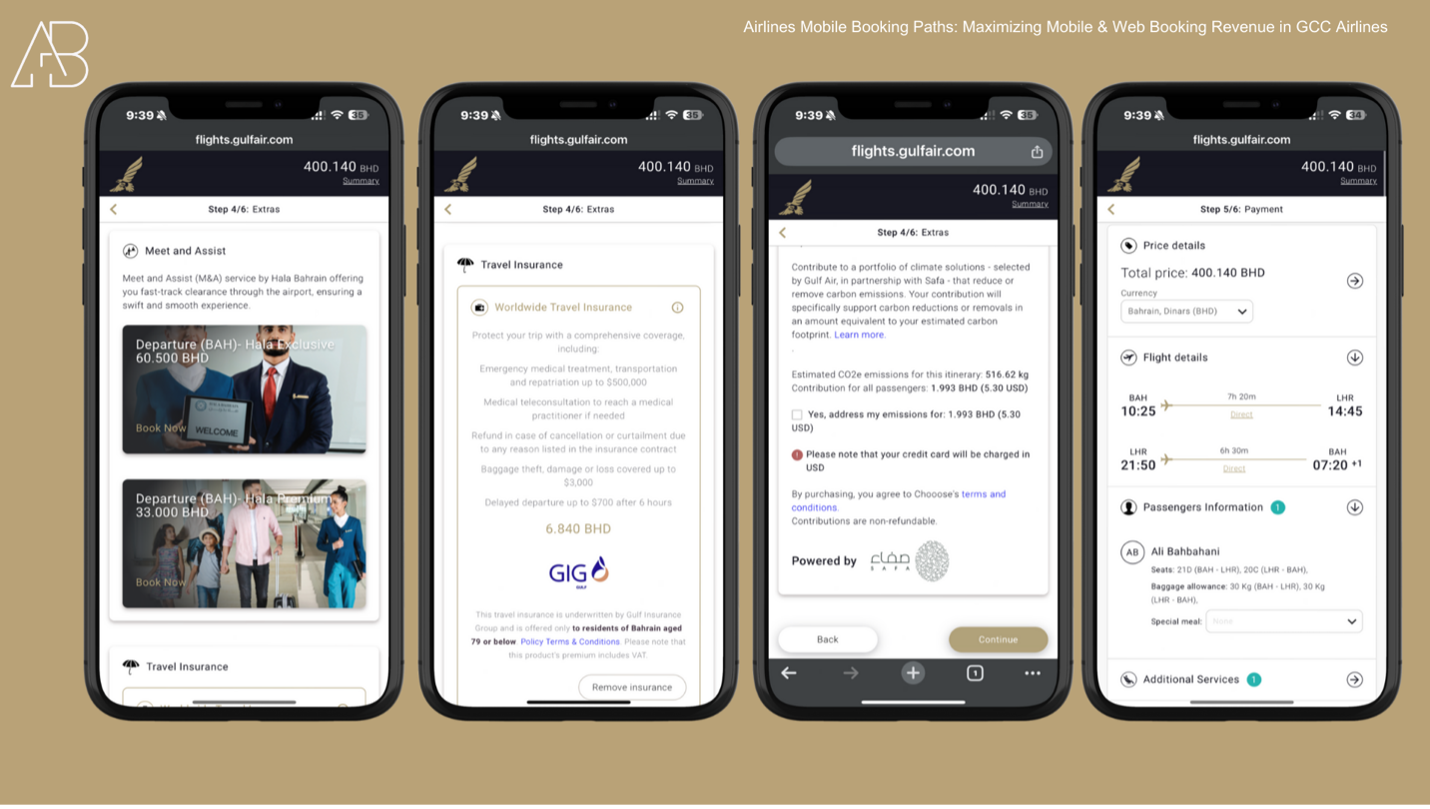
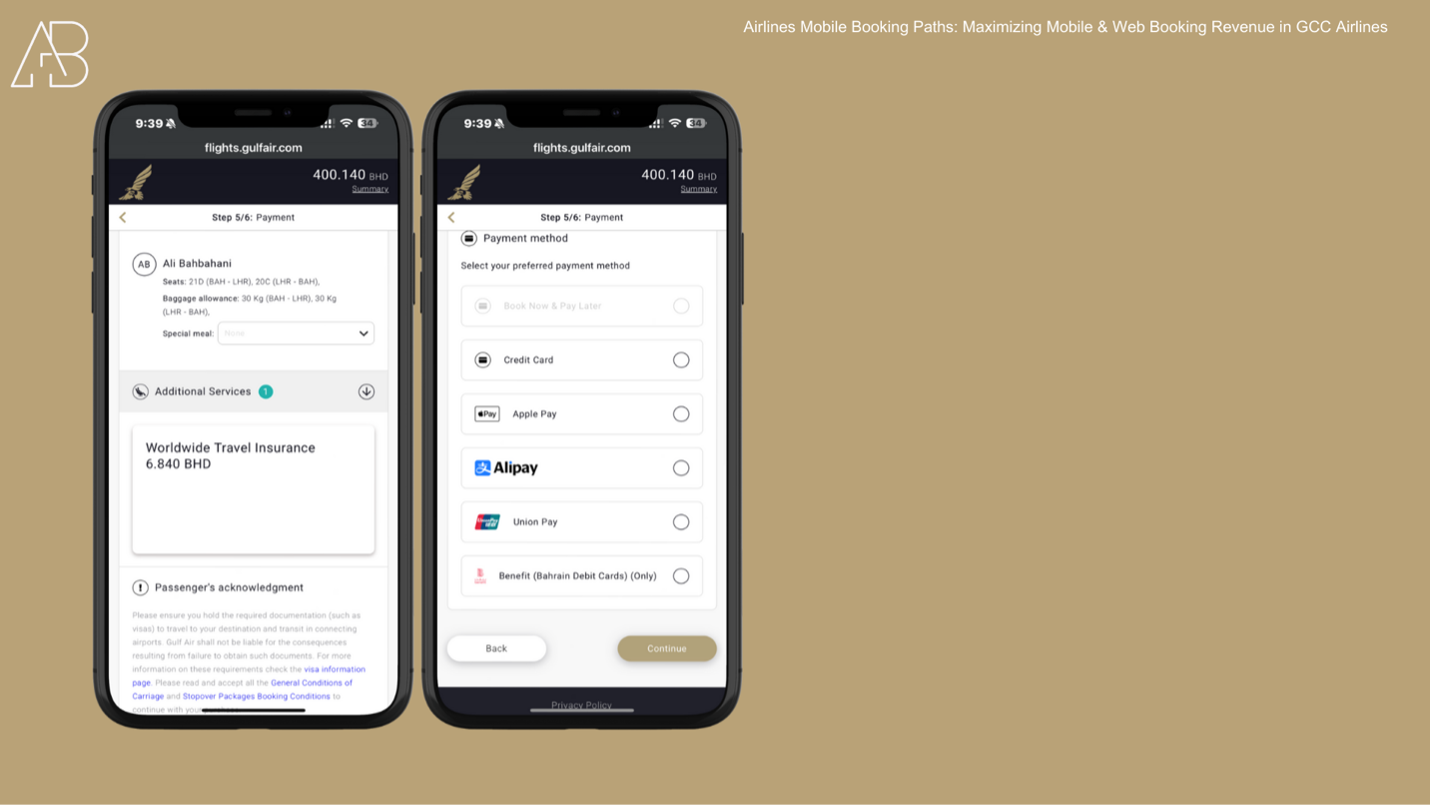
7. Gulf Air
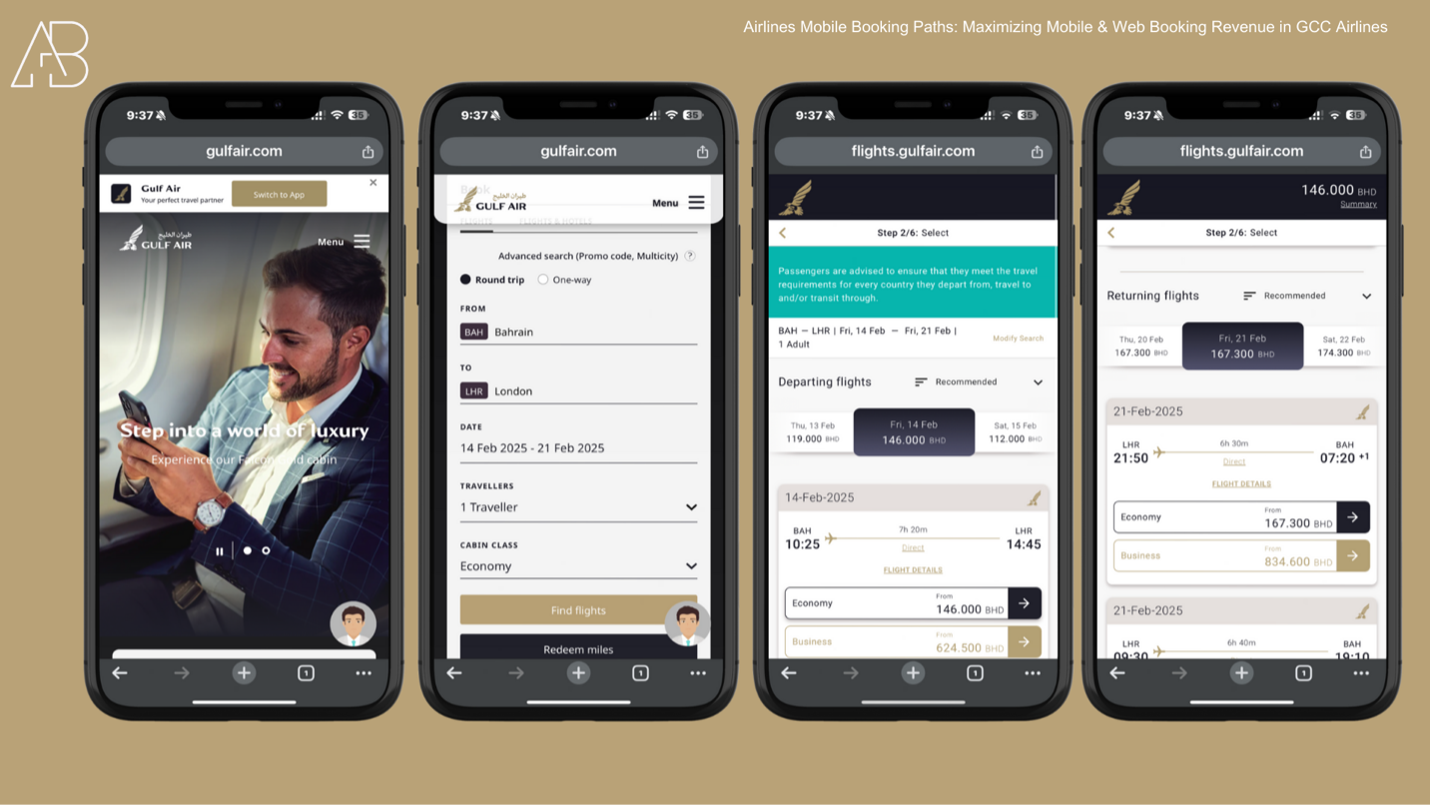
- Flow: 7–8 steps. Long.
- Upsells: Economy Light vs Smart fares, seat selection, lounge, occasional tour add-ons.
- Loyalty: FalconFlyer not pushed. Standard passenger data, multiple cards.
- What would help: Unify seat and baggage on one page. Add hotel or local experience cross-sells where relevant.
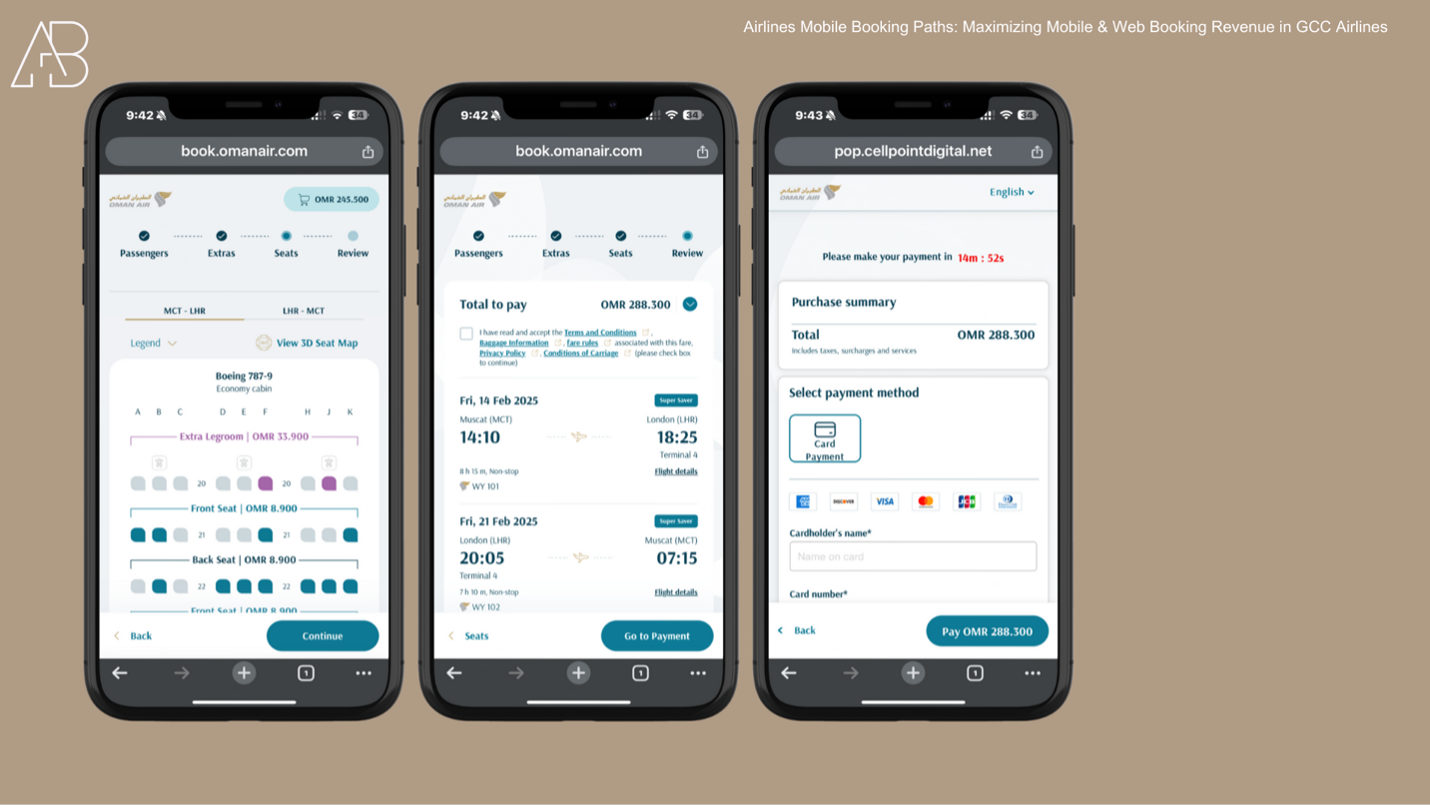
8. Oman Air
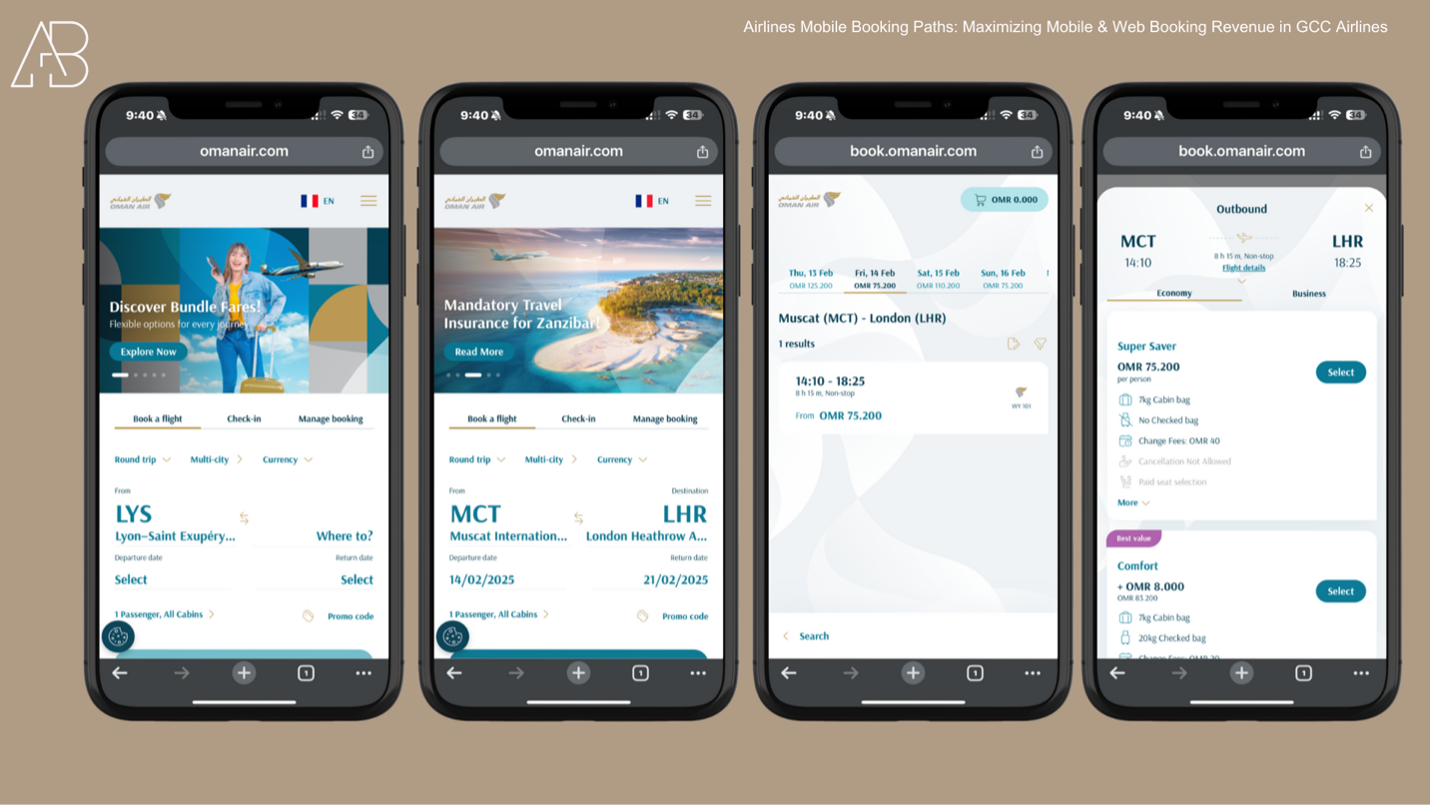
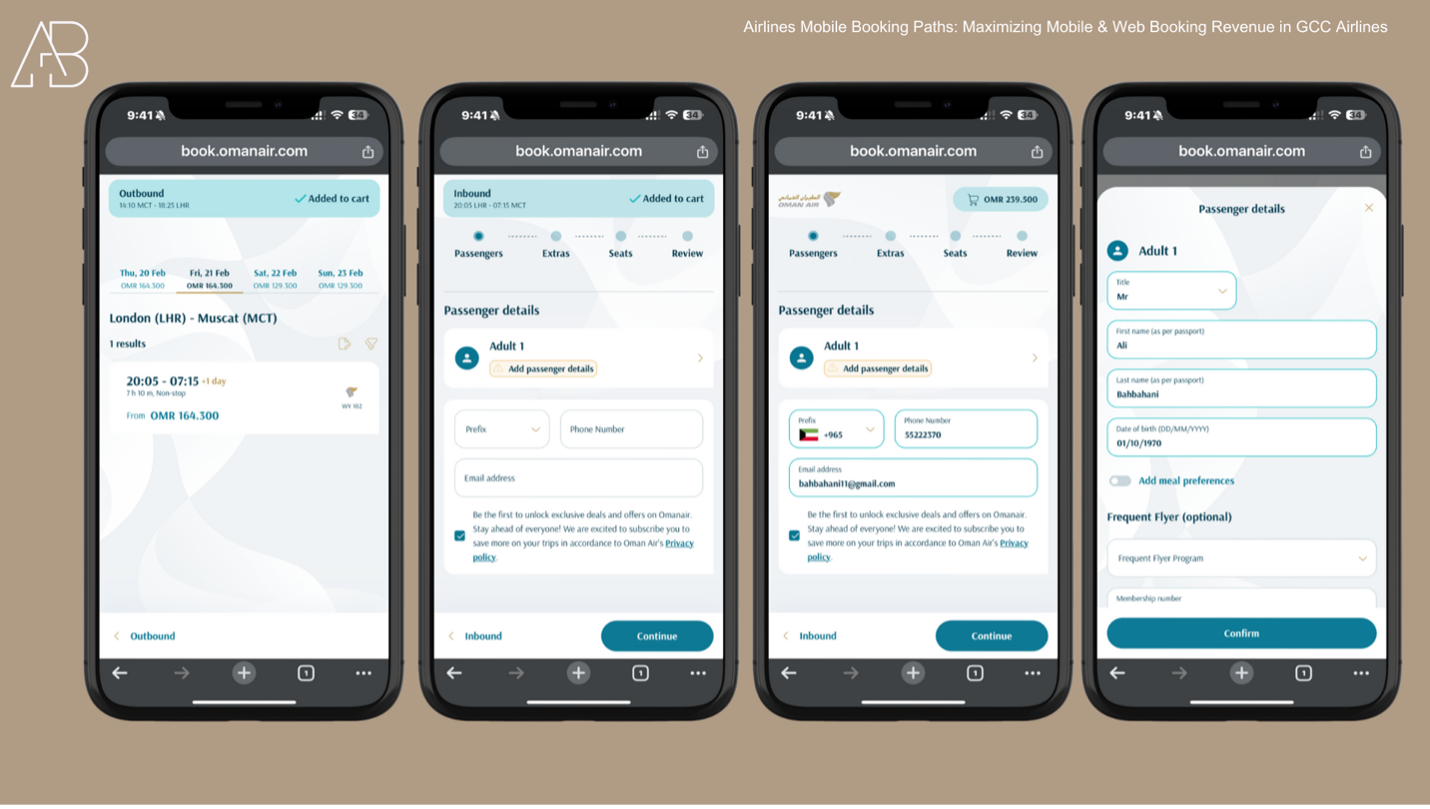
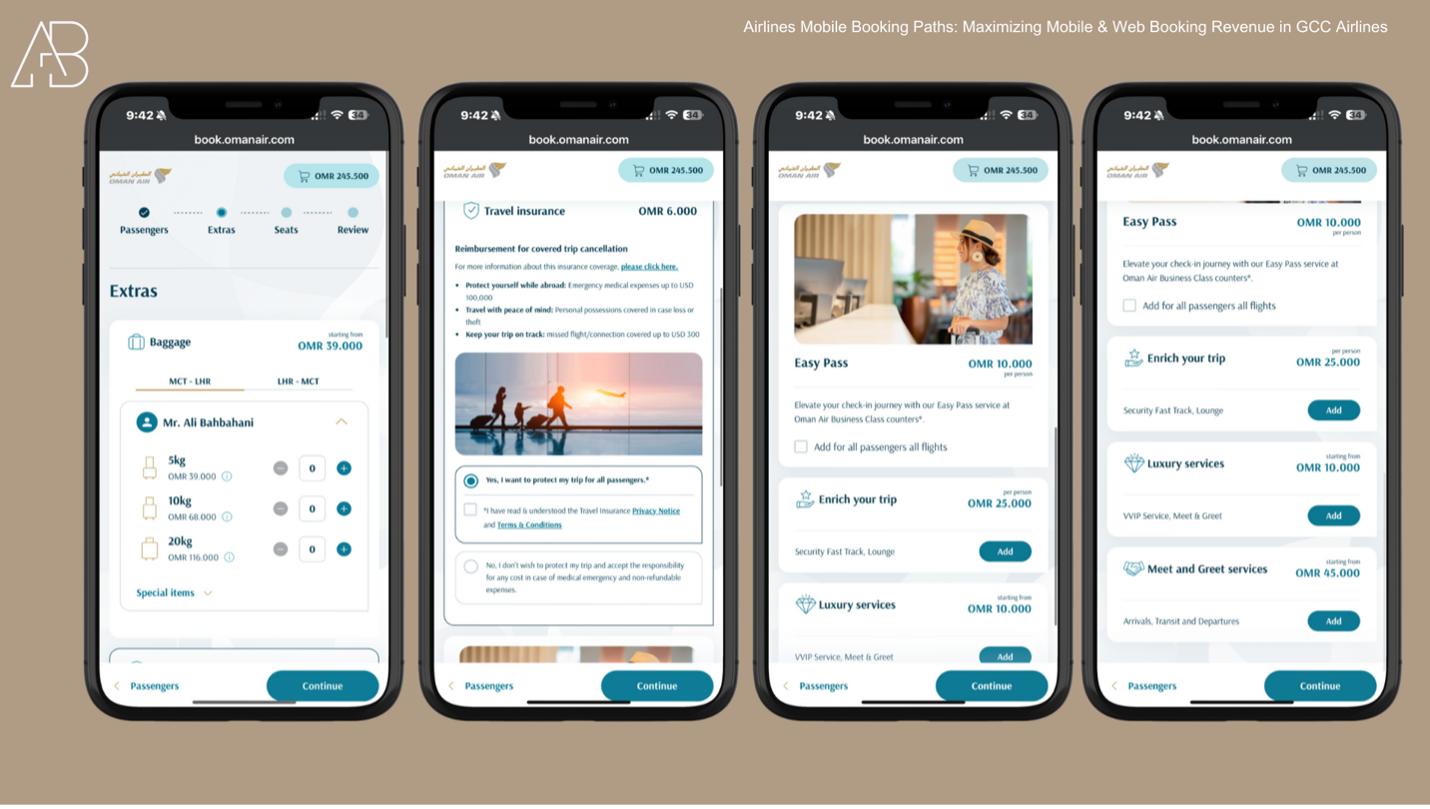
- Flow: 5–6 steps. Premium presentation.
- Upsells: Baggage, seat upgrade, Majan Lounge, insurance, all on one page. This is the right model.
- Loyalty: Sindbad not surfaced. Cards and some e-wallets. No Apple Pay or Google Pay.
- What would help: Fare hold. Family deals such as child meals or waived child seat fees.
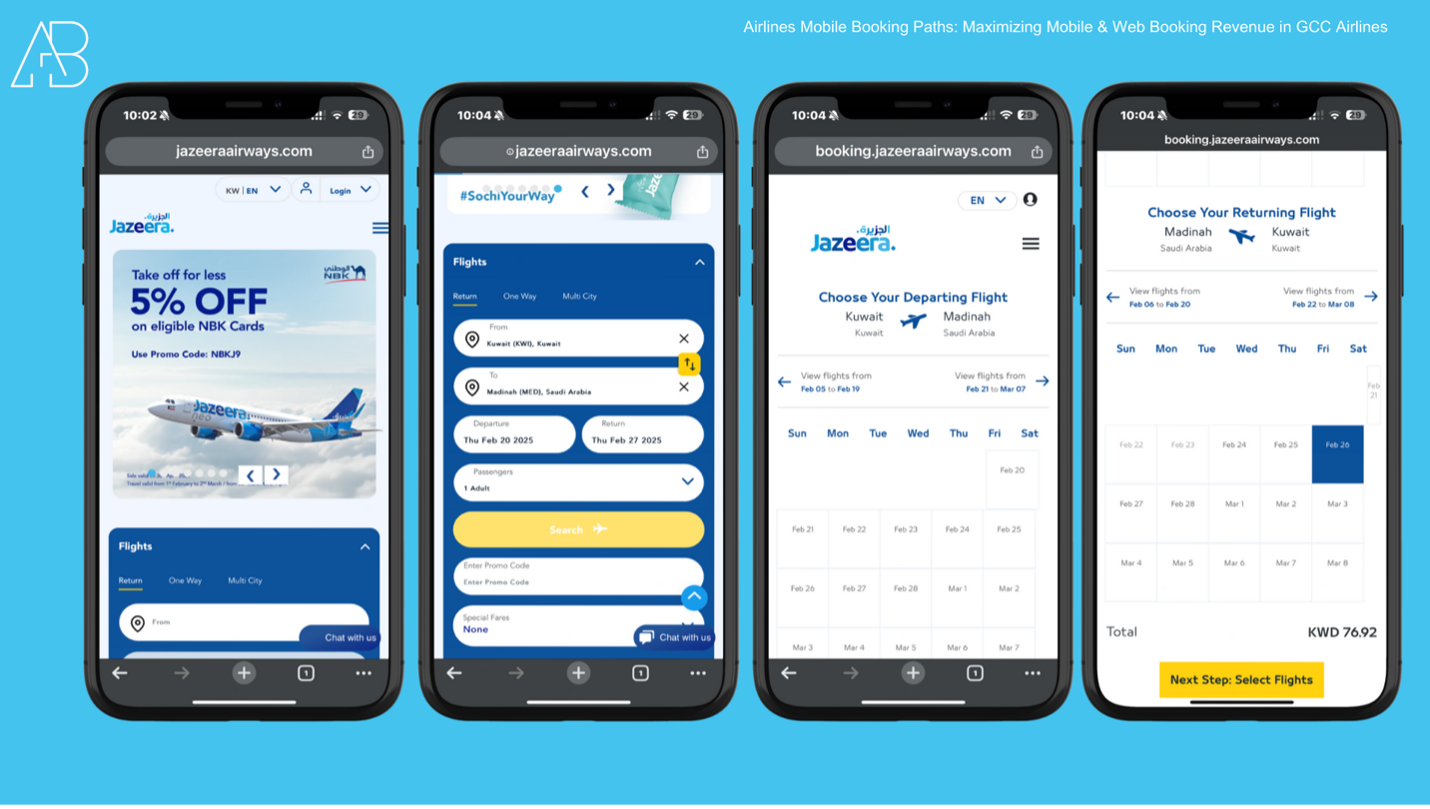
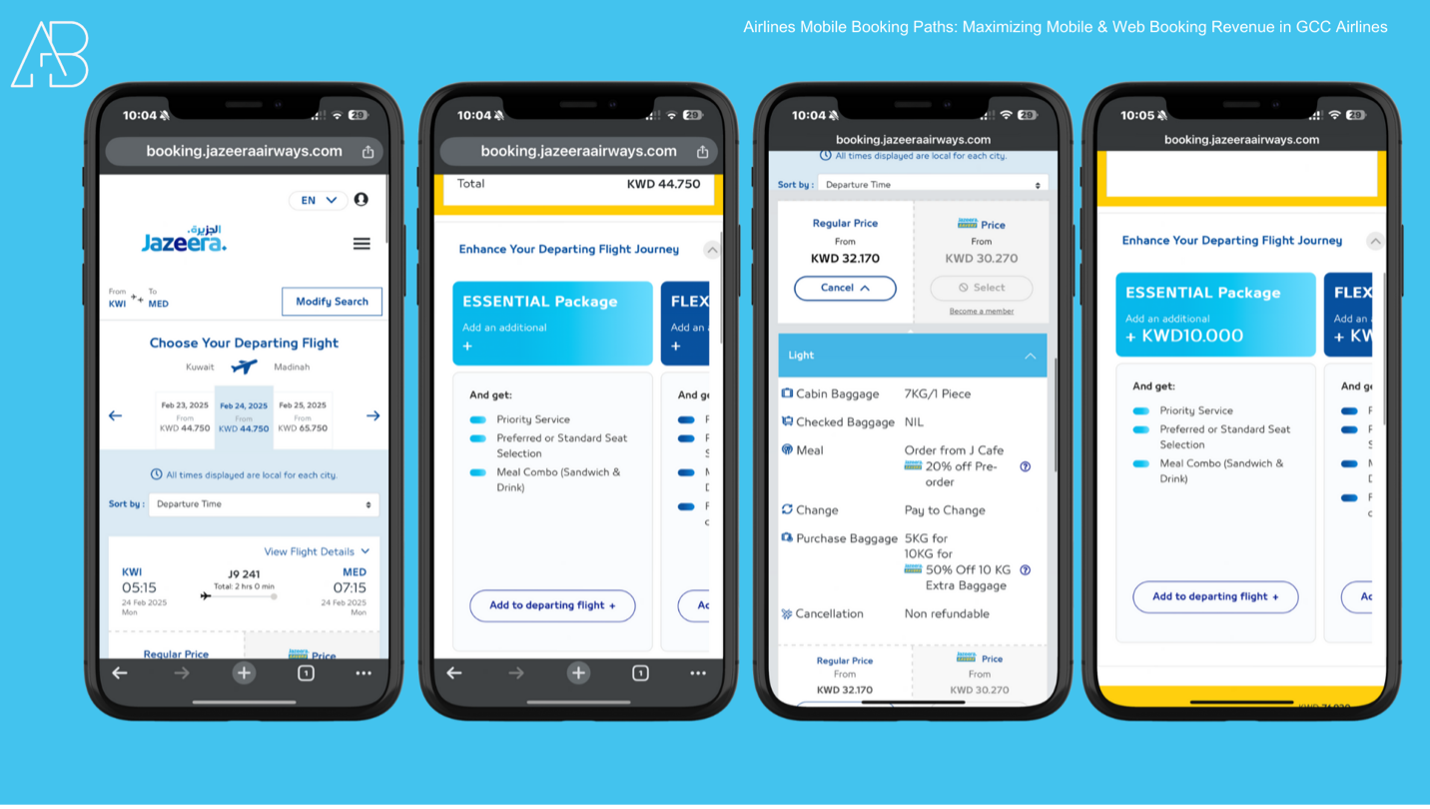
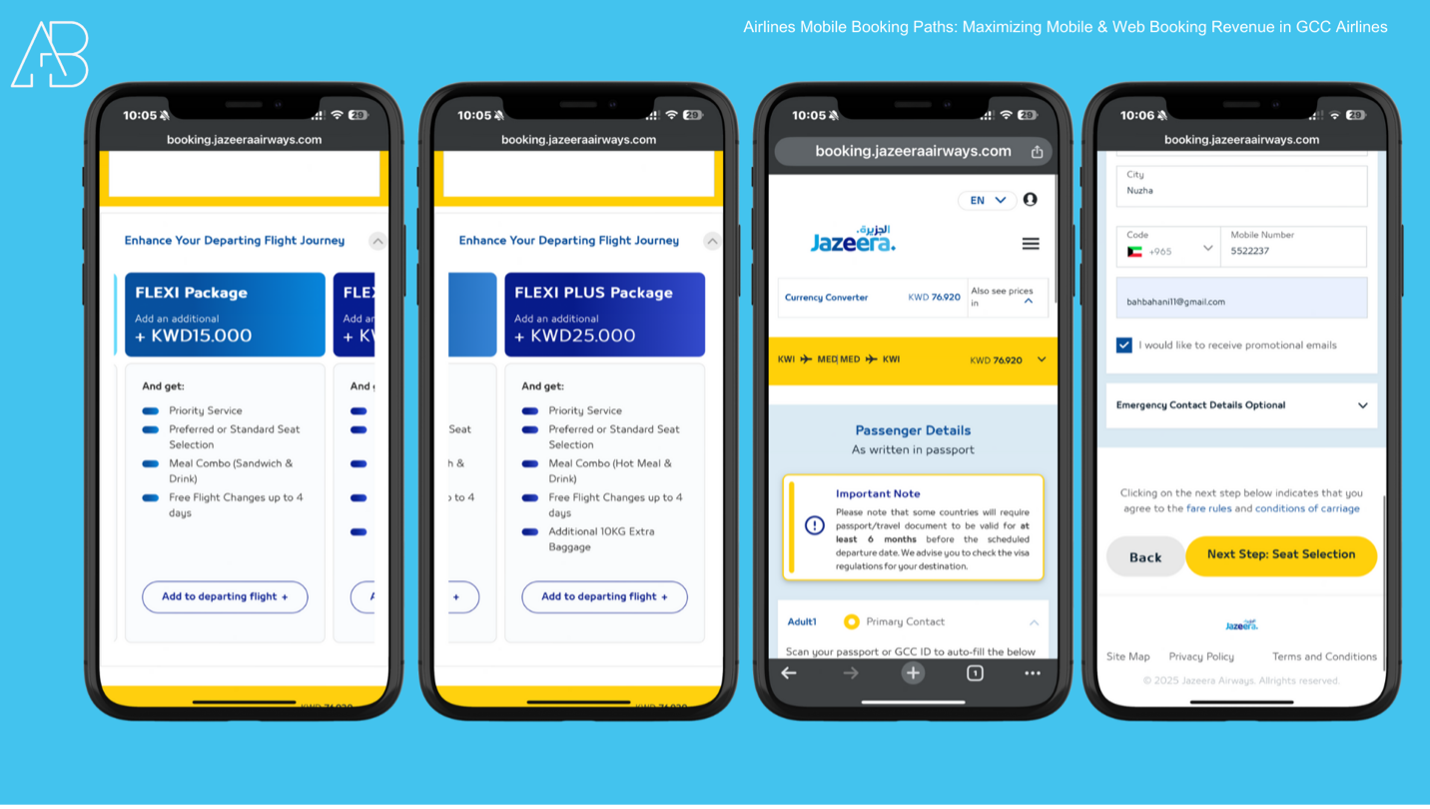
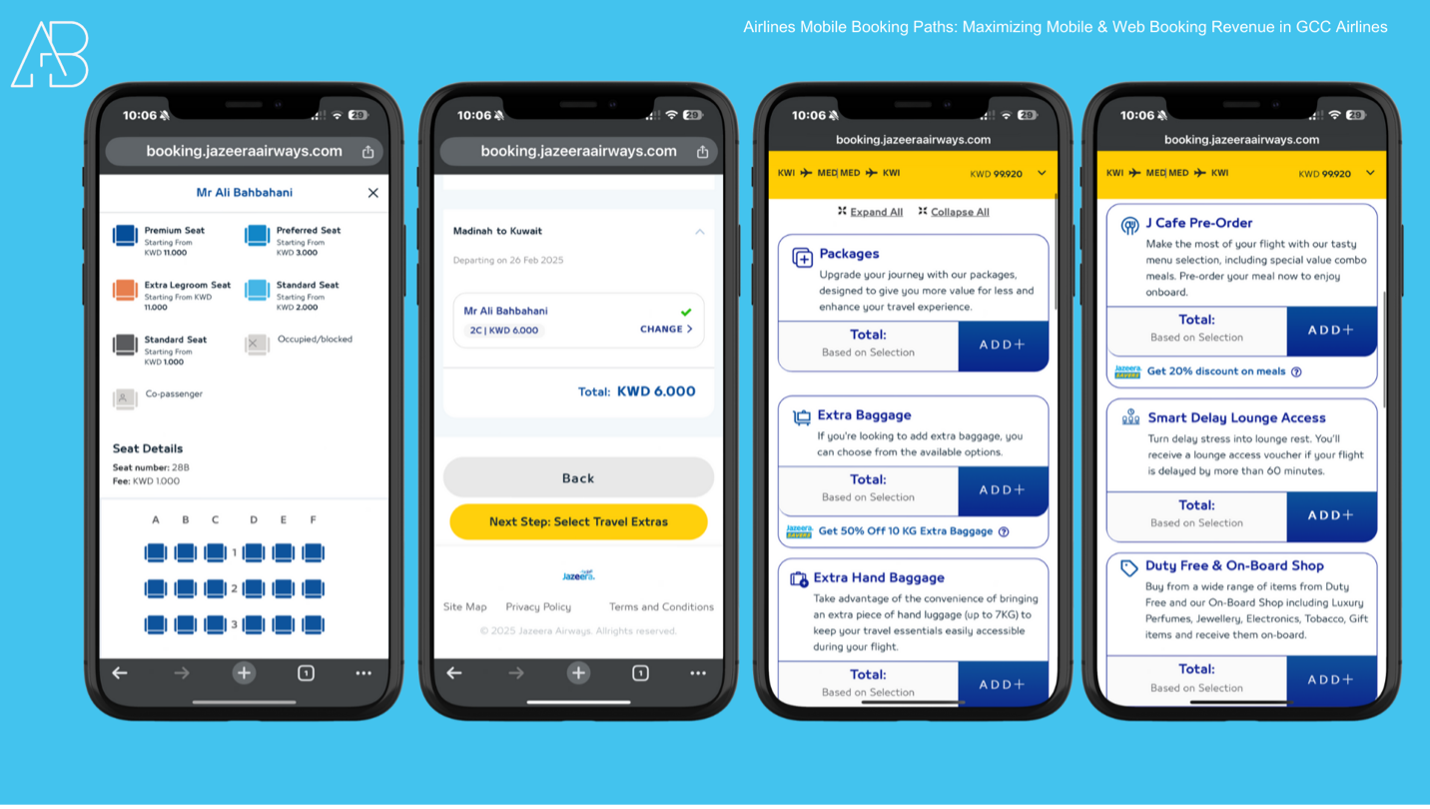
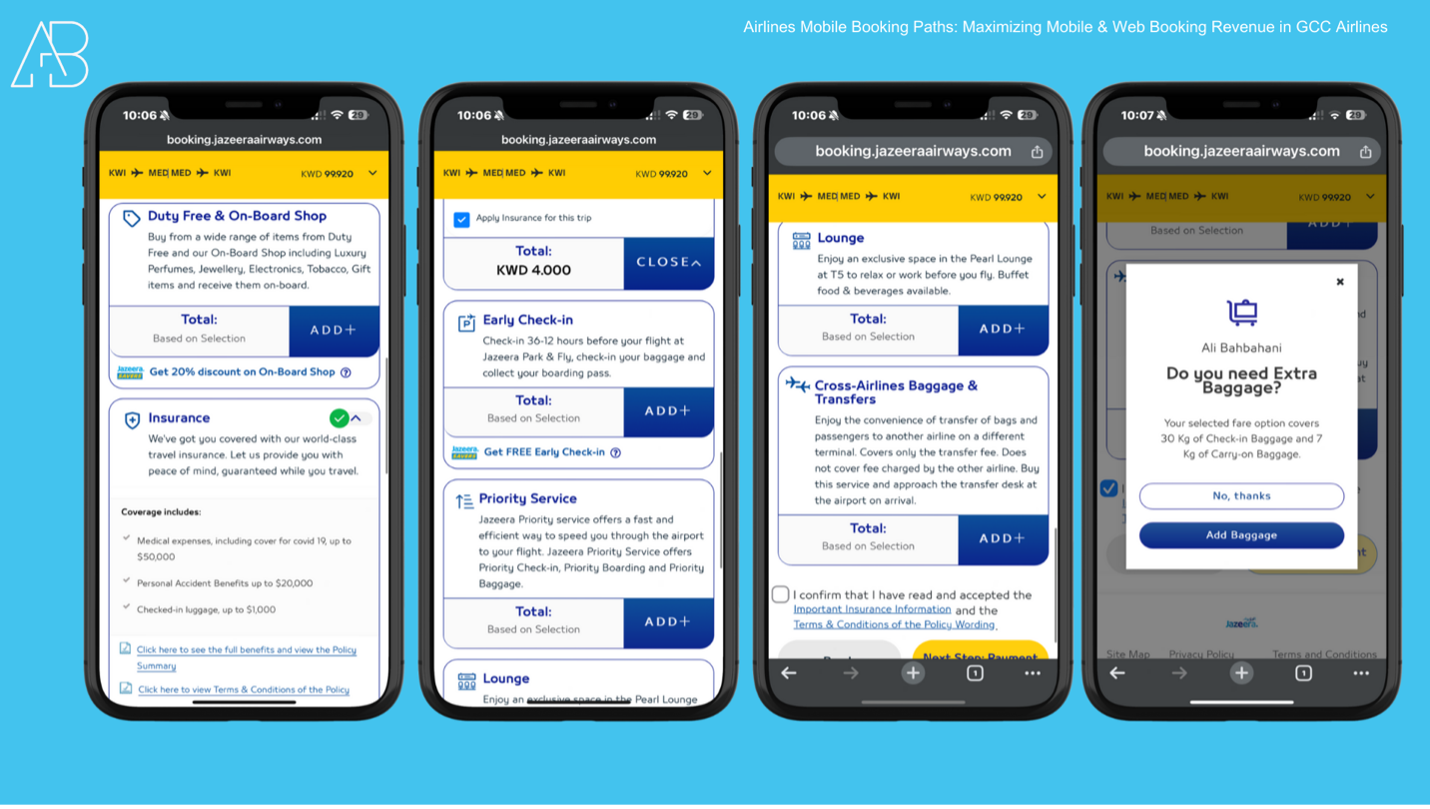
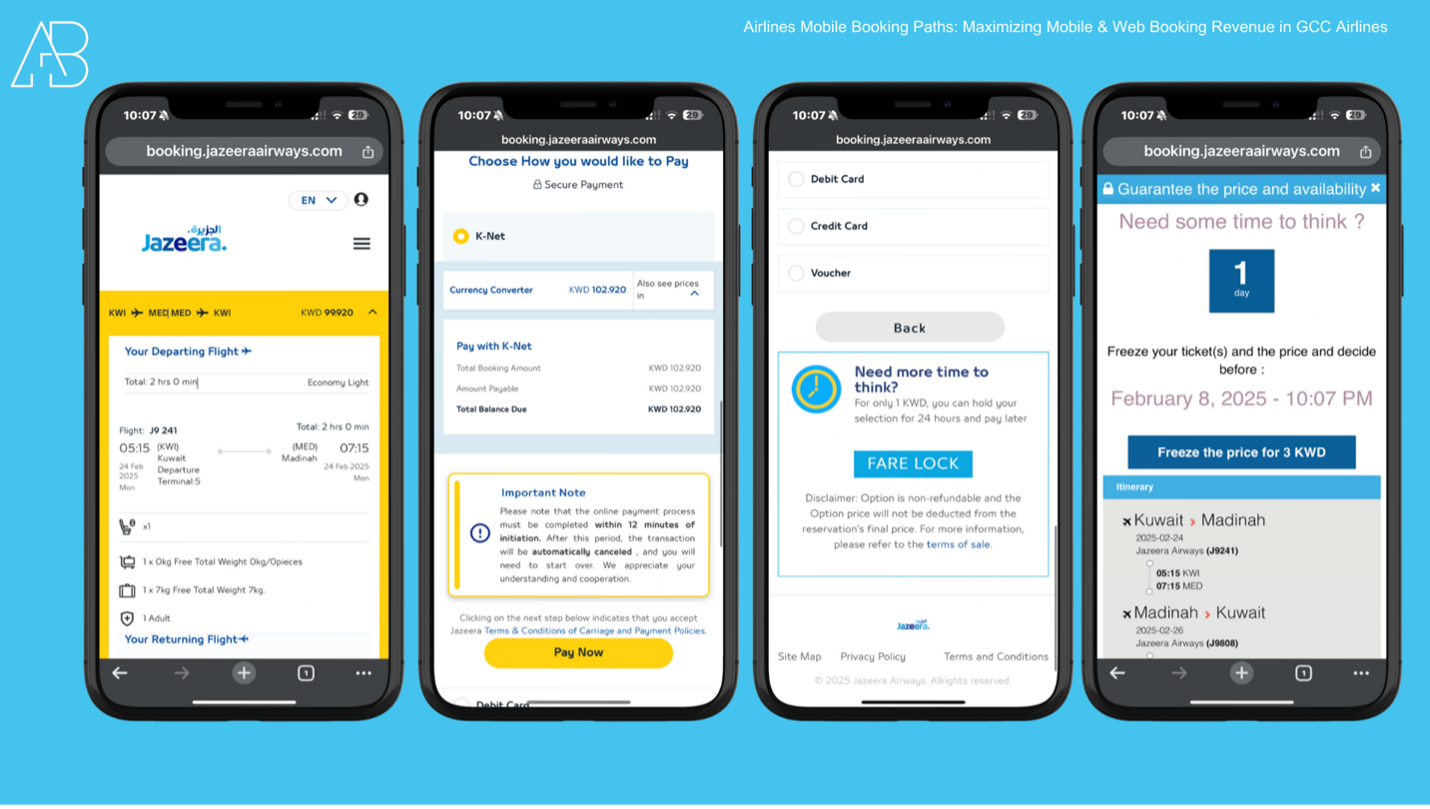
9. Jazeera Airways
- Flow: 8–9 steps. Too long.
- Upsells: Essential, Flex, Flex Plus bundles. Fare lock for a small fee. Too many upsell points in sequence.
- Loyalty: No frequent flyer programme. Subscription tier surfaced at price display.
- What would help: Cut the number of upsell screens by half. The fare lock is a real asset and should be more visible.
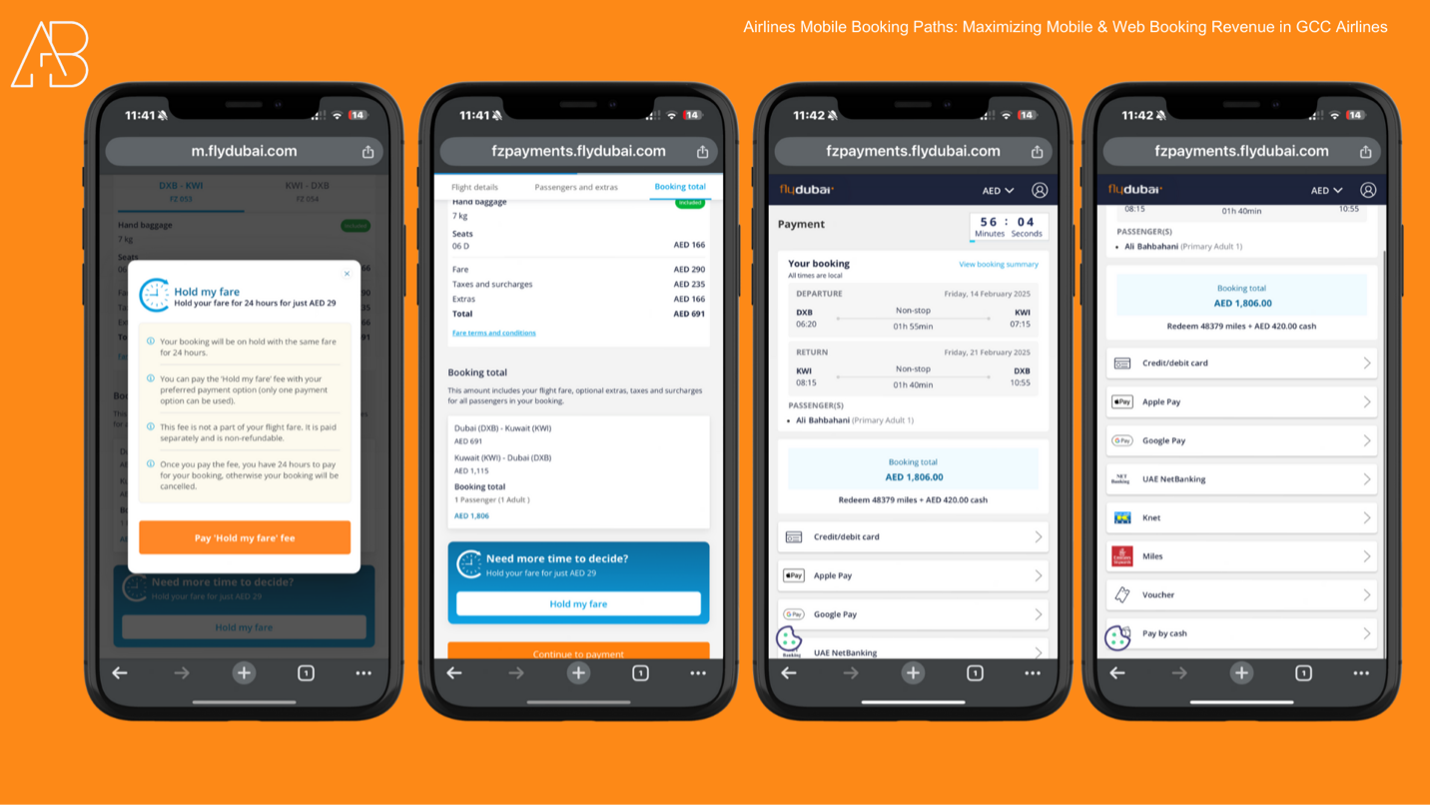
10. flydubai
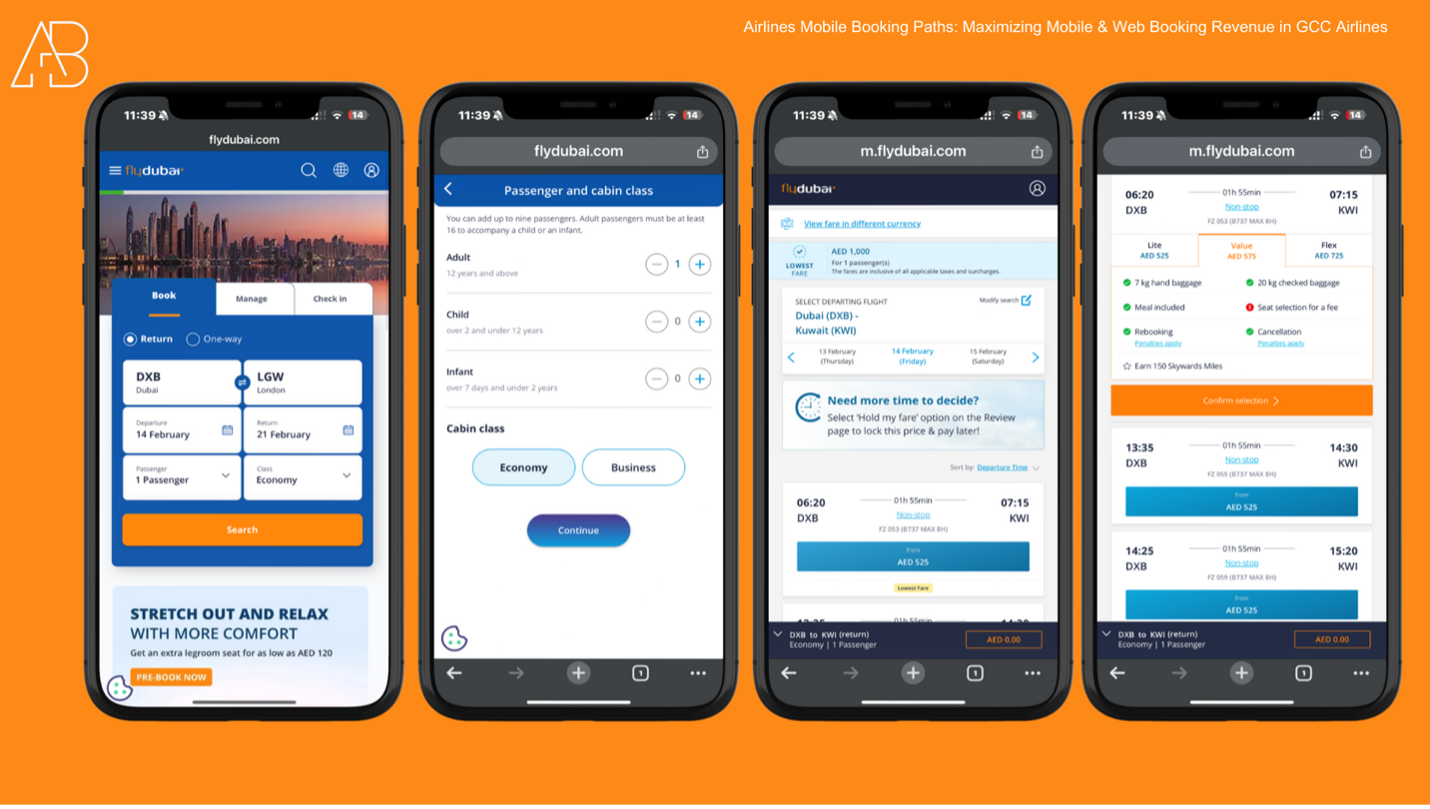
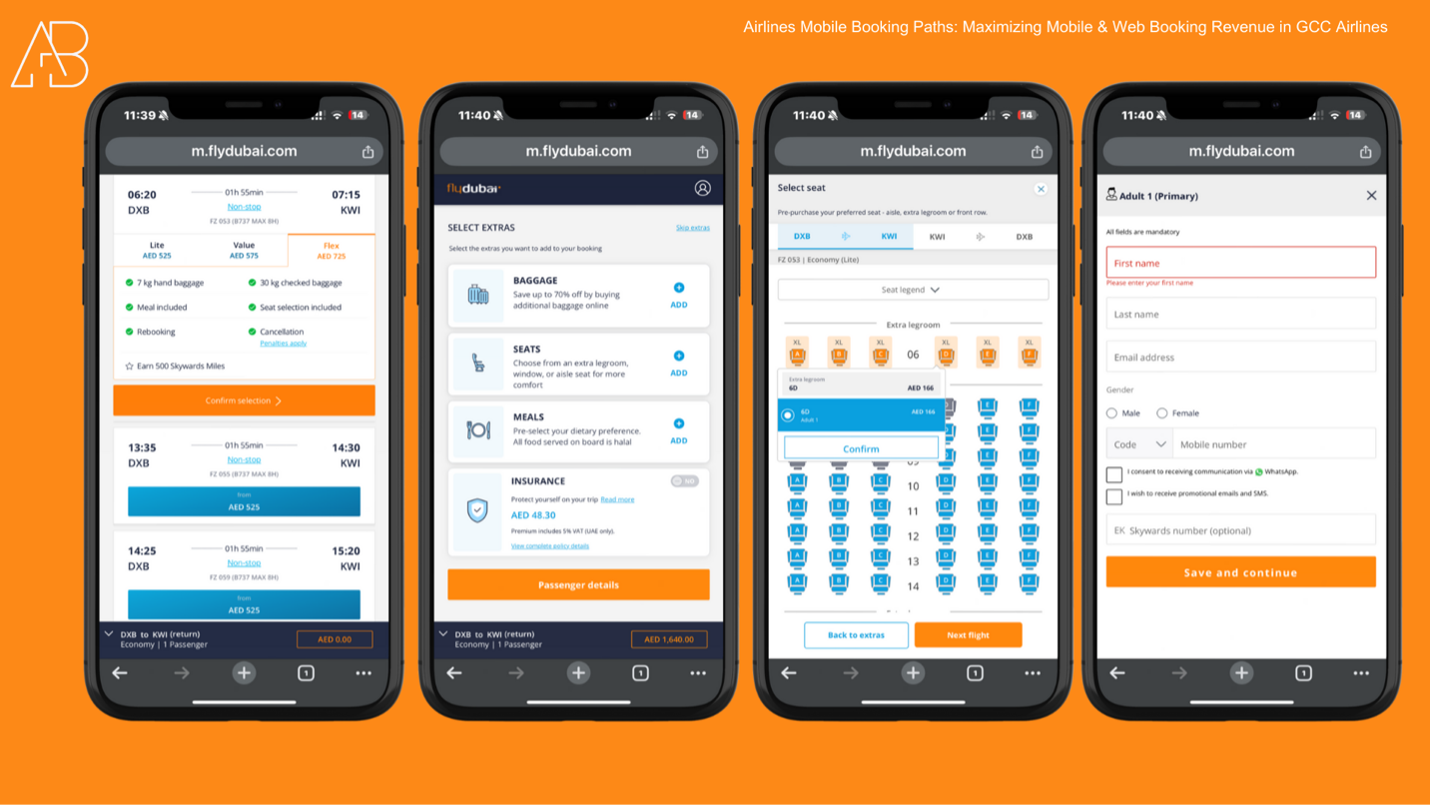
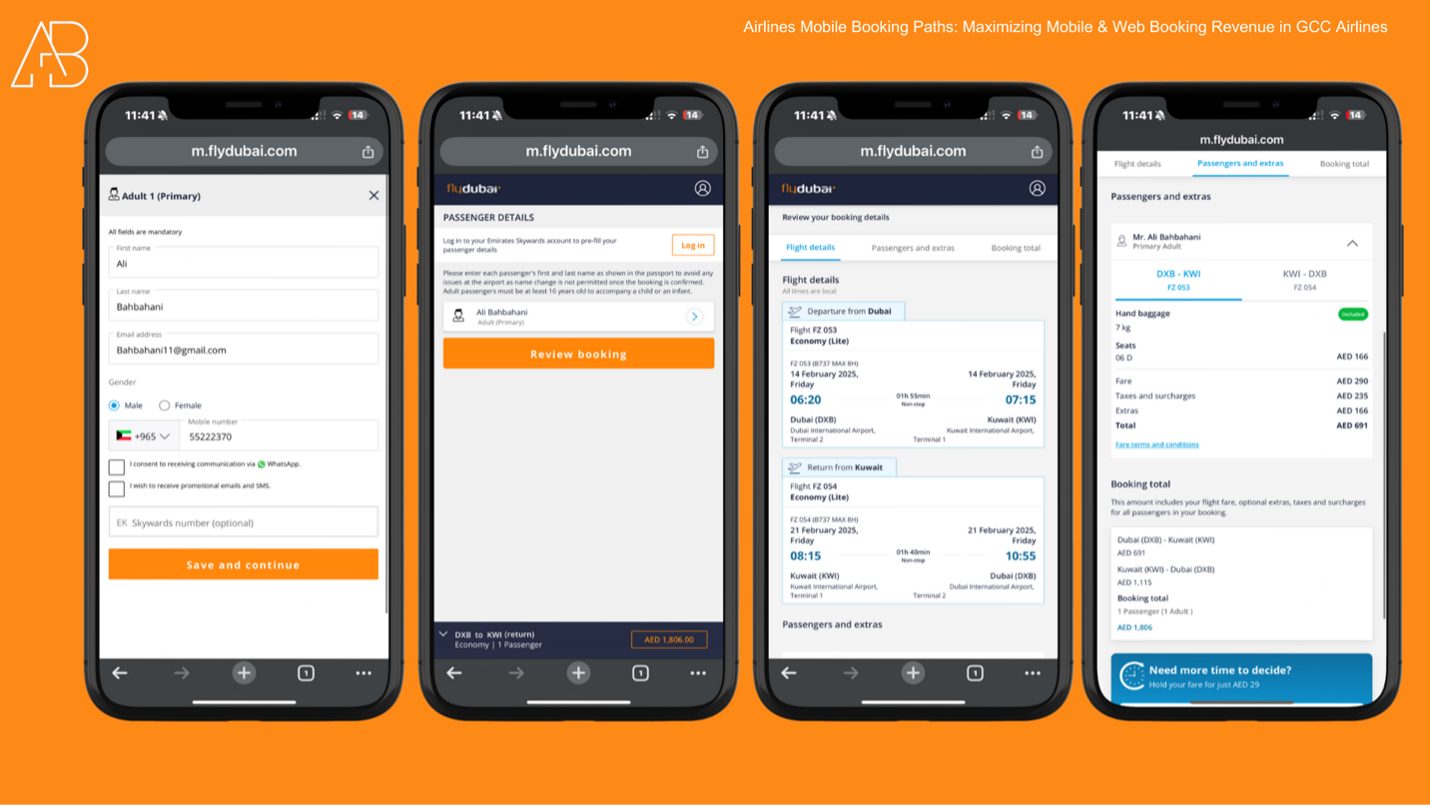
- Flow: 7–8 screens.
- Upsells: Lite, Value, Flex fares with seat, baggage, meals, insurance. Hold My Fare for 24 hours.
- Loyalty: Skywards integrated through Emirates. Apple Pay, Google Pay, KNET, cards.
- What would help: Consolidate baggage, seat, and meal selection on one page.
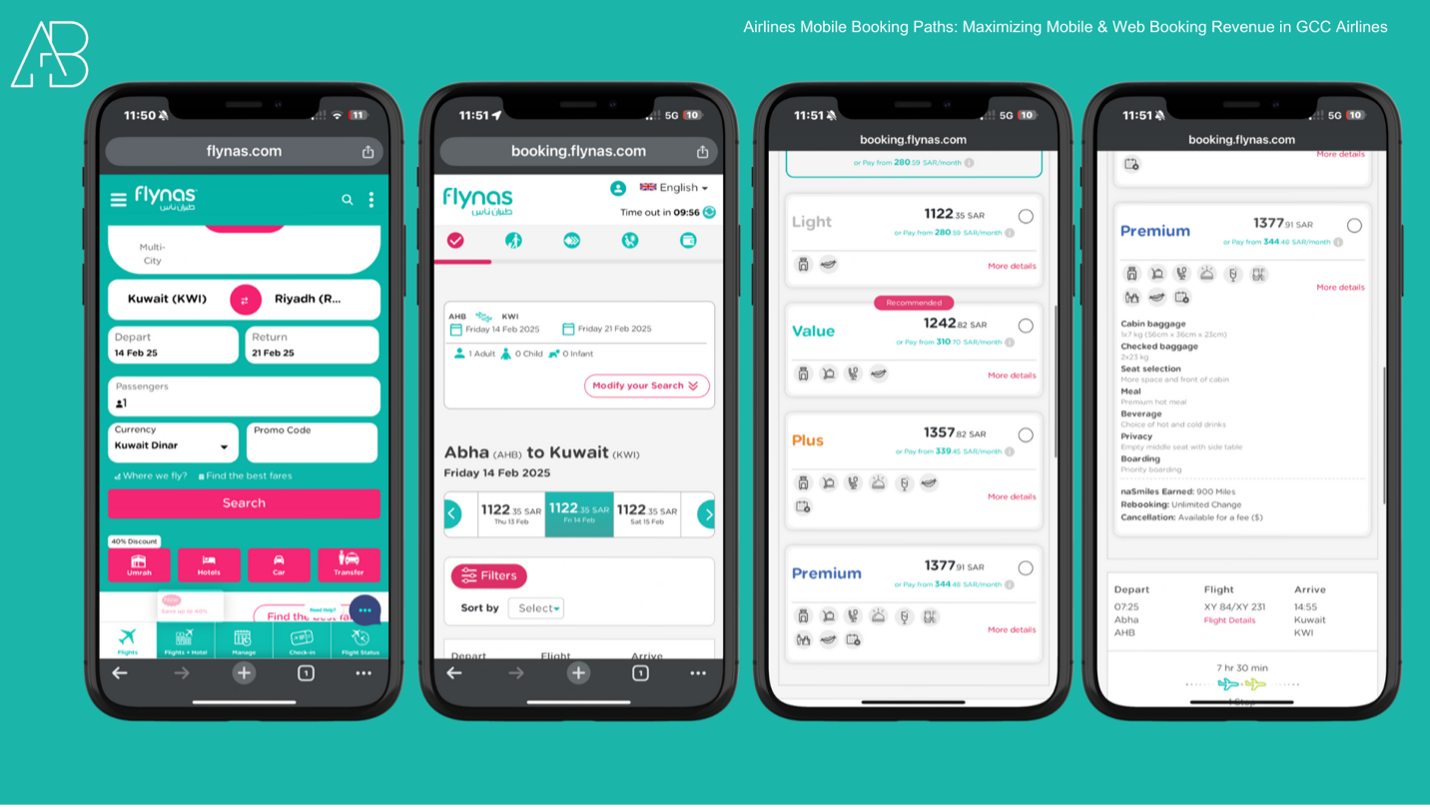
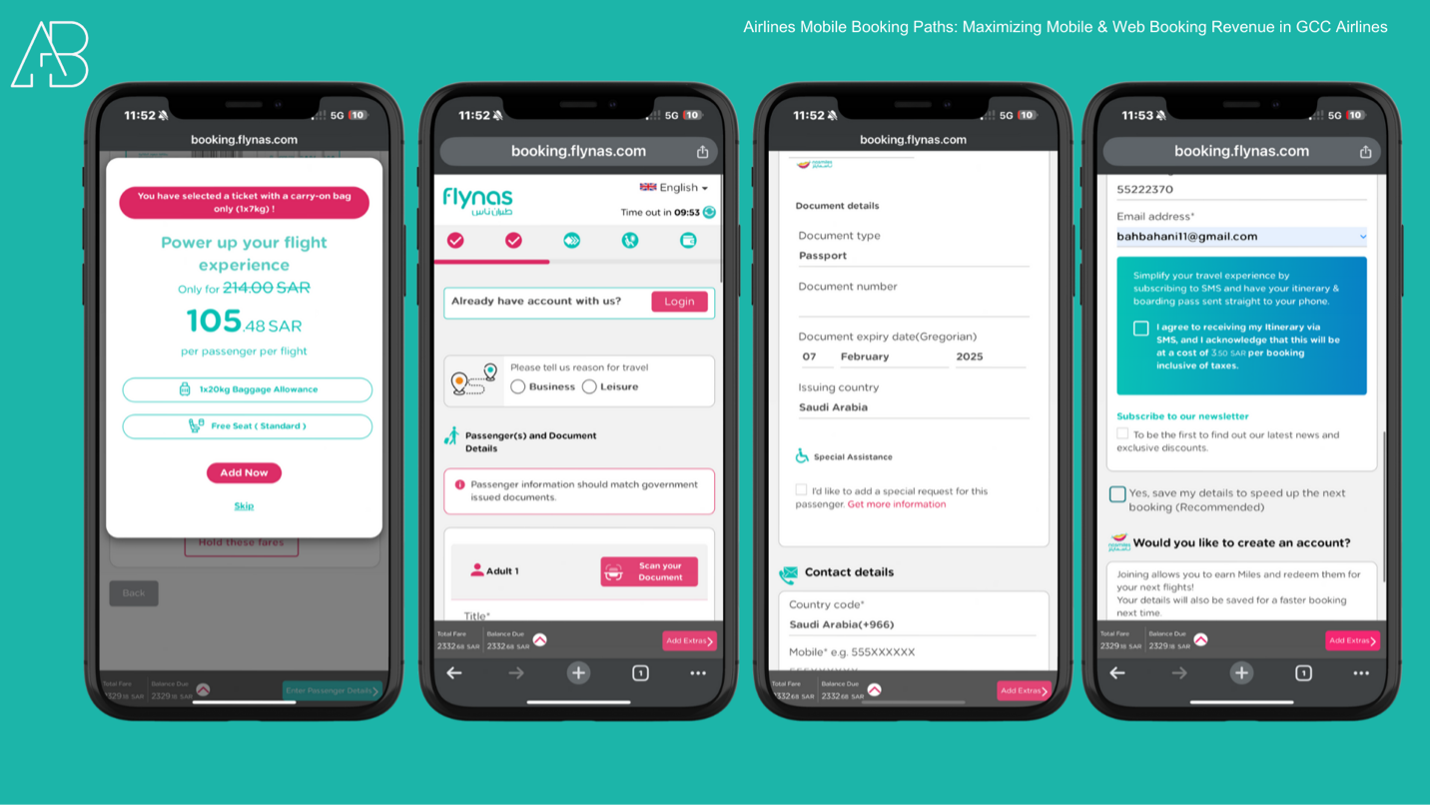
11. flynas
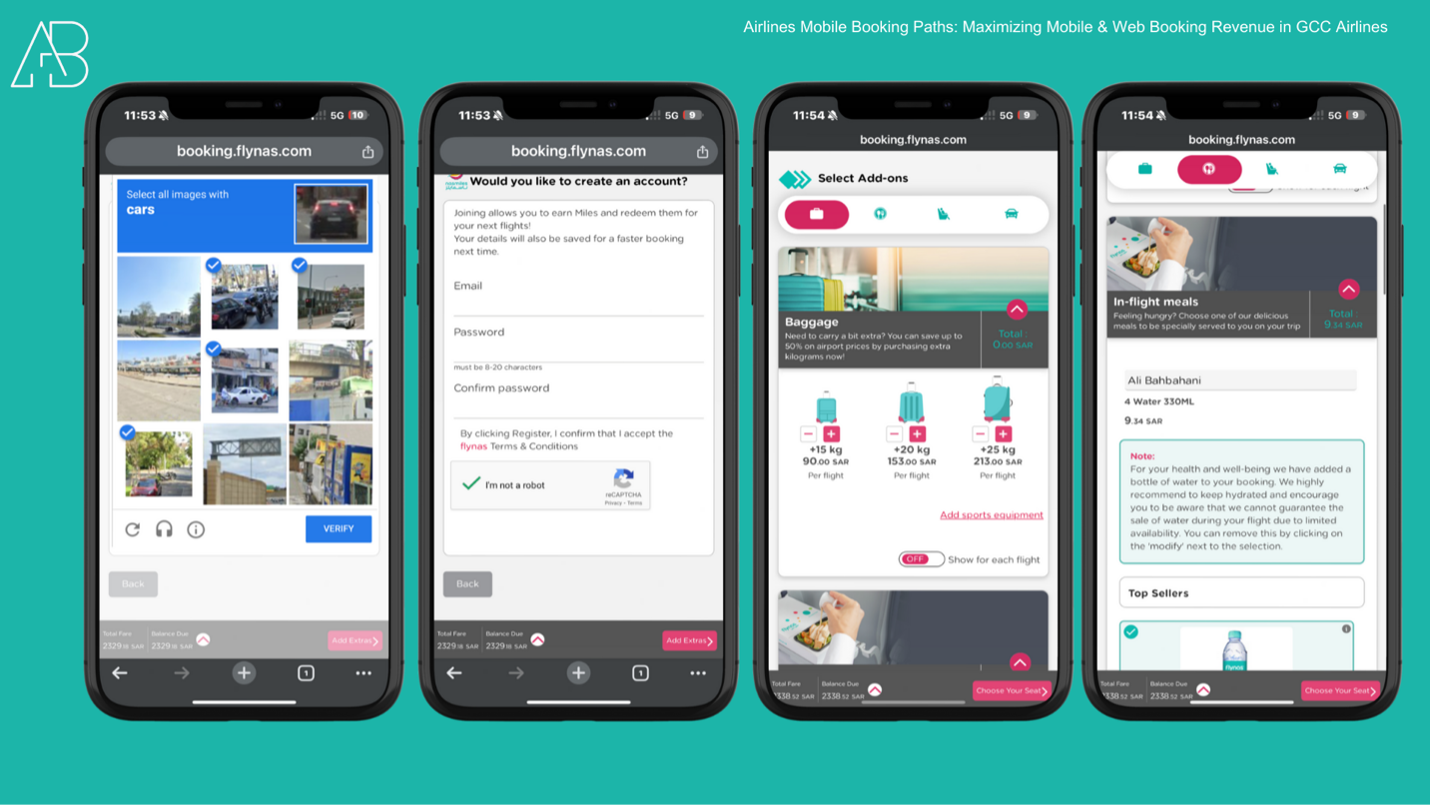
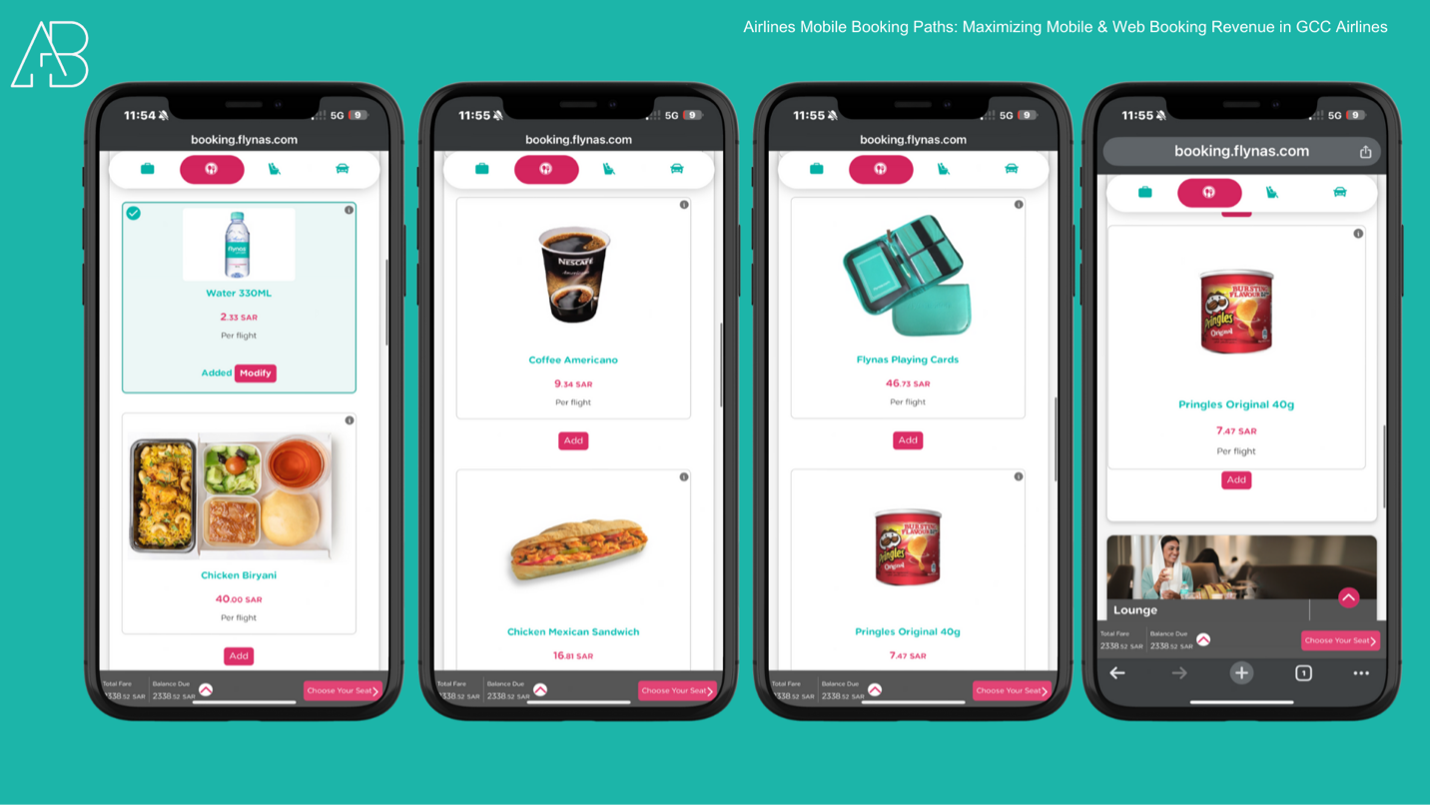
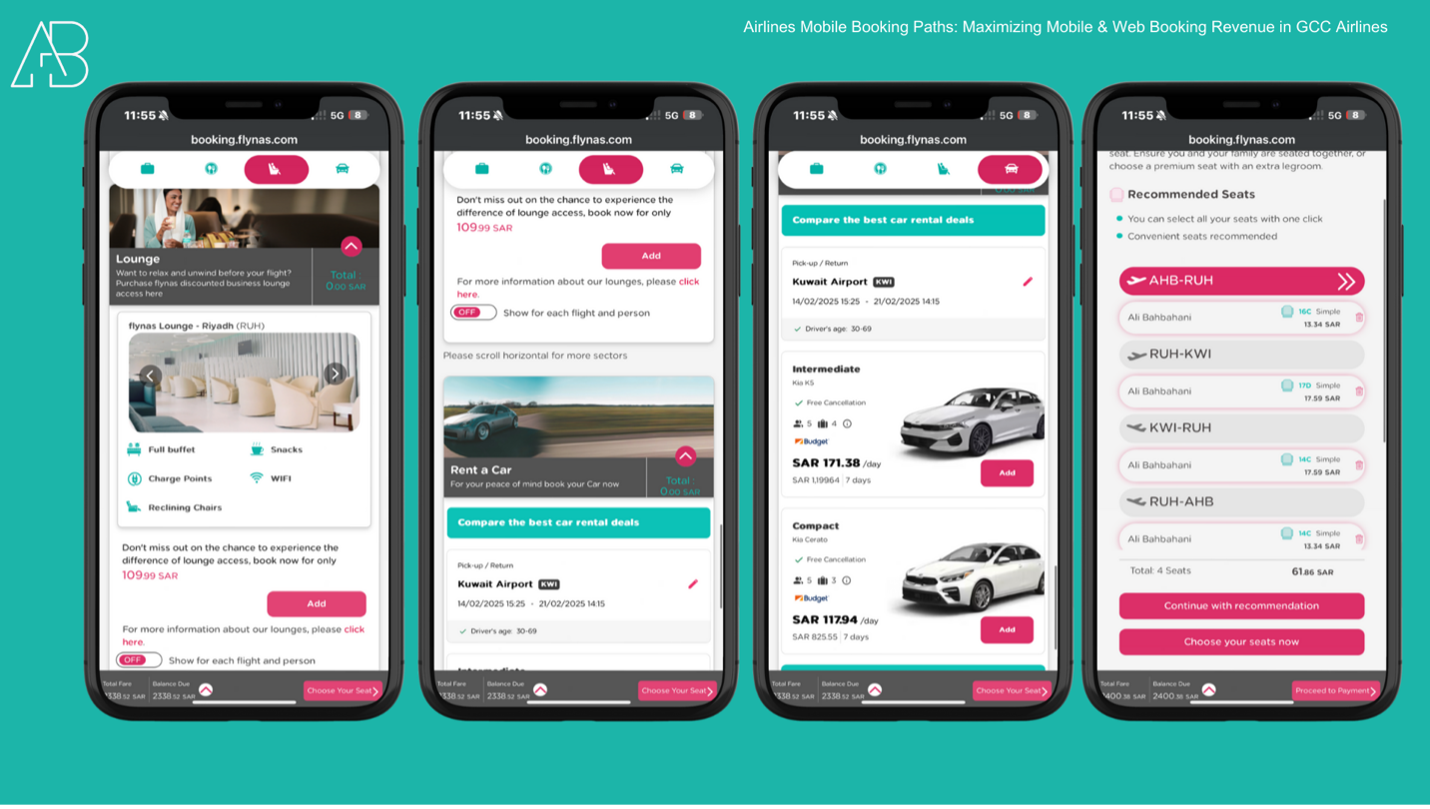
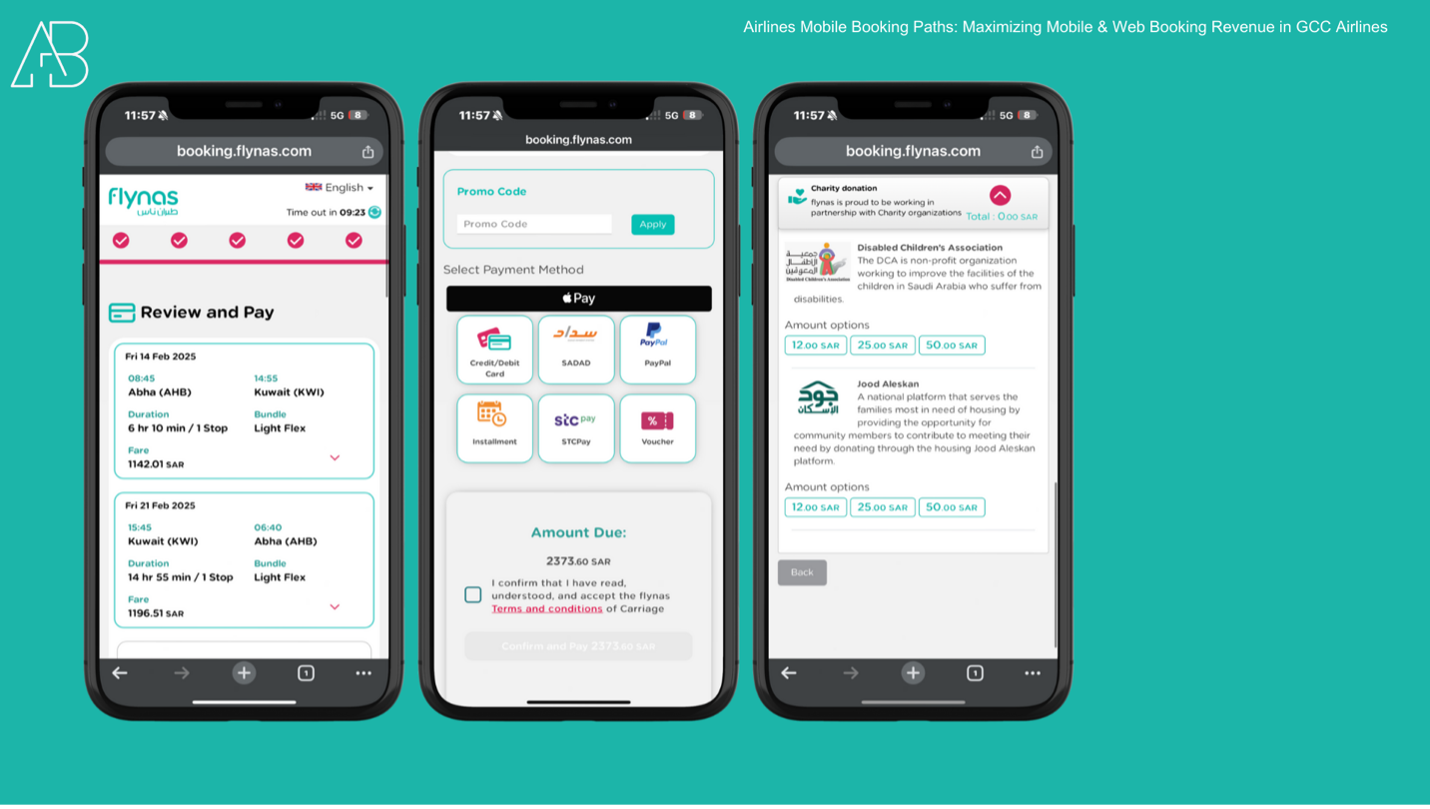
- Flow: 8–9 steps. Longest path in the review. Bright branding for younger travellers.
- Upsells: Light, Value, Plus, Premium families. Baggage, seat, meal, lounge, car rental.
- Loyalty: No prompt. Apple Pay, STCPay, cards. Strong abandonment email programme.
- What would help: Combine seat, meal, baggage on one screen. Add a child meal flow for family bookings. Remove the "I am not a robot" prompt. Cut ancillary options that do not drive revenue.
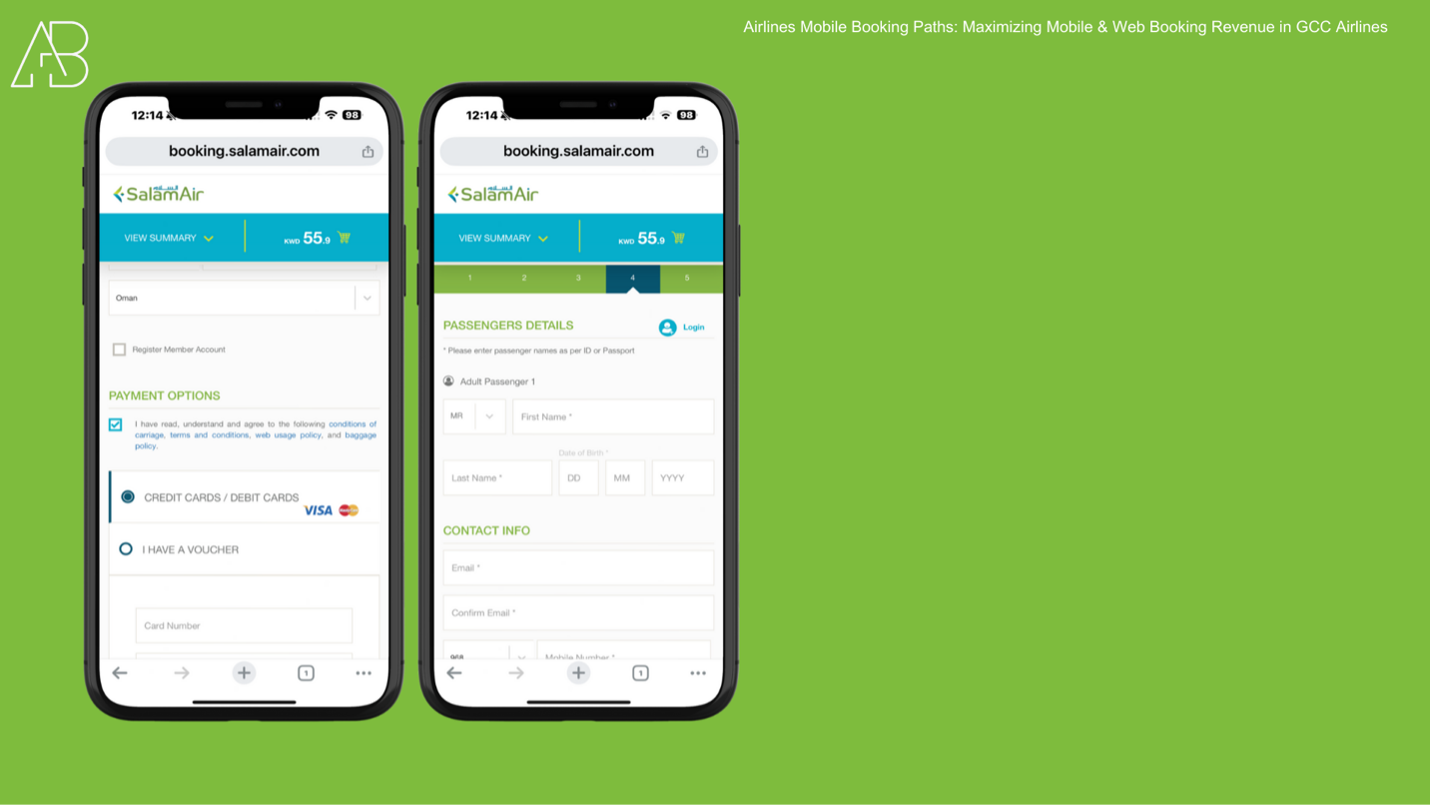
12. SalamAir
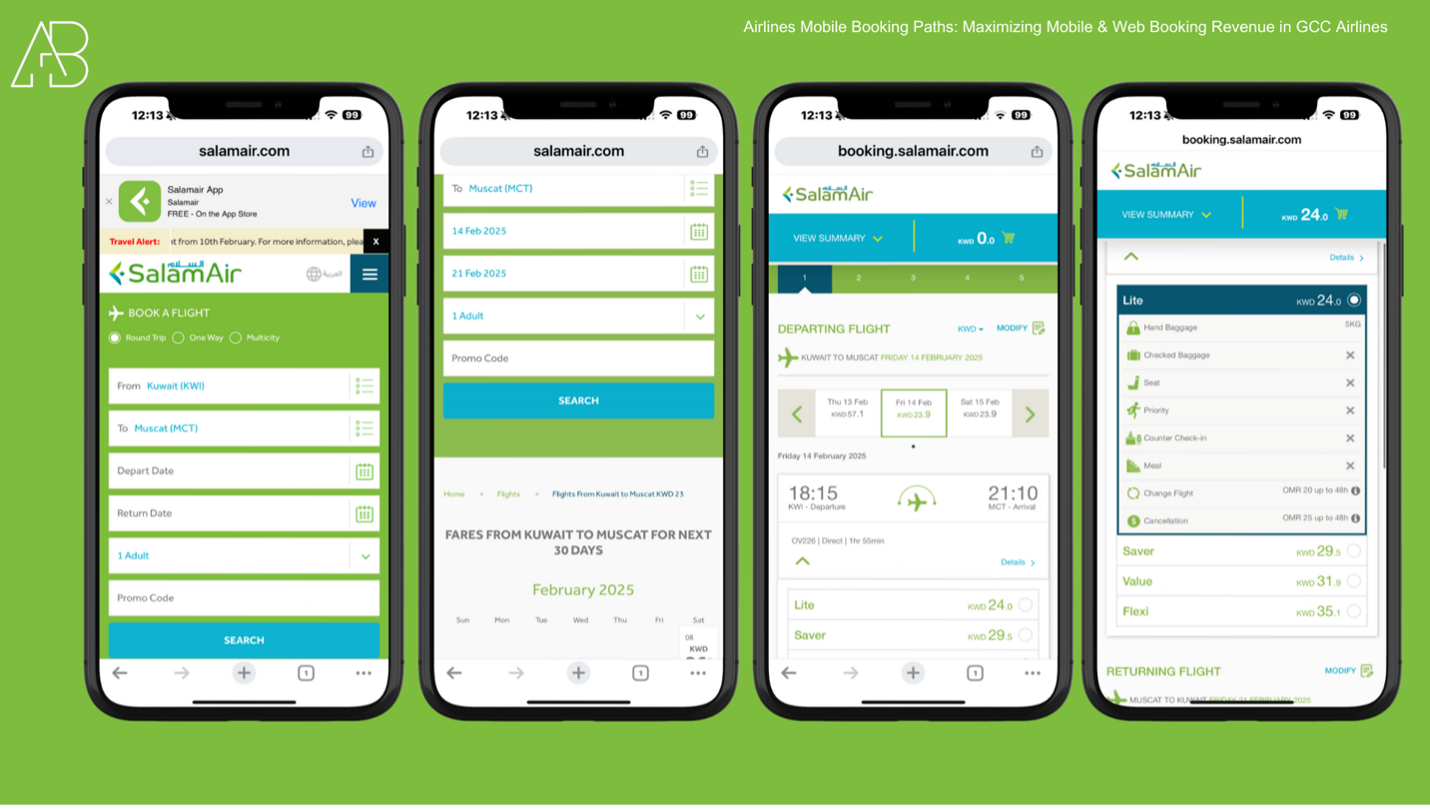
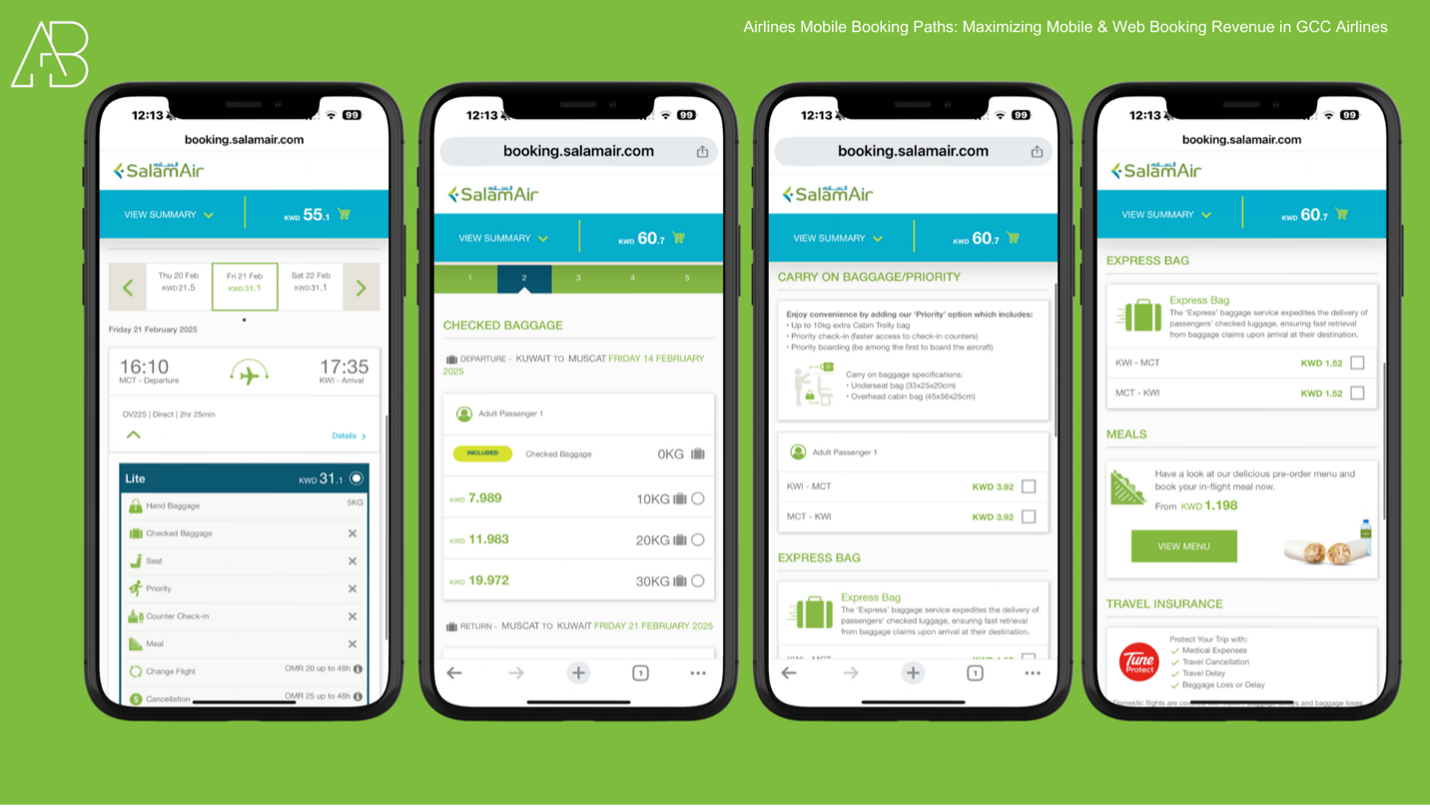
- Flow: 7–8 steps. Standard LCC structure.
- Upsells: Lite, Saver, Flexi families. Everything unbundled: baggage, seat, meals, lounge, check-in fee.
- Loyalty: No prompt. Standard contact and passport data.
- What would help: Combine the pop-ups. A family fare bundle would differentiate them clearly in Oman.
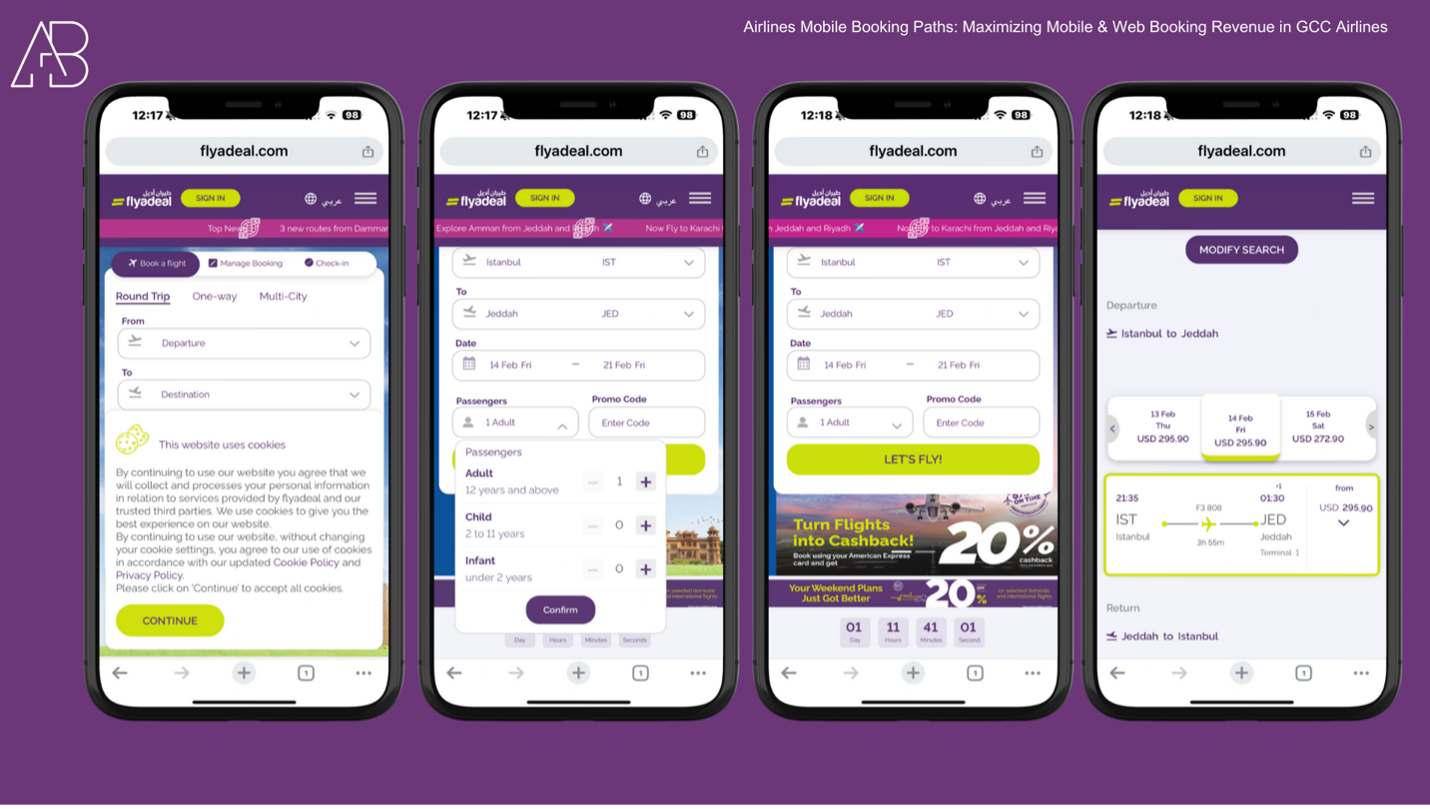
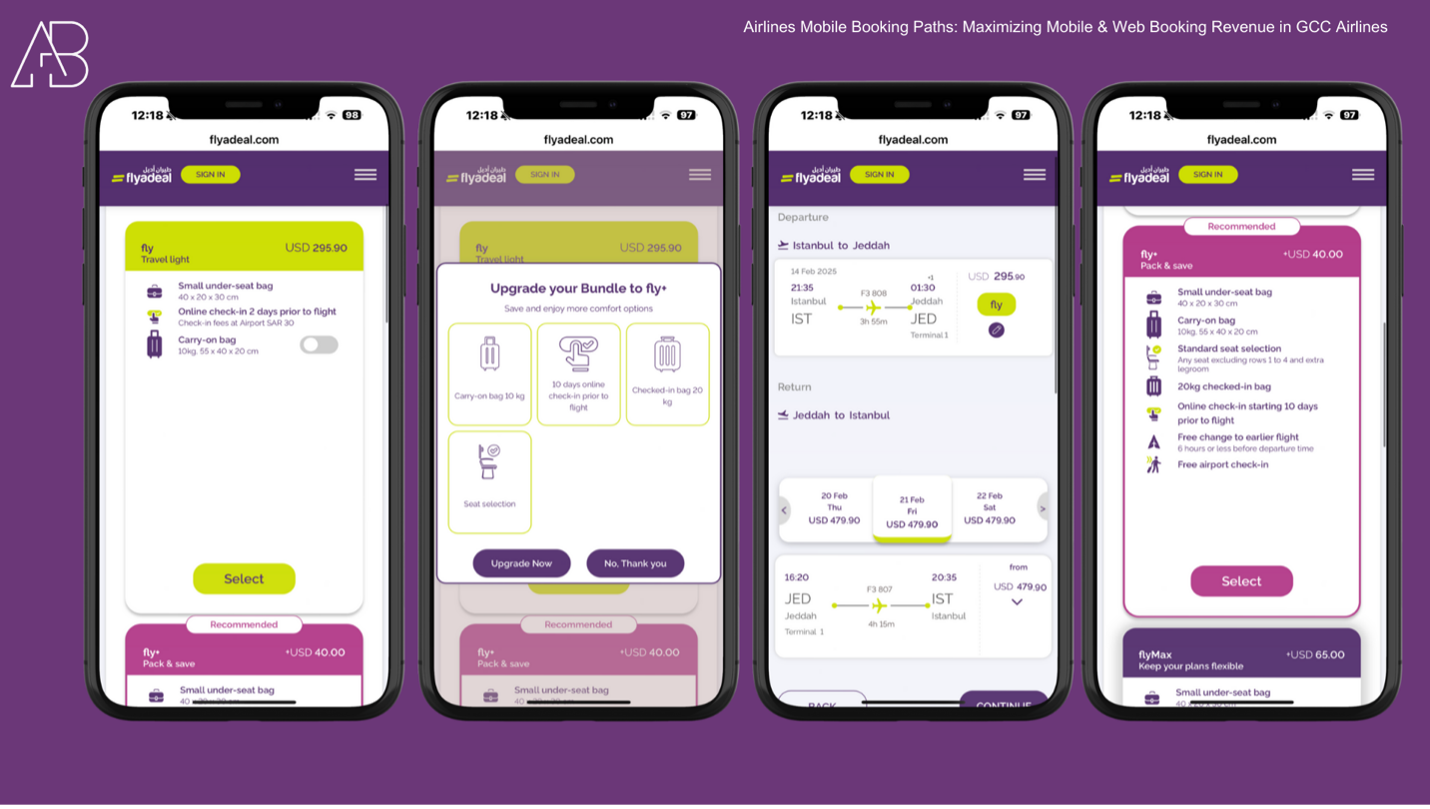
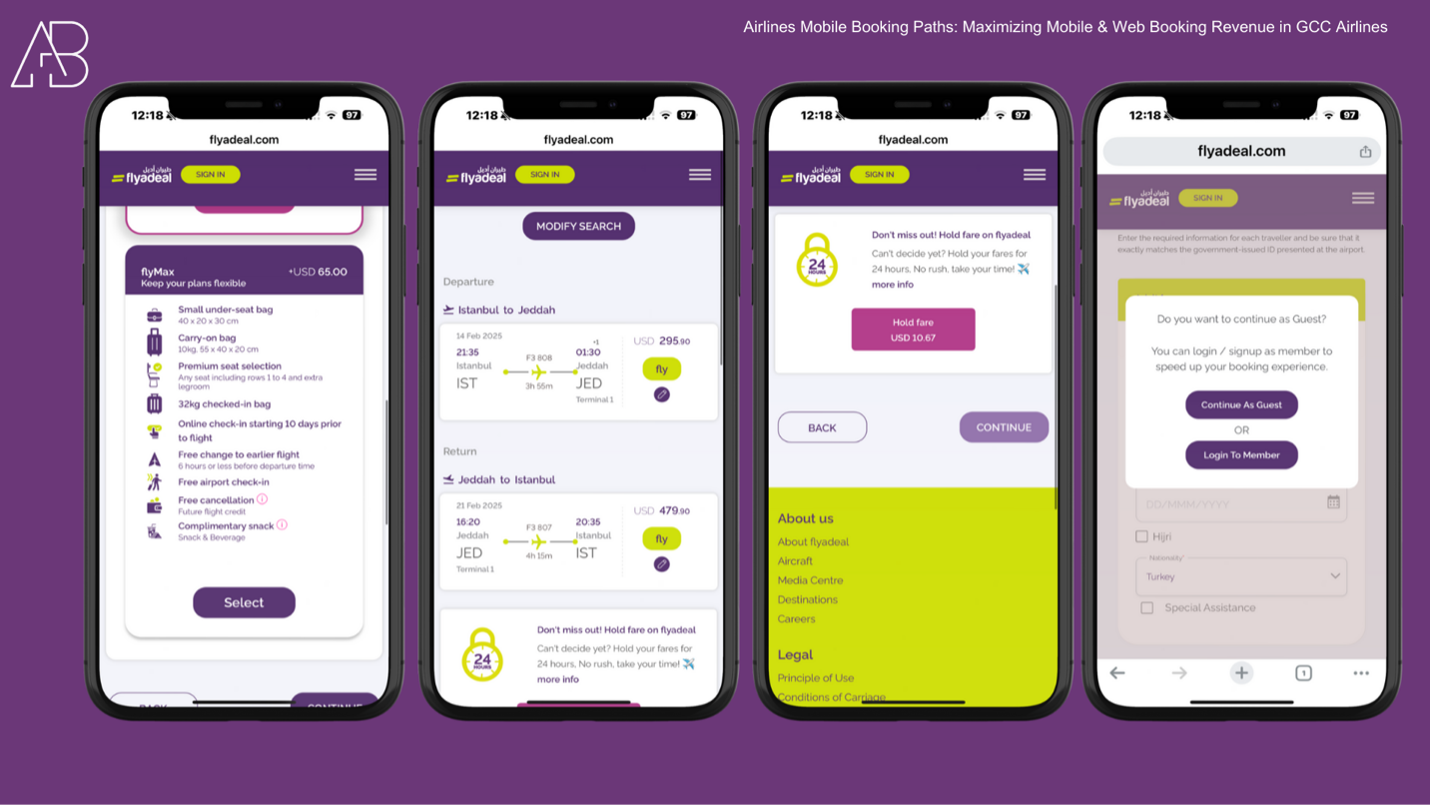
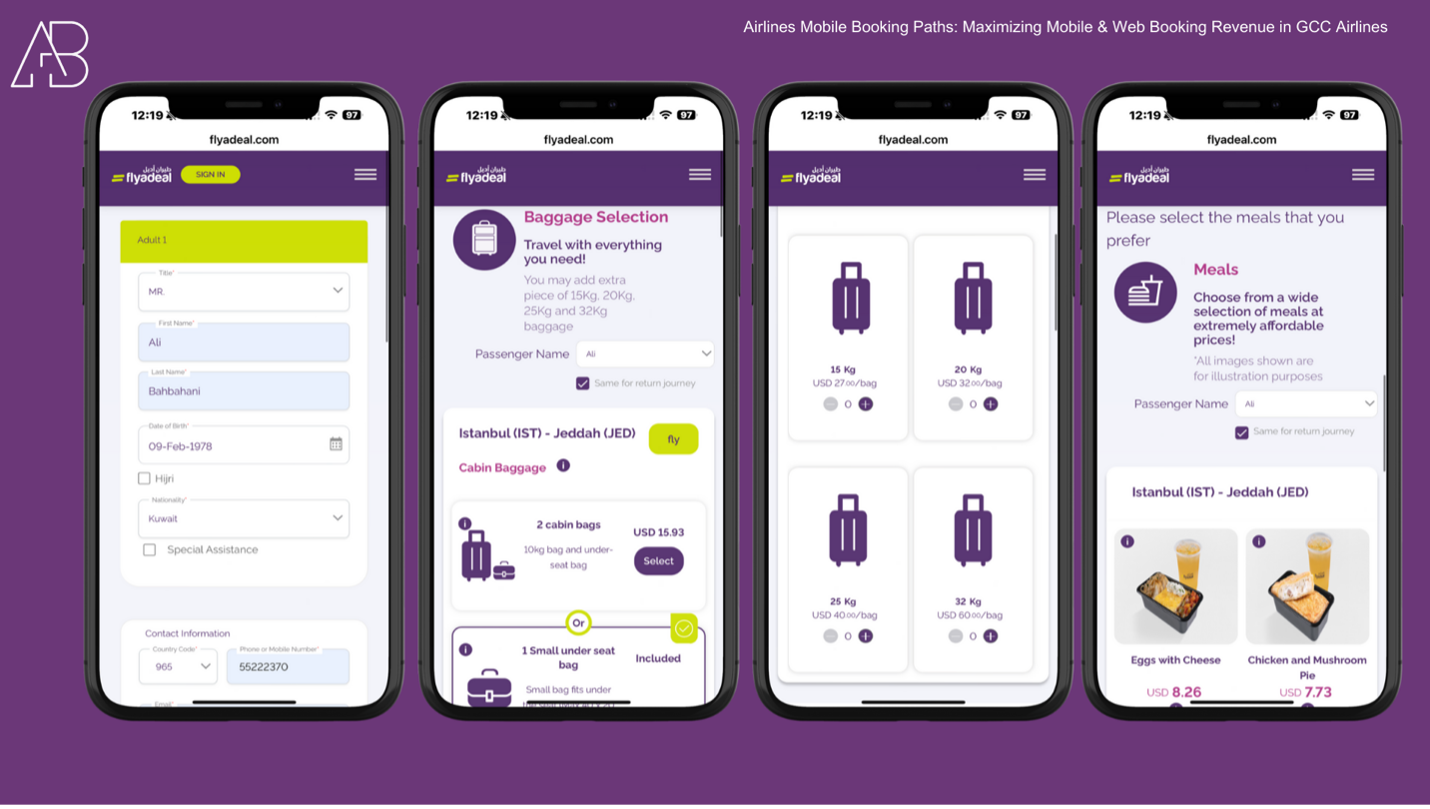
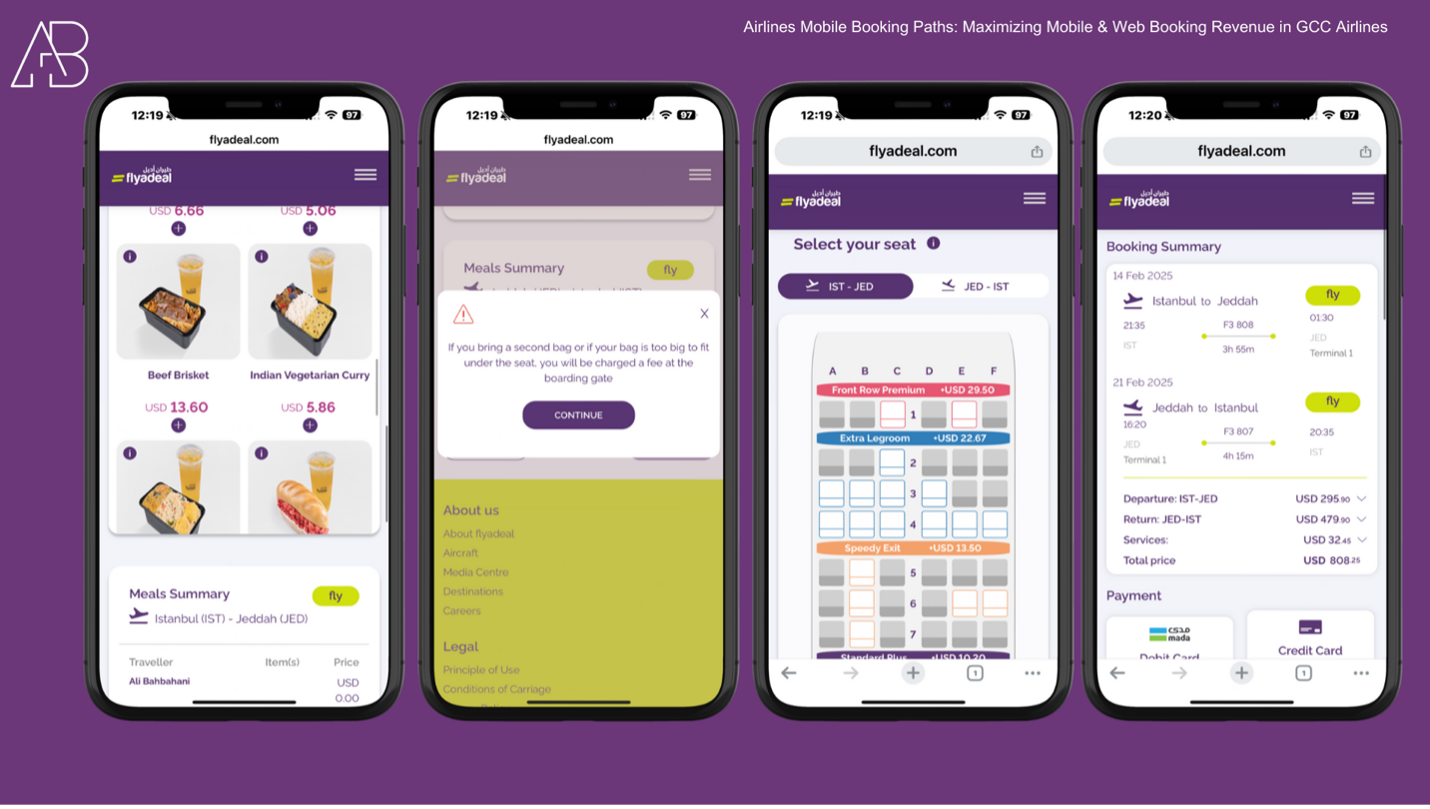
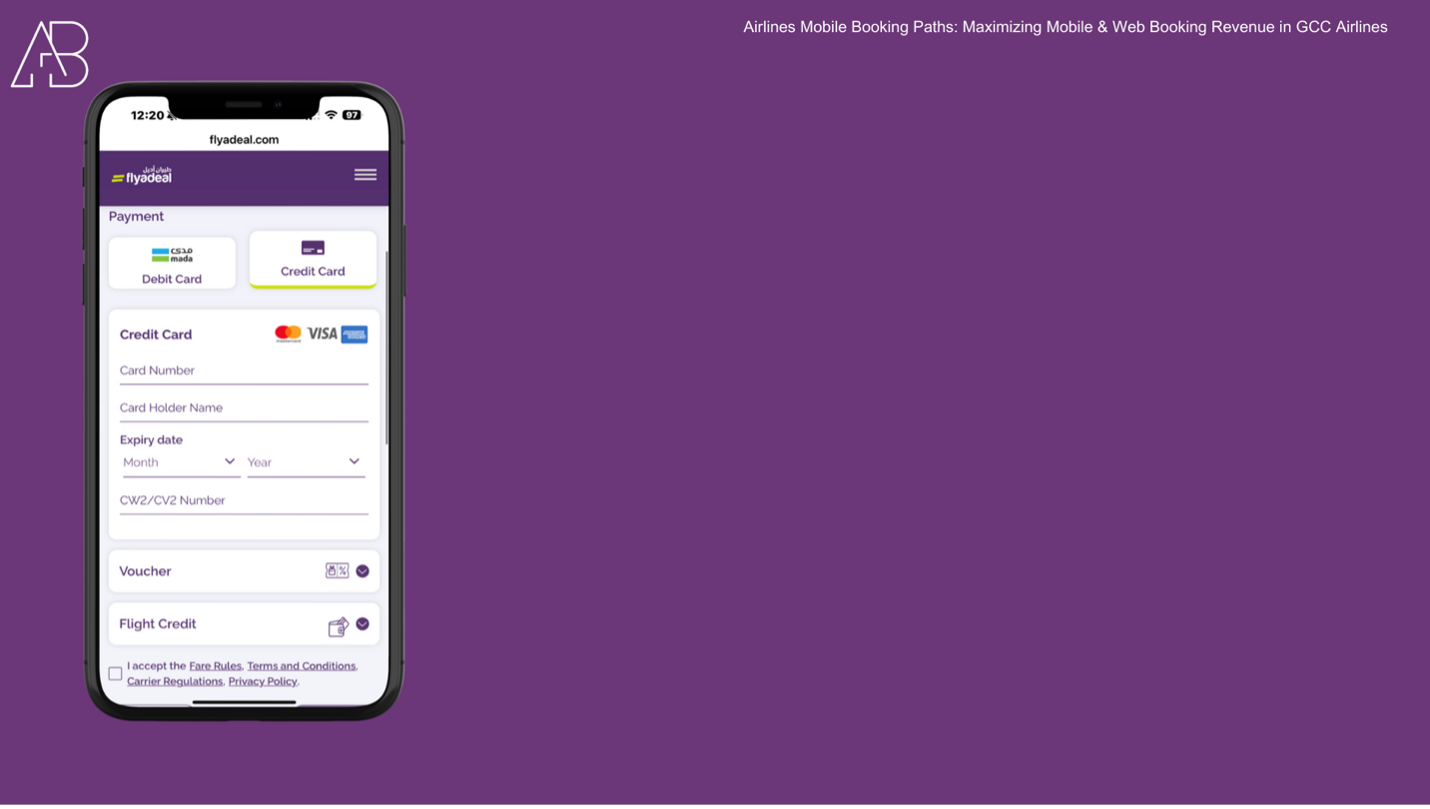
13. flyadeal
- Flow: 7–8 screens. Bold visuals.
- Upsells: fly, fly+, flyMax bundles. Baggage, seat, meal. Hold Fare for 24 hours.
- Loyalty: No frequent flyer scheme. Basic data, local Saudi payment methods.
- What would help: A subscription or club tier would drive repeat bookings in a price-sensitive market.
Best Practices
Five moves separate the carriers that convert from those that do not.
Combine upsells on one screen. Multiple pop-ups for baggage, seat, and meals are friction. One unified add-ons page converts better and faster.
Use family signals. When the booking includes children, surface child meals and waived seat fees. The carriers that do this in Europe and Asia see measurable conversion lift.
Treat the seat map as a second sales moment. When a traveller selects a premium-adjacent seat, prompt the fare upgrade. easyJet's playbook here is well documented and worth borrowing.
Run fare holds and abandonment emails. A small fare hold fee converts hesitant buyers. Abandonment emails recover 10–15% of lost bookings. Saudia and flynas already do this. Most others should.
Embed loyalty at the decision point. "Join now to save 20% on baggage" outperforms a generic membership link by a wide margin.
Conclusion
Conclusion
The thirteen carriers in this review are moving in the right direction on bundling, loyalty visibility, and abandonment recovery. The gaps that remain are not technical. They are about decisions: how many steps to allow, where to put the upsell, what to do when the booking includes a child. The carriers that decide these things deliberately will pull ahead on ancillary revenue in the next two years.
The benchmark group is small. Qatar Airways for premium cross-sell. Oman Air for unified add-ons. easyJet for seat-map upselling. Carriers that hit those three marks will pull material ancillary revenue without lengthening the flow.
How Ali Bahbahani & Partners Can Help
We work with carriers on the booking experience itself, not the marketing around it. Specifically:
- Streamline the UX: cut booking steps, unify pop-ups, make upsells feel like service.
- Personalise offers: child meals, seat upgrades, or loyalty discounts surfaced at the right moment.
- Build abandonment recovery: recover lost bookings with the email flow most carriers still do not have.
- Move loyalty into the flow: from a footer link to the decision point where it converts.
Get in touch to discuss your current booking funnel and where the revenue is leaking. Contact us.