
Elevating Travel: Kuwait Airways Case Study
I have flown Kuwait Airways for years. The airline has been the country's national carrier since 1954 and it carries a real weight of history. It also trails Emirates, Qatar Airways, and Etihad on every operational measure that the premium customer notices. This is what I see when I look at the airline as a frequent flyer, and where the gap can realistically be closed.
.avif)
A Struggle to Stay Aloft
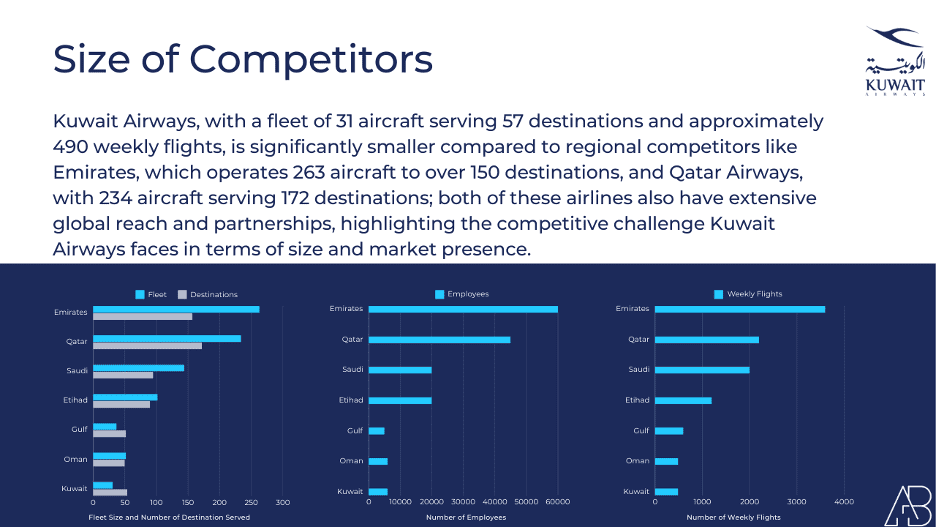
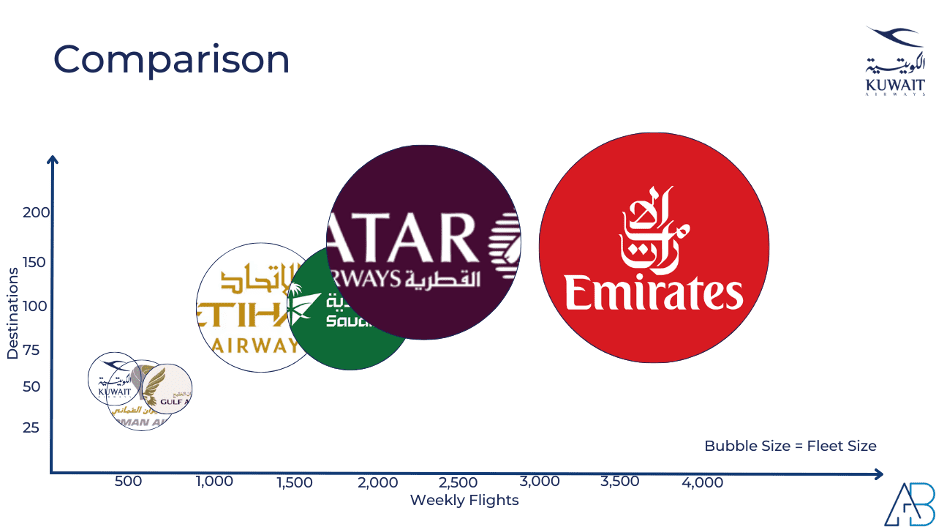
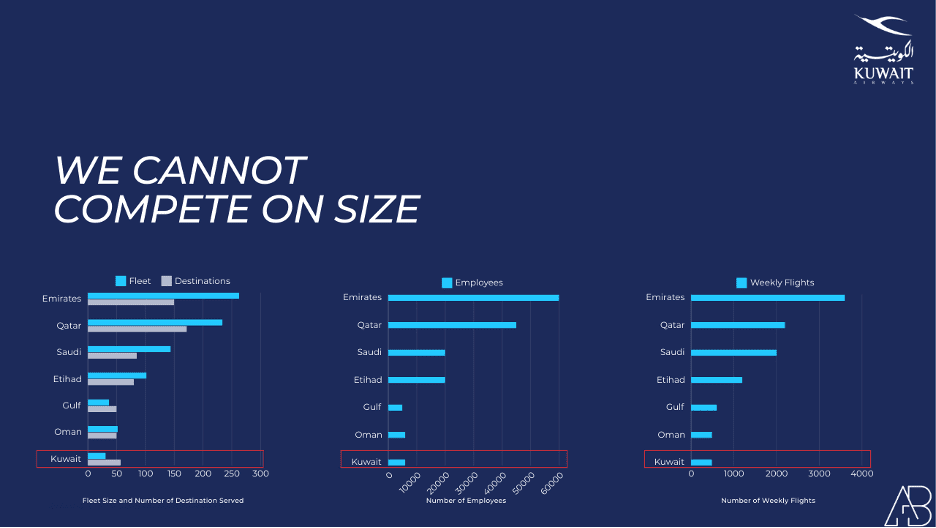
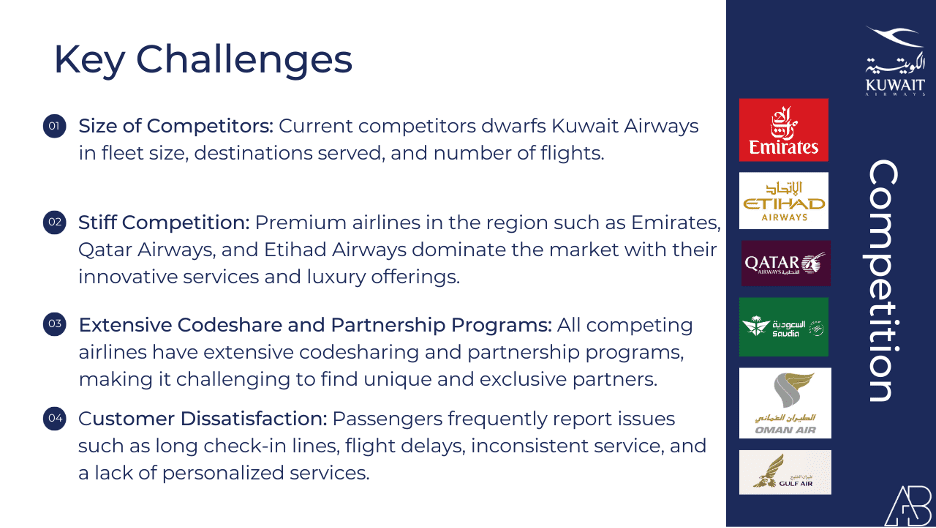
Kuwait Airways today operates 31 aircraft and serves 57 destinations. Emirates runs over 250 aircraft to more than 150 destinations. Qatar Airways runs around 230 aircraft to 172 destinations. The numbers are not the whole story, but they are the part of the story that the customer feels first: fewer routes, fewer schedule options, fewer ways to put together a full journey on a single ticket. The gap is structural and it shows up everywhere the airline meets the passenger.

On the Skytrax World Airline rankings, Kuwait Airways sits at 92. Qatar Airways is at 1. Emirates is at 3. Those rankings are a composite of cabin product, service consistency, ground experience, and customer-reported satisfaction, and they correspond closely to what I have experienced flying the airline myself.
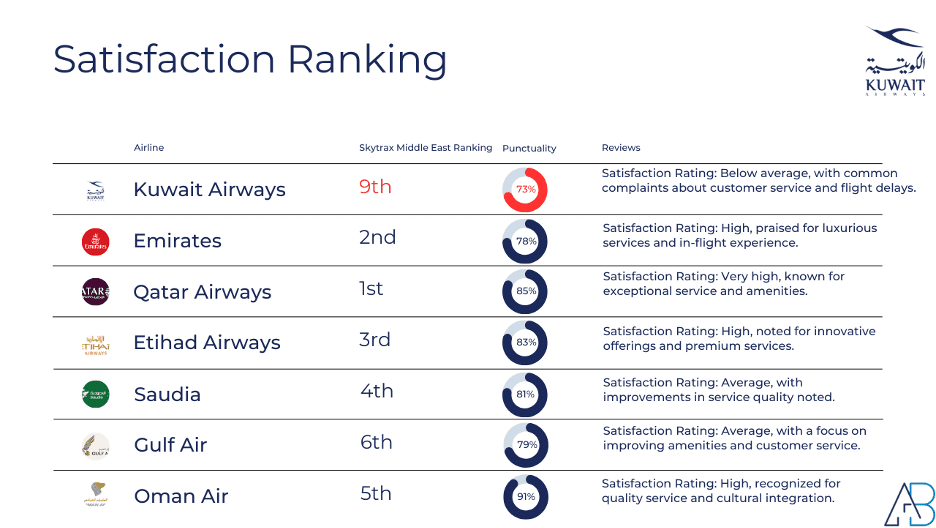

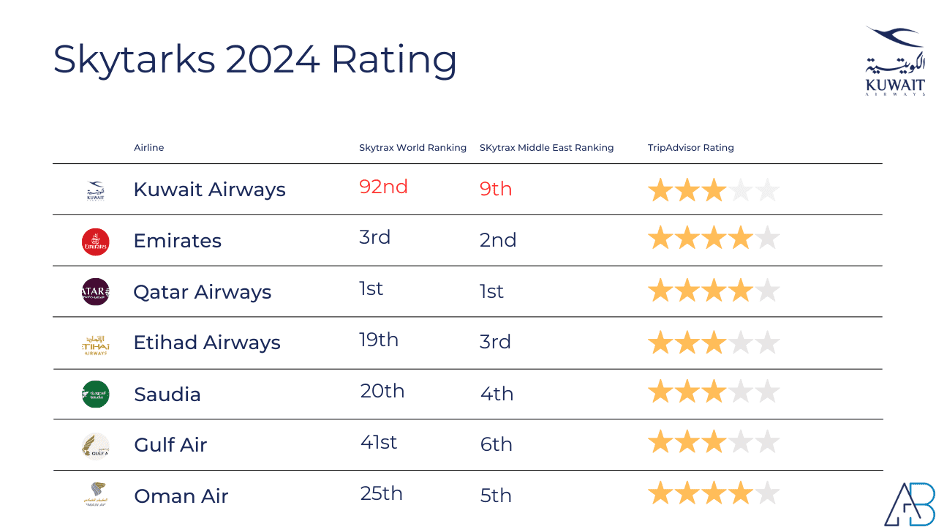
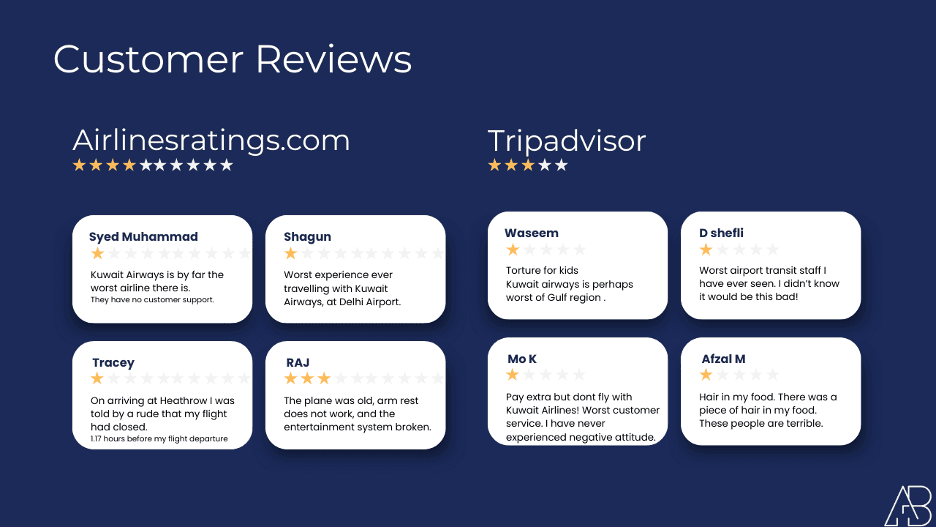
Customer Satisfaction: Where We Fall Short
The web booking flow and the mobile app are both behind where modern airline products are. The visual design feels like a decade ago. The functionality is incomplete. The Oasis Club rewards program is not properly integrated into the app, so redeeming points still requires a physical visit to a Kuwait Airways office. In a category where Emirates Skywards and Qatar Privilege Club handle every redemption inside the app, this is a competitive disadvantage that the airline pays for daily in cancelled bookings and abandoned upgrades. I have written about the same problem on the booking funnel in our GCC airline case study.
In-flight, the consistency problem is the most damaging single issue. I had a long-haul Royal Class flight where the in-flight entertainment system did not work for the duration of the flight. On another flight, blankets ran out because the ground team did not load enough for the return leg. Neither of these is the kind of failure that happens occasionally on a well-run airline. They are the kind of failures that happen when the standard operating procedure is loose and nobody owns the check.
The refund process is the third recurring complaint and the one that costs the airline the most goodwill per incident. After cancelling a flight, I had to cancel on the website, send a follow-up confirmation email, and then wait more than a month with no progress updates. There was no way to track the refund status from inside the customer account. A passenger going through that process once will think twice before booking the airline again. A passenger who has been through it twice will tell every business traveller they know to fly someone else.
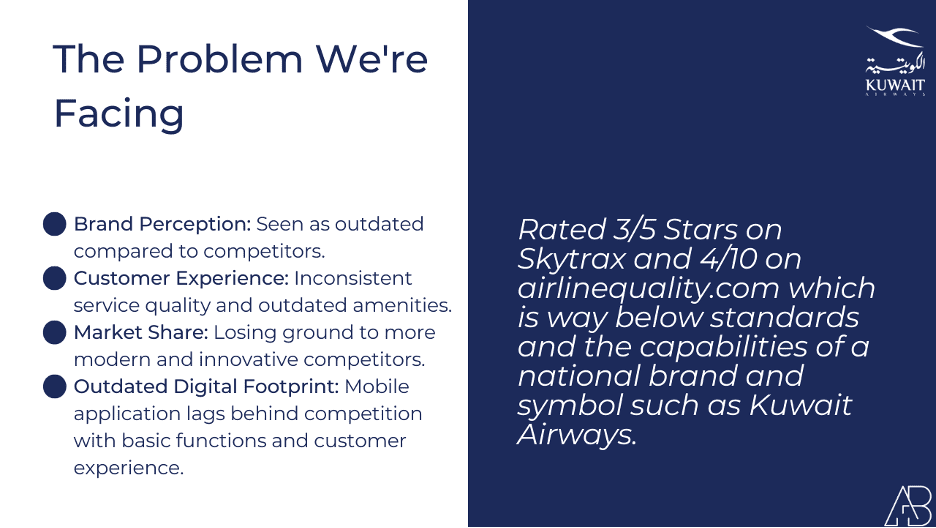
Competitors Soaring Ahead
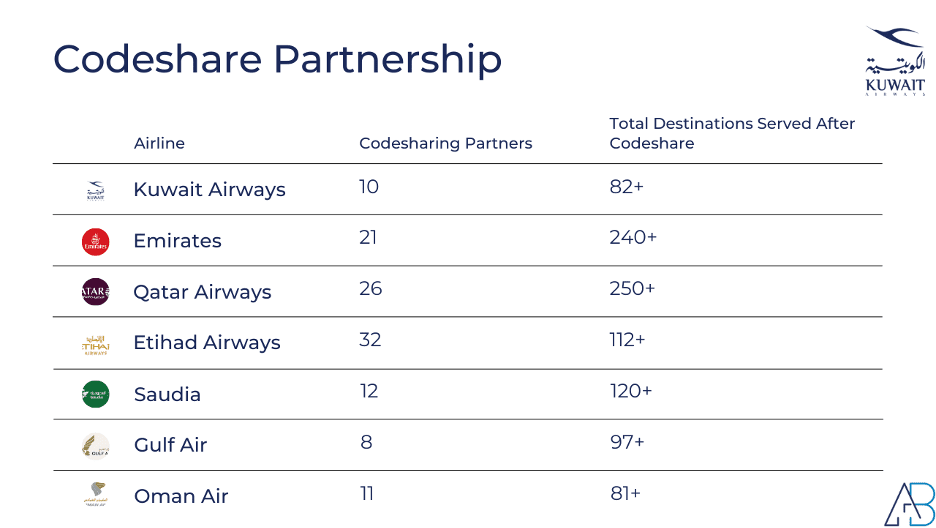
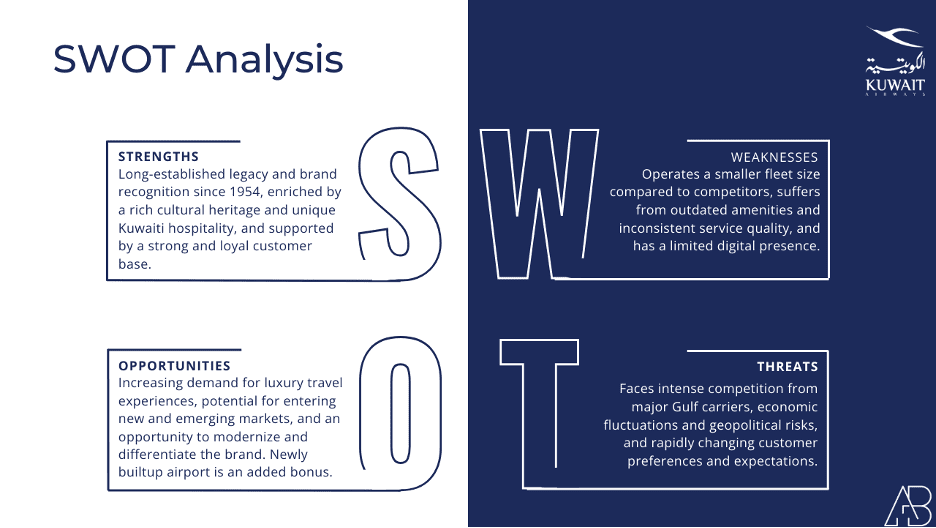
The regional comparison is unflattering and it has been getting worse for a decade. Emirates, Qatar Airways, and Etihad Airways each offer first-class products with private suites, on-demand gourmet dining, and current-generation entertainment systems. On codeshare reach, Kuwait Airways has 10 active partners. Emirates has 21. Qatar Airways has 26. Codeshare reach is what lets a passenger buy a ticket from Kuwait City to a third-tier destination on a single PNR; without it, the customer either goes through a competitor or builds the trip themselves.
On the published service reviews, Kuwait Airways takes consistent hits for outdated cabin product and schedule reliability. The competitors are reviewed for the opposite: hard product that gets refreshed on a schedule, service standards that hold up across stations, on-time performance that justifies the premium fare. The reputational gap compounds because the premium-cabin customer who flies once is the one who decides whether to fly the airline for the next ten years.

First Class Offering
First class is where the comparison gets sharpest, because it is the cabin where customers pay the highest premium and form the strongest opinions. The first-class experience starts before check-in and continues after arrival. Every regional carrier now has a defined first-class product. Here is what each of them actually delivers.
Emirates First Class
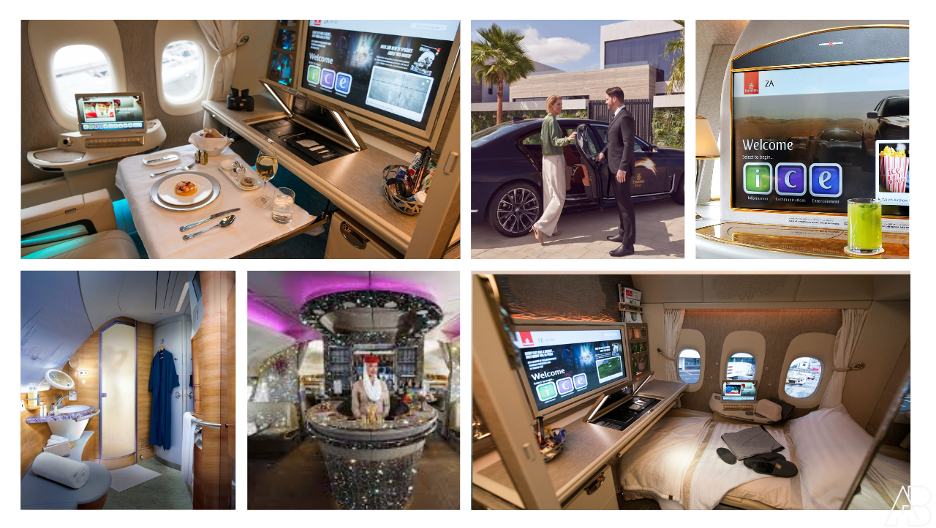
Emirates first class is the regional benchmark. The cabin is private suites with fully enclosed doors, lie-flat beds, and mood lighting controlled from the seat. The signature features are onboard shower spas on the A380 and virtual windows for the inner suites on the 777. The dining is gourmet multi-course on demand, prepared by chefs at international standard. The in-flight entertainment system, ICE, runs thousands of channels with high-speed Wi-Fi. The ground product includes chauffeur-driven transfers and access to Emirates first-class lounges in every major hub.

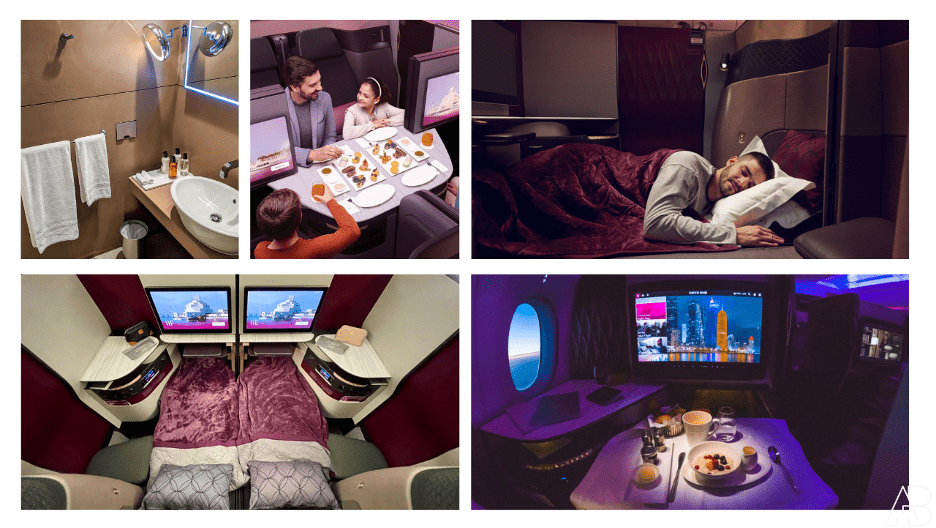
The Qatar Airways response to the Emirates first-class product is the Qsuite, which has redefined what business class can be and put pressure on first class across the region.
Qatar Airways Qsuite
The Qsuite is sold as business class but it competes directly with first-class products. Each Qsuite has fully enclosed sliding doors and a customisable seating layout that converts to a double bed for couples or a four-seat meeting space for families. The amenity kit is BRIC's. The bedding and pajamas are The White Company. The dining is menu-driven, designed by celebrity chefs, and served on demand. The Oryx One entertainment system carries a wide media library. The Al Safwa First Lounge in Doha is the ground anchor and is one of the most highly rated airport lounges in the world.

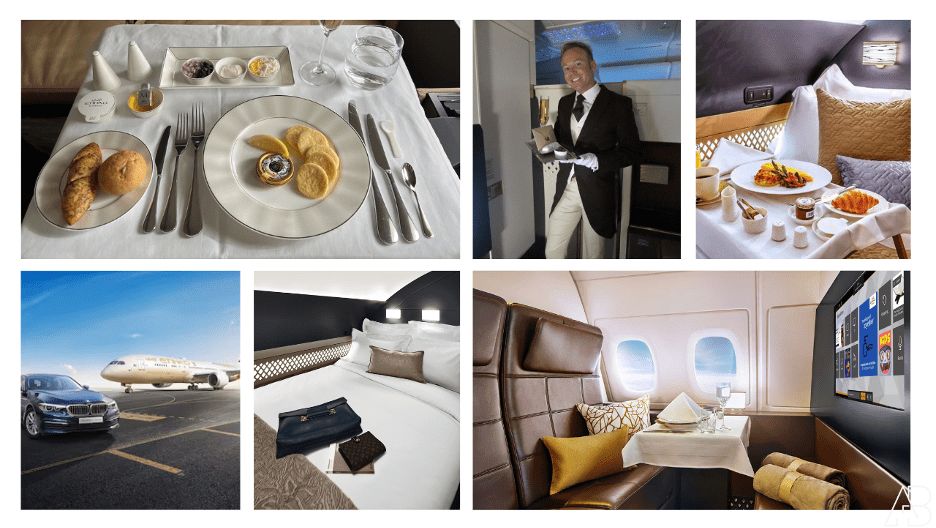
Etihad takes the same competitive logic in a different direction with The Residence, which sits at the top end of regional first class.
Etihad Airways The Residence
Etihad Airways offers The Residence, a three-room cabin with a living room, separate bedroom, and private bathroom with shower. A personal butler serves the suite. The amenity products are Acqua di Parma. An onboard chef prepares a personalised menu for the flight. The E-BOX entertainment system runs in the cabin. The ground product includes chauffeur transfers and lounge access with spa facilities. The product is positioned as the most exclusive commercial cabin offered by any airline.

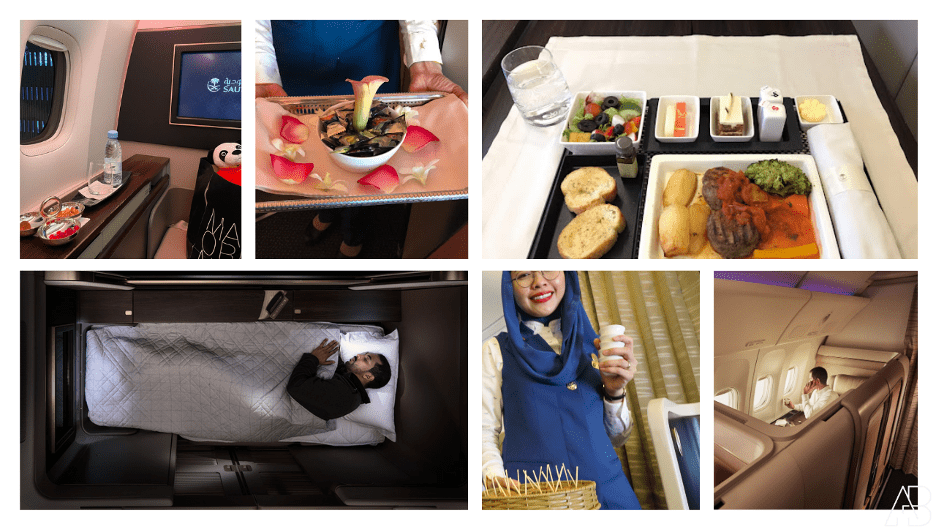
Saudia is the cultural counterweight to the Emirates and Qatar product play. The first-class cabin is built around traditional Saudi hospitality, which is a real category of service rather than a marketing line.
Saudi Arabian Airlines (Saudia) First Class
Saudia first class delivers spacious private suites with fully lie-flat beds and a clear cultural identity in the cabin design. The amenity kits, sleepwear, and bedding are all at the level the regional category now expects. The dining is on-demand multi-course with a mix of international and Saudi cuisine, prepared by senior chefs. The in-flight entertainment system is up to current standard. Ground services include chauffeur transfers, first-class lounge access with spa facilities, and priority check-in and boarding. The product is positioned around hospitality, not novelty, and it works.

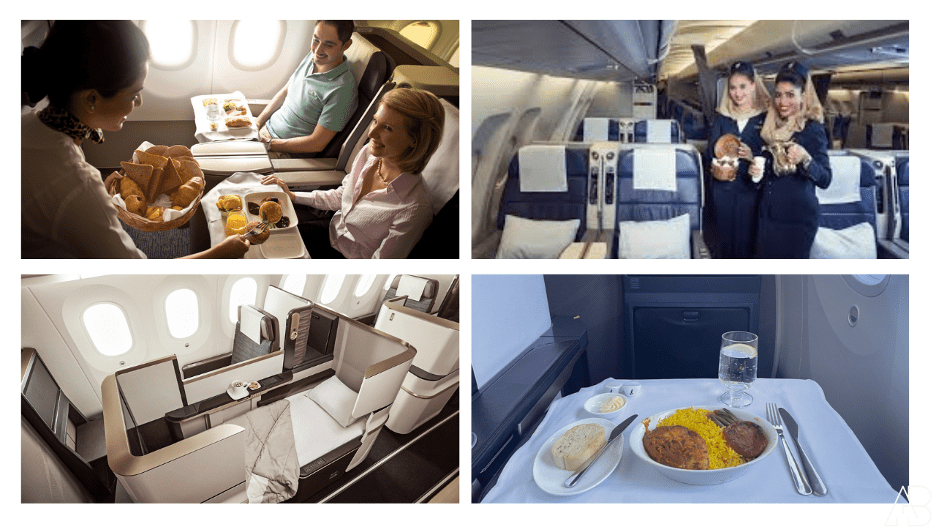
Gulf Air's answer is more pragmatic. Falcon Gold collapses first and business into a single premium cabin, which is the right structural answer for a smaller carrier.
Gulf Air Falcon Gold Class
Falcon Gold takes the exclusivity of first class and combines it with the operational efficiency of business class in a single premium cabin. The seats are wide, with privacy dividers, and convert to lie-flat beds. The amenity kits and bedding are at the regional standard. The dining is à la carte with international and Bahraini options on demand. The cabin is served on fine china with full table-setting presentation. The in-flight entertainment is current. The ground product includes premium lounge access, priority boarding, and additional baggage allowance. For an airline of Gulf Air's size, this is the right product architecture.

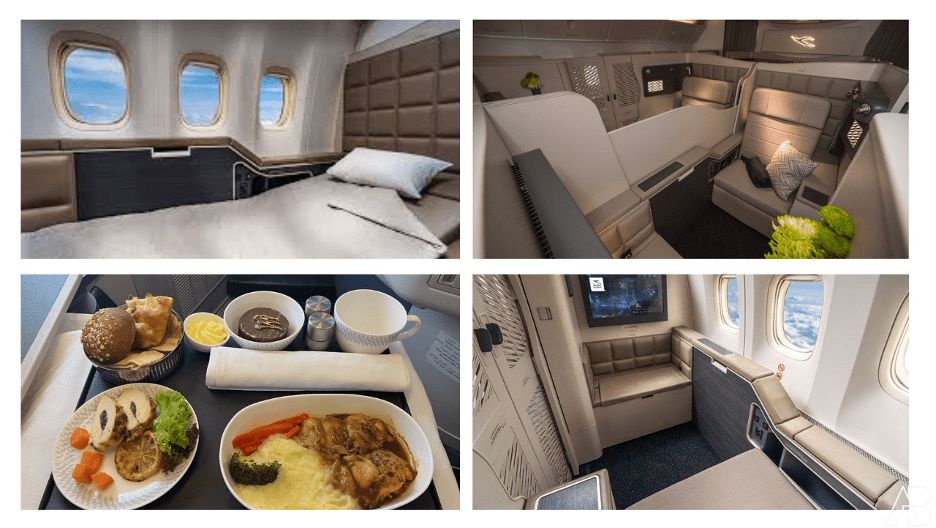
Oman Air is the closest analogue to where Kuwait Airways should be: a smaller national carrier that has invested in a distinctive first-class cabin rooted in its own cultural identity.
Oman Air First Class
Oman Air first class is built around Omani hospitality and it is one of the best examples in the region of a national carrier using cultural authenticity as a real competitive lever rather than as decoration. The private suites have extra-tall sliding doors for full privacy and a chilled personal minibar. The amenity kits are premium and the sleepwear is comfortable enough that passengers keep it. The dining is à la carte on demand, served on Narumi tableware, with an Omani, Arabic, and international menu. The in-flight entertainment is current with complimentary Wi-Fi. The ground product includes chauffeur transfers and full lounge access. Every individual element of this product is something Kuwait Airways could match within eighteen months if the will was there.

Kuwait Airways Royal Class
Kuwait Airways Royal Class has private suites with extra-tall sliding doors, customisable seating, luxury amenity kits with skincare and pajamas, an à la carte menu of Kuwaiti, Arabic, and international dishes on Narumi tableware, an in-flight entertainment system with complimentary Wi-Fi, and dedicated stowage. On the spec sheet, the cabin is closer to the regional standard than the Skytrax ranking suggests.

The gap is not the hard product. The gap is consistency in delivery and the surrounding service stack. A Royal Class cabin with a broken entertainment system on the day, a refund that takes six weeks, and a rewards program that does not work in the app is not selling a Royal Class experience. It is selling a hardware specification that the operational layer cannot consistently deliver.
Bridging the Gap
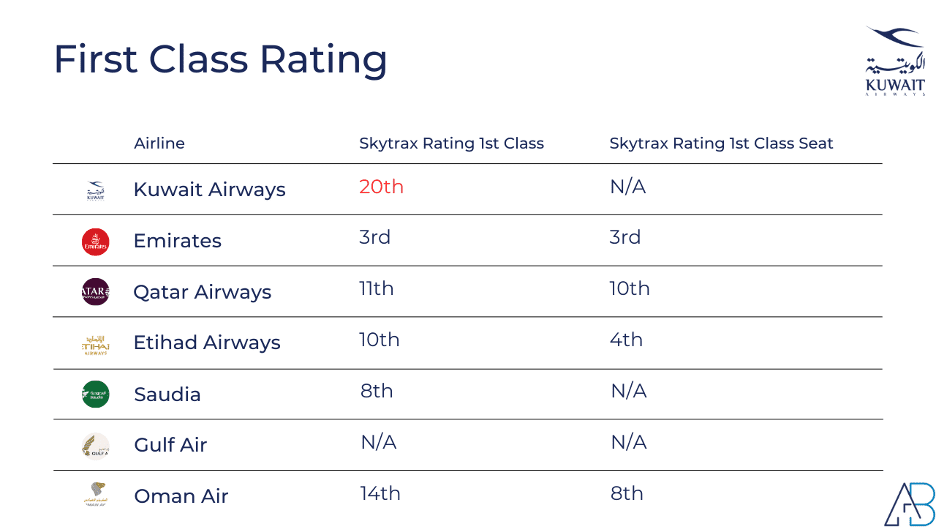
Skytrax rates Kuwait Airways at 20 for first-class service specifically. Emirates is at 3. Qatar Airways and Etihad are both in the top tier. That is not a hardware ranking. That is a consistency ranking. The route to closing it is operational, not architectural, and that should be encouraging because operational fixes can be made faster than hardware refreshes.
Areas for Enhancement
- Cabin features that get used. Fully enclosed suites with working climate control, mood lighting, and reliable seat hardware. The benchmark is not novelty features; it is that the things in the brochure all work on every flight.
- Amenity partnerships. Move from generic kit suppliers to named partnerships with luxury brands. Consider higher-touch elements like onboard shower facilities on long-haul aircraft where the airframe supports it.
- Culinary partnerships. Bring in named chefs to design the gourmet menu and rotate it on a schedule. Build the menu around Kuwaiti cuisine as a category rather than treating Kuwaiti dishes as a side note.
- Entertainment refresh. Upgrade the IFE library and screen hardware. Standardise reliable high-speed Wi-Fi across the fleet.
- Ground service. Chauffeur transfers for premium-cabin passengers as default, dedicated check-in, lounge access at home and at the major outstations.
All of this depends on the same thing: knowing who the customer is and what they need on the specific journey they are taking.
Understanding Our Customers: The Key to Competitive Excellence
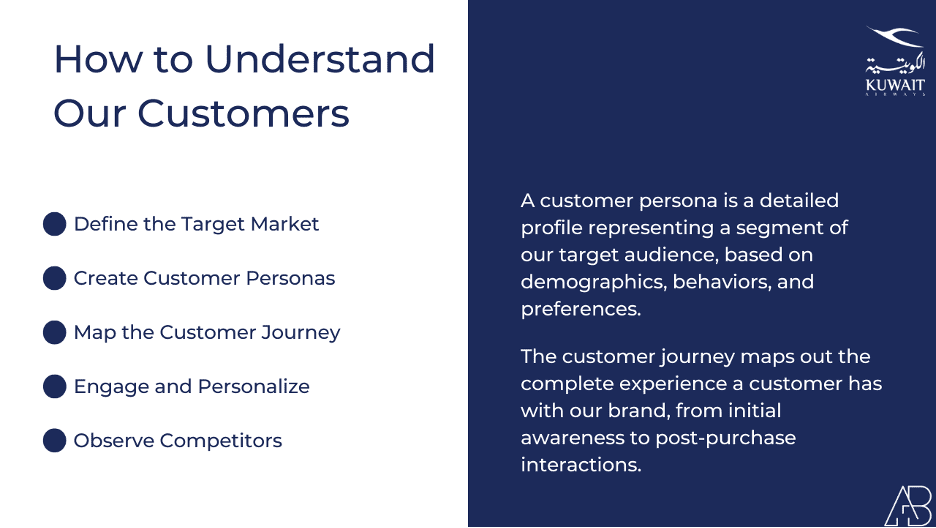
The carriers that lead the regional rankings have one thing in common operationally: they invest serious resources in understanding passenger segments at granular level and tailoring product decisions to those segments. Kuwait Airways treats the customer as a single category. The competitors treat the customer as five or six categories with different needs and different willingness to pay. That difference compounds into product choices, service script, and brand positioning.
Defining Our Target Market
The Kuwait Airways passenger base is not homogeneous. It includes business travellers on Gulf and intercontinental routes, the leisure traveller flying for family visits and holidays, the religious traveller on Hajj and Umrah segments, the diaspora traveller connecting Kuwait to the home country, and a small but commercially significant premium segment that pays the highest yields. Each segment has different needs at the booking stage, the ground stage, and the in-flight stage. Treating them as one population is the source of most of the experience inconsistency the airline gets criticised for.
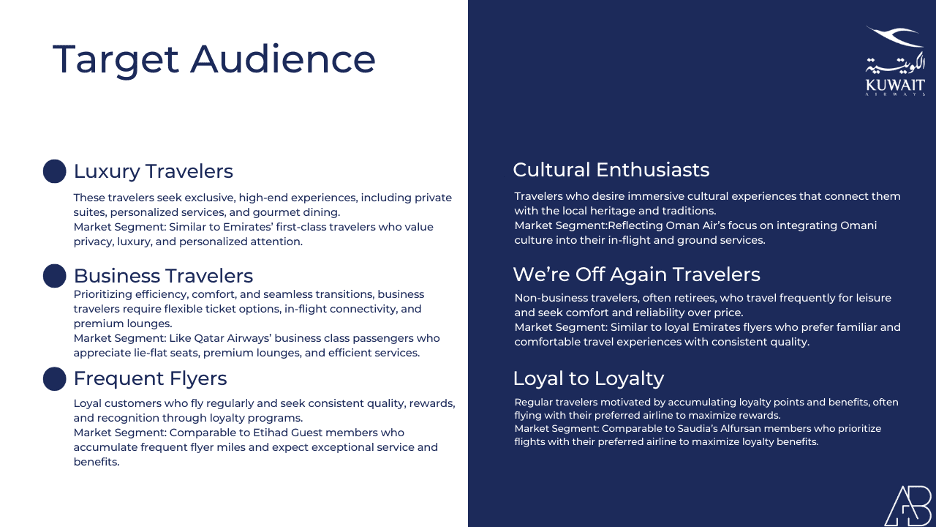
Once the segments are defined, the next step is to build the personas that operationalise them.
Creating Customer Personas
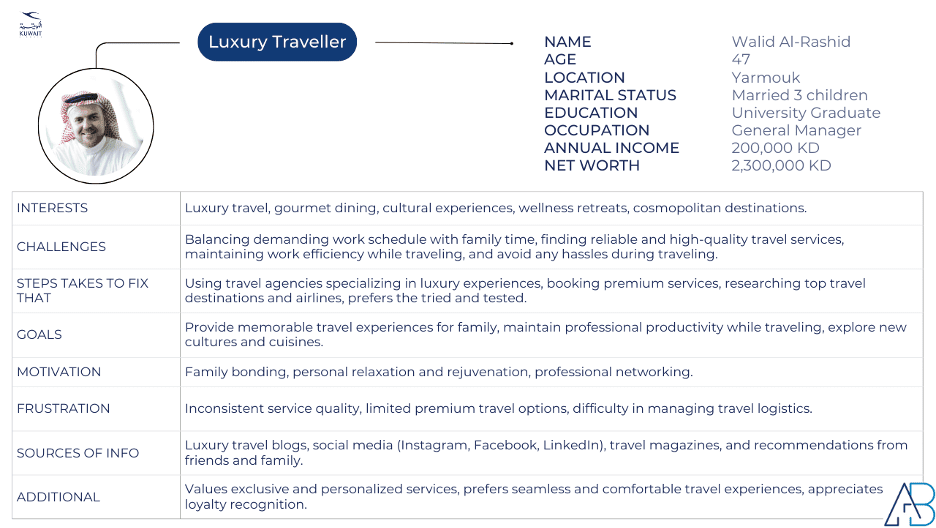
Personas turn a segment into a person the airline can design for. A persona is not a brand exercise. It is an operational document that captures the typical journey, the decision drivers, the pain points, and the price sensitivity of a real customer type. When a persona exists, the cabin crew know who the passenger in 12A is likely to be and what they are likely to want. When a persona does not exist, the service standard defaults to the lowest common denominator across all passengers, which is what shows up as inconsistent delivery in the Skytrax reviews.
.png)
Mapping the Customer Journey
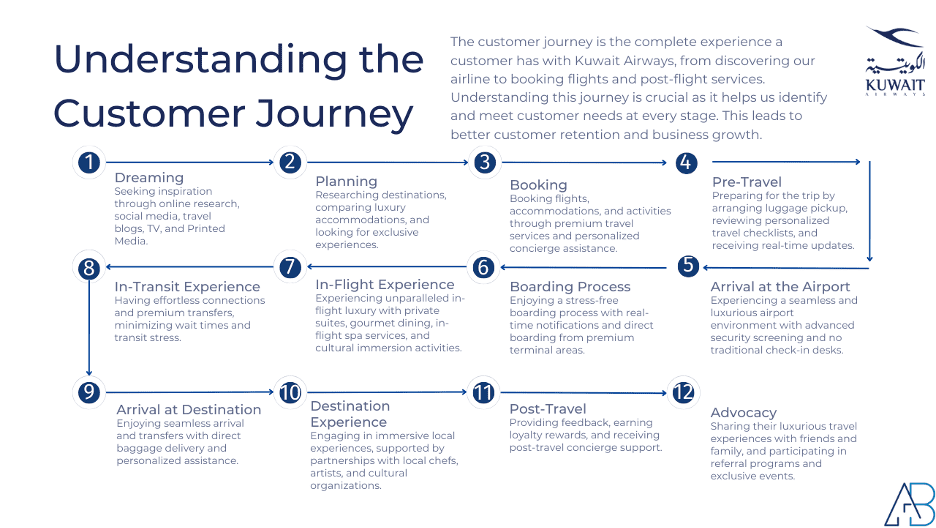
Journey mapping is what links the personas to the operational decisions. The full Kuwait Airways customer journey runs through roughly fifteen distinct touchpoints, from the moment the destination decision is made through the booking process, the pre-flight communication, the ground experience at KWI, the boarding and in-flight experience, the arrival, and the post-trip relationship maintenance. Every one of those touchpoints is an opportunity to either build loyalty or shed it. The Skytrax ranking is the aggregate of all of them. The fix is to audit each touchpoint against the persona it serves and rebuild from there.
Engaging and Personalizing Experiences
Personalisation has stopped being a premium feature in air travel; it is now the default expectation. The competitors all do it. The mechanics are not complicated and the technology is widely available. The blockers are data hygiene and operational discipline. Kuwait Airways should be able to:
- Tailor recommendations. Suggest destinations, ancillaries, and upgrades that match the passenger's booking and travel history.
- Personalise communications. Reach the passenger on the channel they actually use, with content relevant to the specific trip they are about to take.
- Personalise in-flight service. Let passengers pre-select meals, entertainment, and amenities through the app so the cabin crew can deliver on a known preference rather than guess.
Observing Competitors and Innovating
The differentiation play for Kuwait Airways is cultural rather than technological. The competitors will always outspend Kuwait Airways on hardware and on global lounge networks. What Kuwait Airways has, that none of the competitors can copy, is Kuwait itself: the cuisine, the music, the design language, the hospitality codes, the historical relationship between Kuwait and travel. The Oman Air model is the proof that this category of differentiation works commercially. Kuwait has more cultural material to draw on than Oman does. The airline is leaving that asset on the table.
Building Emotional Connections
Air travel is one of the few products customers experience as an emotional event rather than a functional purchase. Carriers that recognise this and build their brand on it (Singapore Airlines, Qatar Airways, Cathay Pacific in its prime) earn premiums and loyalty that the spec-sheet competitors do not. The Kuwait Airways story has real material: the airline is older than most of the regional competitors, it carried Kuwaitis home through the 1990 invasion and again through the pandemic, and it is part of the country's collective memory. None of that shows up in the current brand work.
Investing in Staff Training
The frontline staff are the brand. Every airline that ranks in the global top ten invests heavily in a structured training programme that covers service standards, cultural competence, and customer recovery. Empowered staff are the single biggest difference between a 4-star carrier and a 5-star one. The investment is not glamorous and it does not show up on the spec sheet, but the rankings track it directly.
Embracing Feedback and Continuous Improvement
Closing the loop with customers is the part most airlines do badly. Kuwait Airways should run a structured feedback programme across surveys, social, and direct channels, and the response time on customer complaints should be measured and reported against a defined target. The objective is twofold: resolve the individual issue, and build a pattern view that surfaces structural problems before they show up in the Skytrax ranking six months later.
Recommendations for Enhancing Customer Experiences
Closing the gap is a set of operational decisions, taken in sequence, with a defined owner for each. The list below is the order I would run them.
Firstly, Revamp the Digital Experience
The booking funnel and the app are the highest-leverage fix and the cheapest one to start.
- Website and app overhaul. Modern UX, real-time flight status, fast booking flow, integrated upsell, push notifications that work.
- Oasis Club integration. Full points tracking, redemption, and tier benefits inside the app. Remove the office visit requirement.
- Refund automation. Self-service cancellation, automated status tracking, target-driven refund cycle time, and proactive communication when the cycle slips.
Secondly, Enhance In-Flight Consistency and Quality
The biggest single hit to the brand is the inconsistency between flight and flight. The cabin product is closer to spec than most reviews suggest; the delivery is what fails.
- Operational checklist on amenities. Standard counts of every consumable, signed off before pushback, with a defined owner per flight.
- IFE maintenance. Move to a maintenance schedule that catches failures at the gate, not at cruise altitude.
- Culinary refresh. Bring in named chefs and rotate the menu on a published schedule.
- Cabin crew training. Structured customer service training with a cultural component and a recovery component.
Thirdly, Infuse Kuwaiti Culture into the Travel Experience
This is the part of the play that the competitors cannot match. It is also the part that costs the least to execute well.
- Cabin design. Commission Kuwaiti designers to refresh interior textiles, lounge interiors, and amenity kits with a recognisable Kuwaiti design language.
- Menu. Build the cabin menu around Kuwaiti cuisine as a primary, not a side note.
- Programming. Develop IFE content on Kuwaiti history, destinations, and contemporary culture.
Moreover, Personalize the Customer Journey
Personalisation is what turns the segment work into operational output. It is also what builds loyalty data that the airline can use commercially.
- Data analytics. Build a passenger profile that captures preferences, history, and likely next-trip intent.
- Pre-flight personalisation. Let passengers set preferences in the app before they fly so the cabin crew can deliver against a known profile.
- Loyalty tier benefits. Rebuild Oasis Club with meaningful tier benefits that are visible inside the app and recognised at every touchpoint.
Additionally, Optimize Airport Experience with New Facilities
Kuwait International Airport's new Terminal 2 is the asset most underused by Kuwait Airways. The terminal exists. The fit-out for the airline's premium passengers is the lever.
- Check-in. Online, mobile, kiosk, and biometric paths. Premium-cabin passengers should have a dedicated lane.
- Security. Use the newer screening technology to cut wait times. Track median and 95th percentile passage times and report them.
- Lounges. Build out the Royal Class lounge to a standard that competes with Al Safwa in Doha and the Emirates First lounge in Dubai. Dining, spa, quiet rooms, business suites.
- Retail and dining. Curate the terminal retail and food offer so it represents Kuwait rather than reading as generic regional duty-free.
Furthermore, Strengthen Global Reach Through Partnerships
The codeshare gap is the single biggest commercial issue at the network level. The fix is straightforward but takes negotiation time.
- Codeshare expansion. Move from 10 active partners to a target of 20 within three years. Prioritise carriers that fill the gaps in Kuwait Airways' own network.
- Joint ventures. Move from codeshare to revenue-sharing JVs on high-volume corridors where the economics support it.
- Local partnerships. Bundle airline product with Kuwait hotels, retail, and tourism programming for stopover passengers, on the same model Emirates used with Dubai twenty years ago.
In Addition, Commit to Sustainability and Innovation
Sustainability is now a procurement requirement for corporate travel buyers, not a marketing nice-to-have. The competitors are already disclosing on a defined schedule.
- Fleet renewal. Continue moving toward newer-generation aircraft (787, A350) for fuel efficiency per seat-kilometre.
- Sustainable aviation fuel. Set a defined SAF blend target on a defined timeline. Disclose progress annually.
- Single-use plastics. Run an audit of cabin and ground operations and publish a reduction roadmap.
- Carbon offset programme. Add a credible offset option to the booking flow, with verified projects rather than generic credits.
- Reporting. Publish an annual sustainability report at the standard that corporate travel buyers can use in their own ESG disclosures.
Conclusion
The Kuwait Airways problem is not the cabin product. The cabin specifications are within range of the regional standard. The gap is in consistency of delivery, in the digital experience, and in the absence of a real customer-segmentation discipline behind the service. Closing that gap is a programme of operational decisions, not a brand exercise.
The airline has real strategic assets that the competitors cannot copy: a seventy-year history, a defined cultural identity, and a hub at a newly built terminal that is currently underused. Used well, those assets are the foundation of a credible repositioning. Used badly, they are the reason the airline keeps falling further behind a moving regional benchmark.
The work that gets Kuwait Airways back into the regional top tier is the work I describe in our customer experience services: customer-journey mapping, persona work, operational service-standard design, and the data infrastructure to support both. None of it is glamorous and none of it is fast. All of it is achievable.