The Global Stallion Market: Stud Fees and Investment Case
.avif)
.webp)
Executive Summary
A top thoroughbred stallion can earn more in retirement than most public companies. Northern Dancer broke through $1 million per cover in the late 1980s. The current top tier collectively writes over $500 million in stud fees a year. The numbers have outgrown the sport that produced them.
This piece walks through the world's leading sires, their year-by-year fee history, and the operations behind them. It also looks at why sovereign funds, family offices, and Middle Eastern owners keep adding allocations to the sector.
Key Findings
- Top-tier stallions generate $20–100 million a year in stud fees
- Global breeding market value sits above $3 billion annually
- Middle Eastern participation has stepped up materially over the past decade
- Reproductive technology and genetic data are changing how books are managed and priced
Market Overview: The Economics
The market runs on one number. Roughly 92,000 thoroughbred foals are registered globally each year. Of those, fewer than fifty colts ever stand at top-tier fees. Scarcity does the rest.
Prize Money
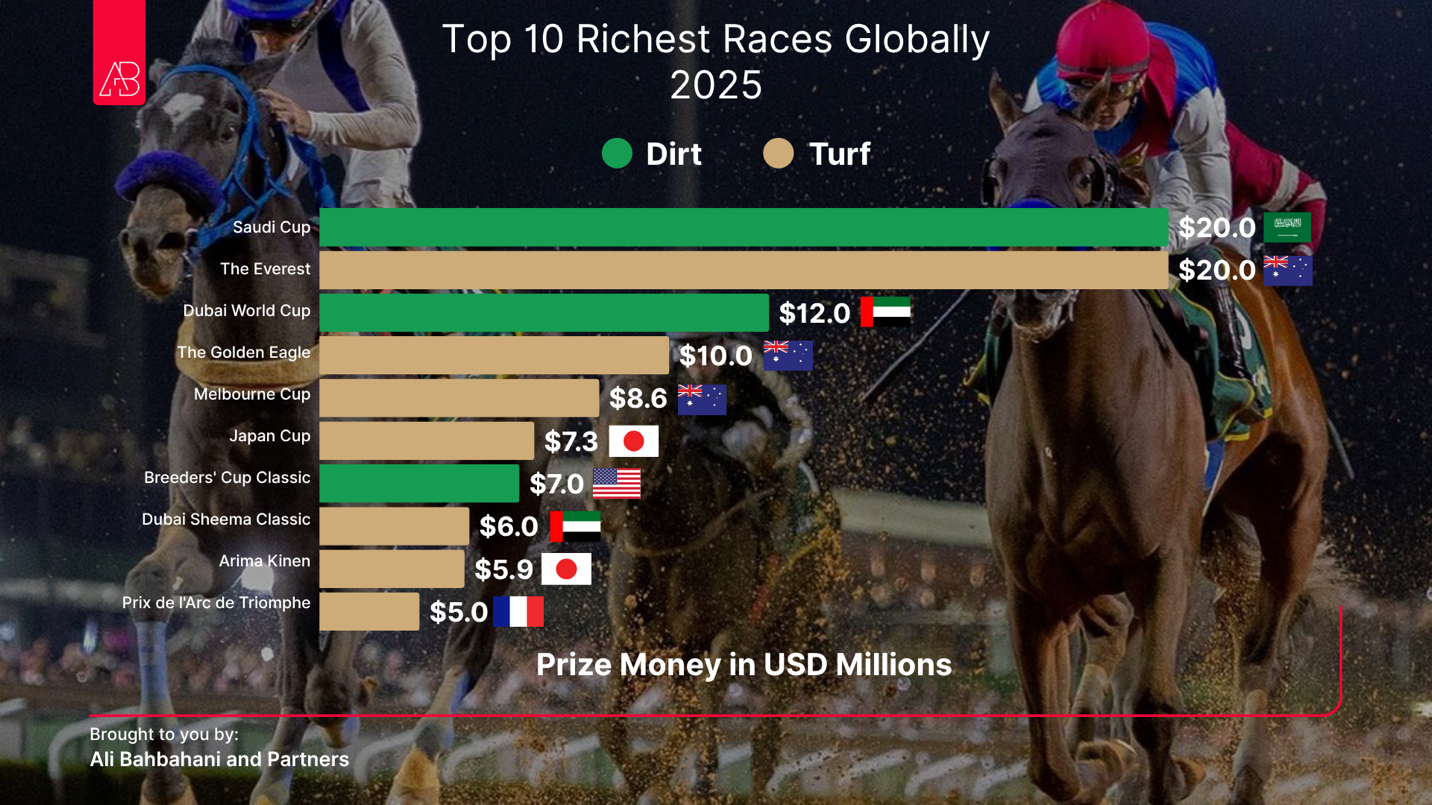
Saudi Cup $20 million. Dubai World Cup $12 million. Breeders' Cup Classic $6 million. When a single race purse can pay for a foal twenty times over, breeding rights to produce that foal get priced accordingly.
Shuttle Programs
A sire can cover mares in Ireland in March and in Australia in October. Same horse, two breeding seasons, two revenue streams. The model works because the hemispheres flip the calendar, and it has made top stallions far more productive financially than they used to be.
Institutional Money
What used to be a gentleman's pursuit now has institutional capital allocators inside it. Family offices and sovereign funds treat top breeding shares as a long-duration alternative asset with optionality. The pricing now reflects that.
Why the Middle East Sits Differently
GCC racing operates without pari-mutuel betting. The economics run on patronage, sponsorship, and government support rather than handle. That changes what breeding investment looks like in the region. Returns are less dependent on local betting cycles and more tied to international placement, broodmare value, and prestige.
The World's Richest Races (2025)
The combined prize money from the top ten races sits above $100 million a year. Saudi Cup and The Everest lead at $20 million each. Dubai World Cup at $12 million. Then Japan, the United States, and France fill out the table. Surfaces split between dirt and turf, which keeps demand spread across speed and stamina bloodlines.
One Distinction Worth Drawing
Hong Kong and Dubai run two of the richest race programs in the world but neither has a meaningful domestic breeding industry. Hong Kong does not allow local breeding at all. Dubai's breeding base is essentially Godolphin. Both are buyers, not producers. That creates supply opportunities for breeding-led jurisdictions.
Global racing purses now total around $127.3 billion in 2025, with projections pointing toward $182.4 billion by 2030.
The Prestige Layer
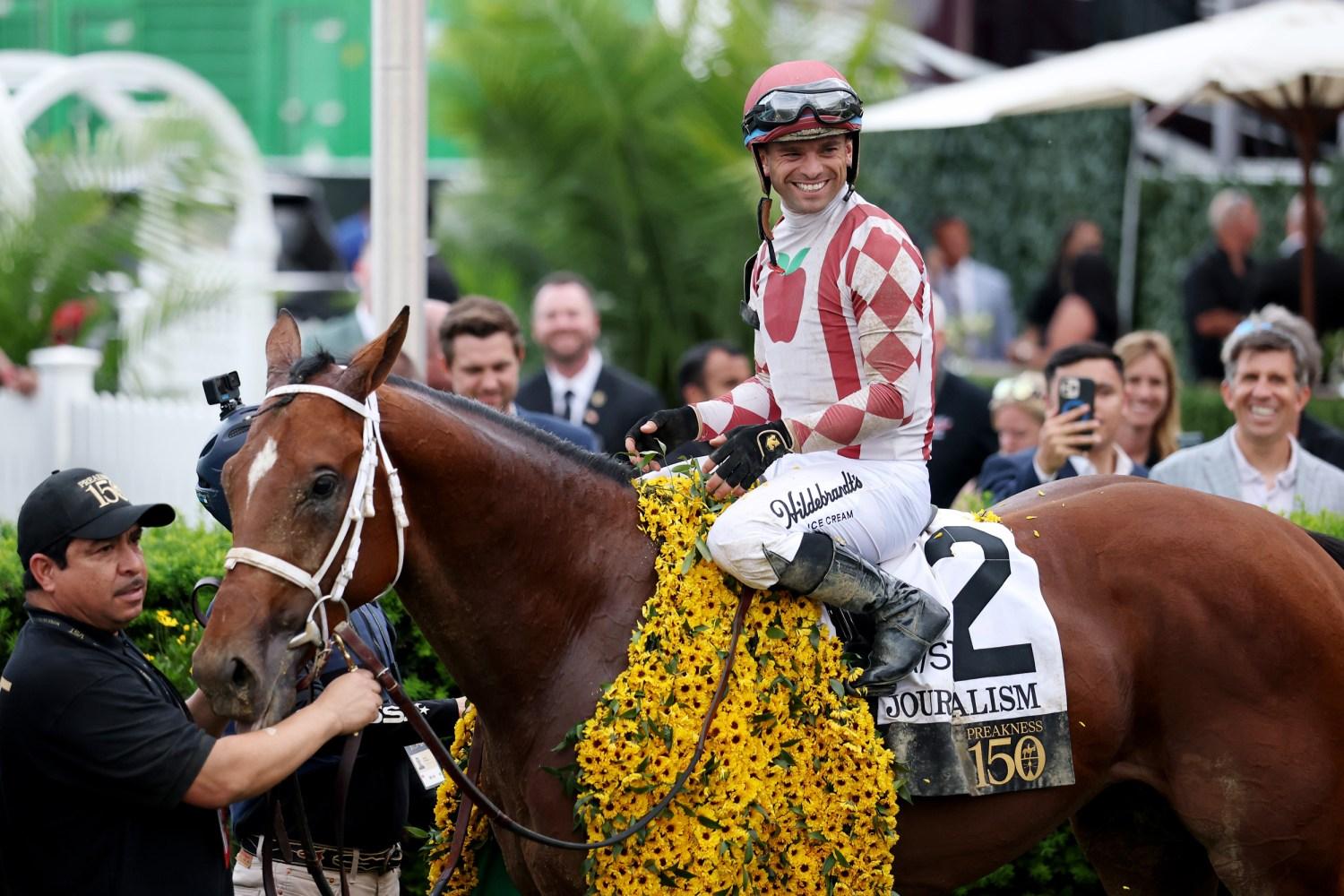
Money is not the only reason stud fees clear. Racing carries 300 years of royal patronage and the social architecture that comes with it. That layer drives part of the pricing.
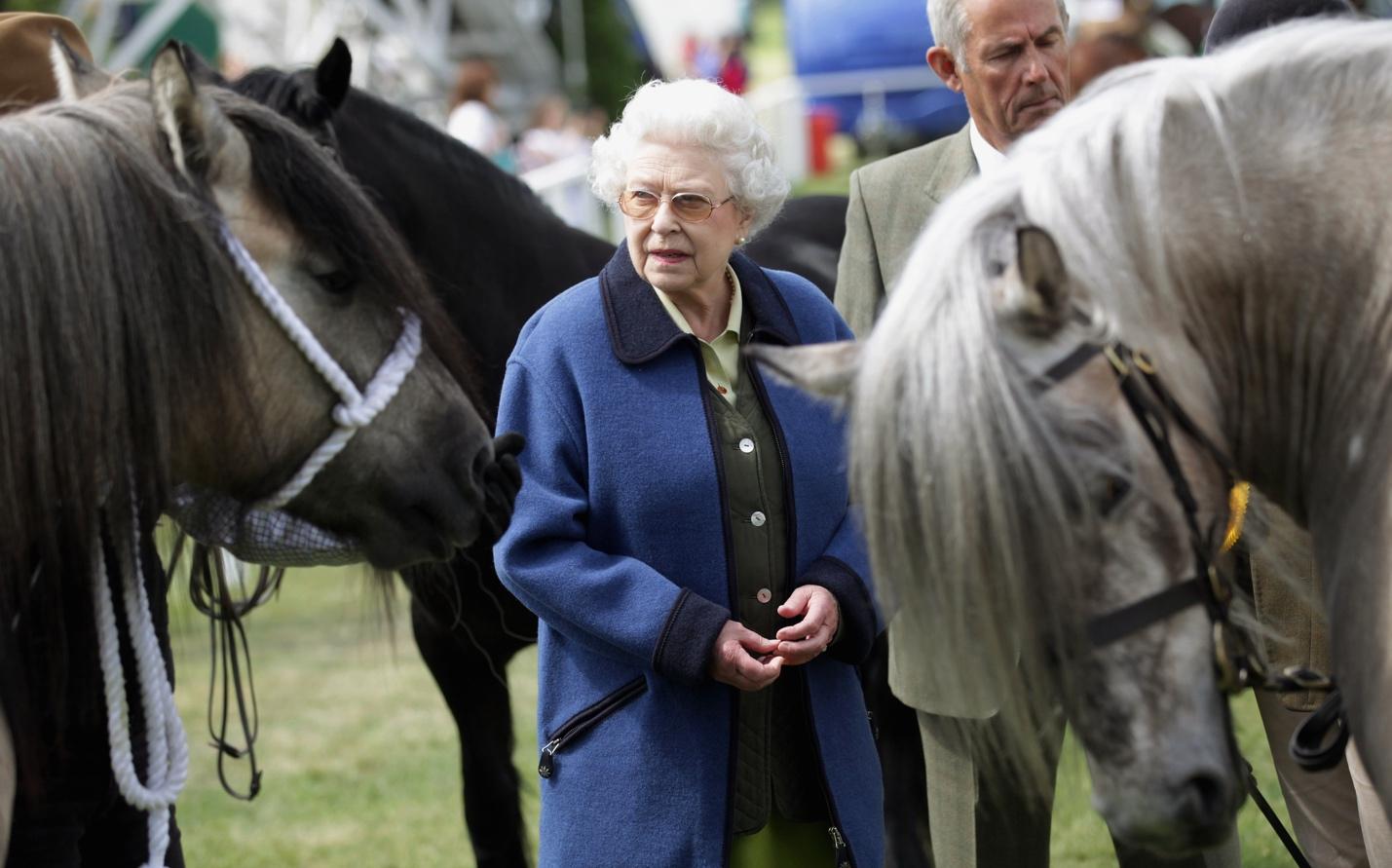
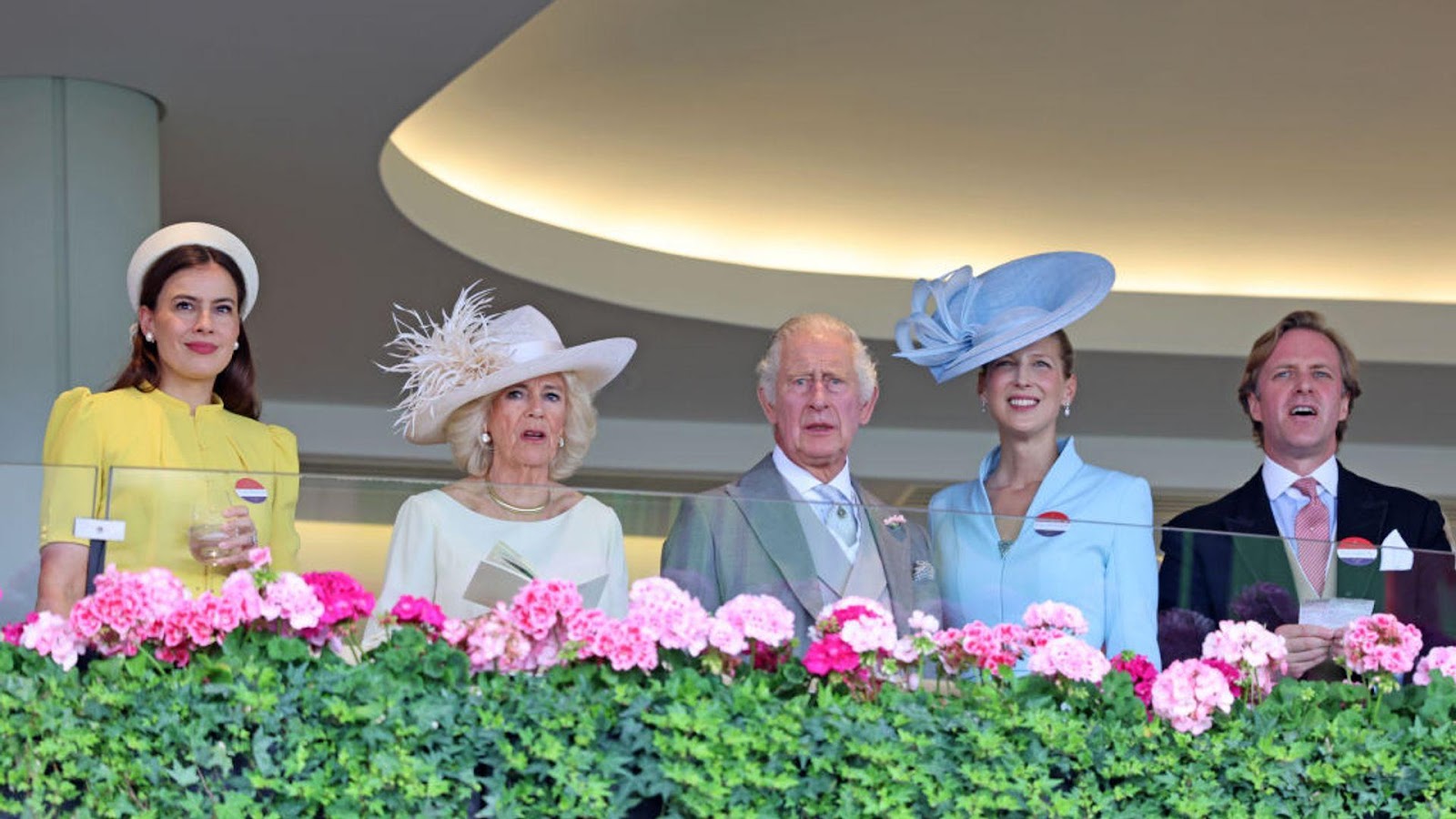
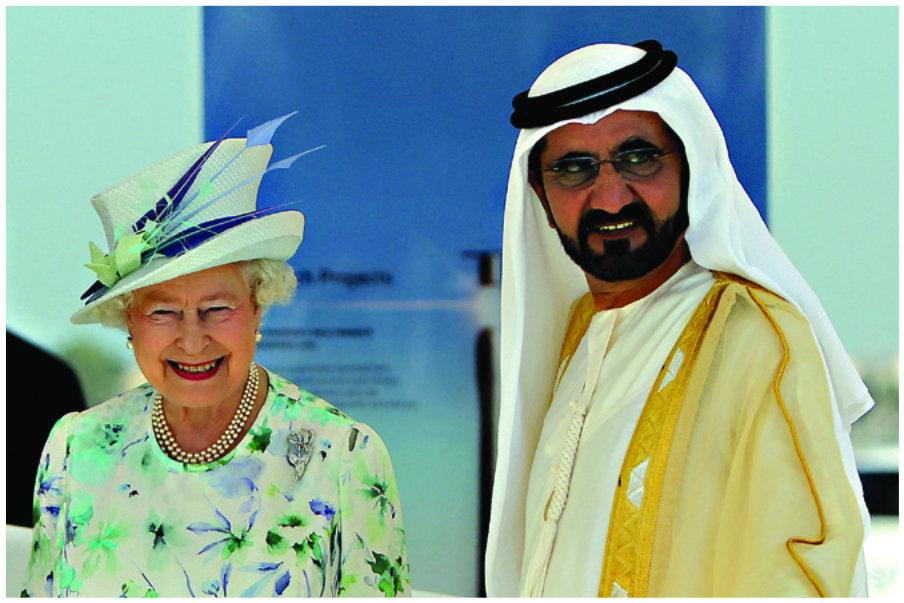
The British royal family still maintains active involvement. Royal Ascot remains the calendar event for global elite attendance. In the Gulf, the Maktoum family's racing program has run for four decades. Saudi racing is now backed at sovereign level.
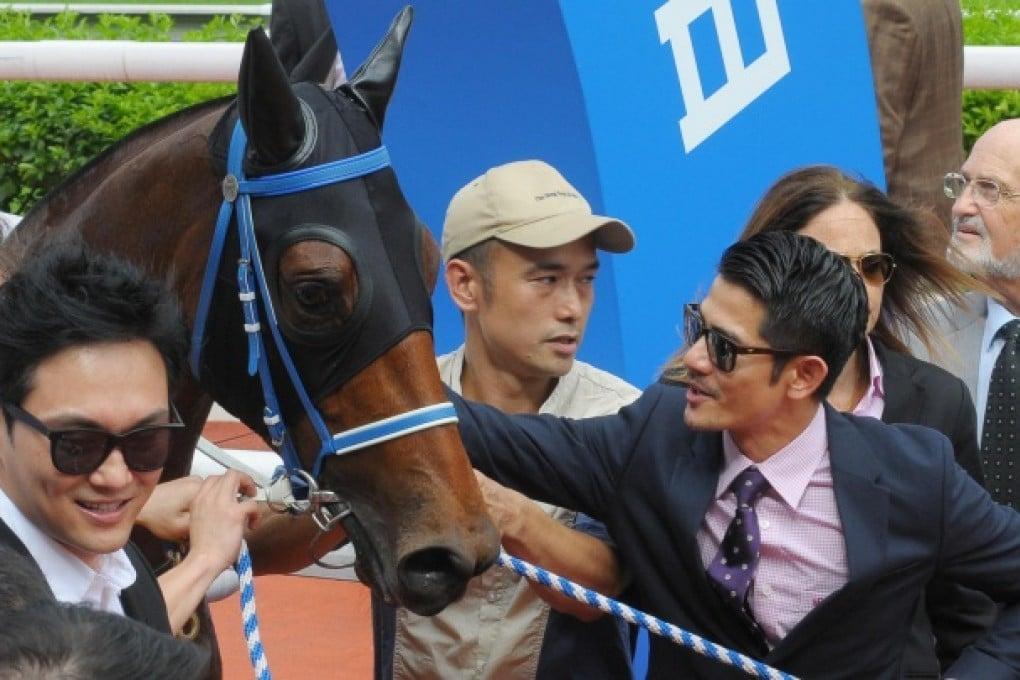
The sport also pulls in entertainers, founders, and corporates who treat ownership as a position rather than a hobby. Aaron Kwok in Hong Kong. Tech founders in California. Industrial families in Europe. None of them needs the return. They want the access and the recognition.
Hong Kong Jockey Club
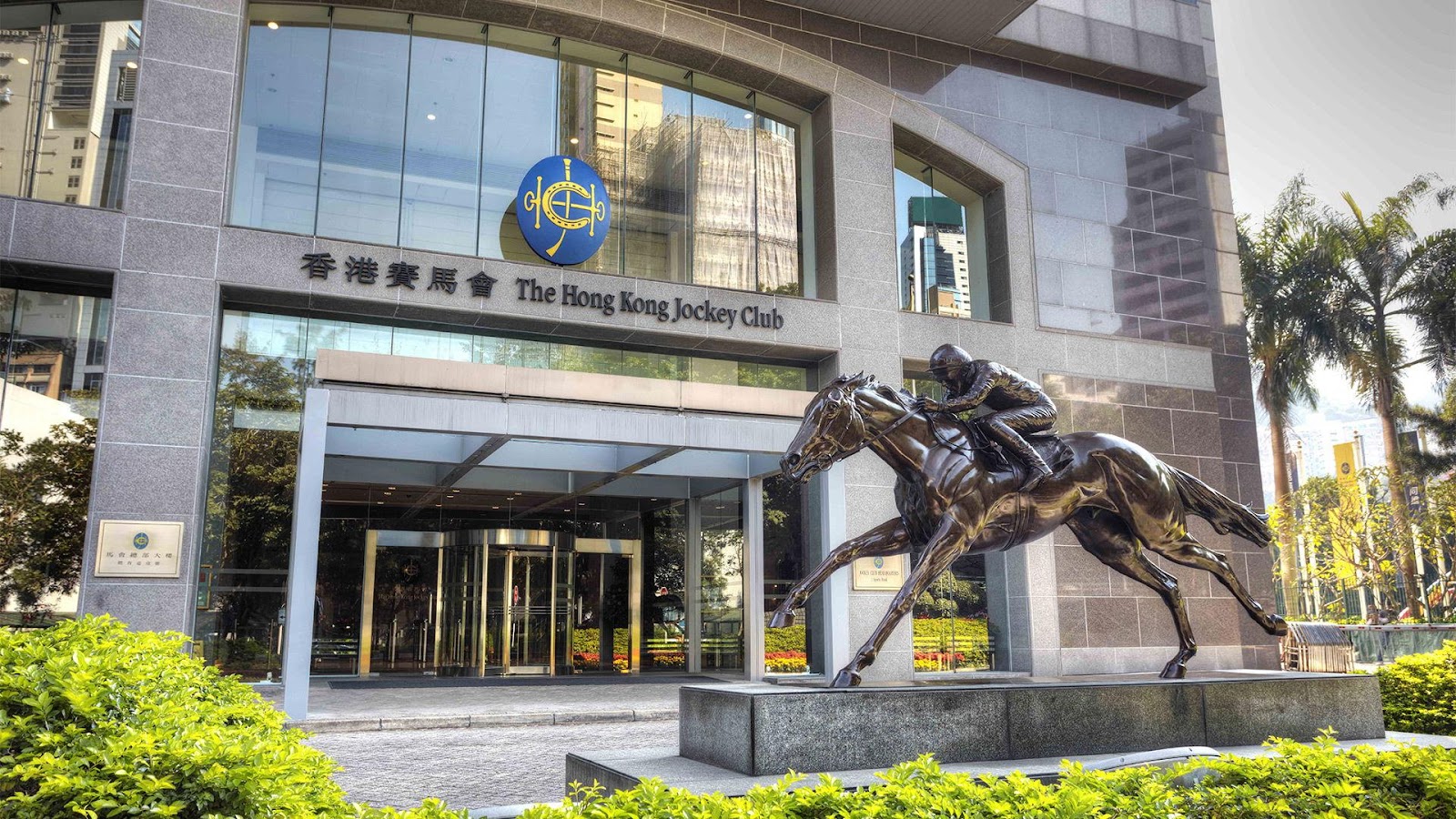
HKJC membership cannot be bought on a secondary market. New members must be proposed by a voting member, seconded by another, and supported by at least three more. The waiting period runs years. With around 9,700 members, HKJC sits as one of the cleanest proxies for elite social access in Asia.
Royal Ascot
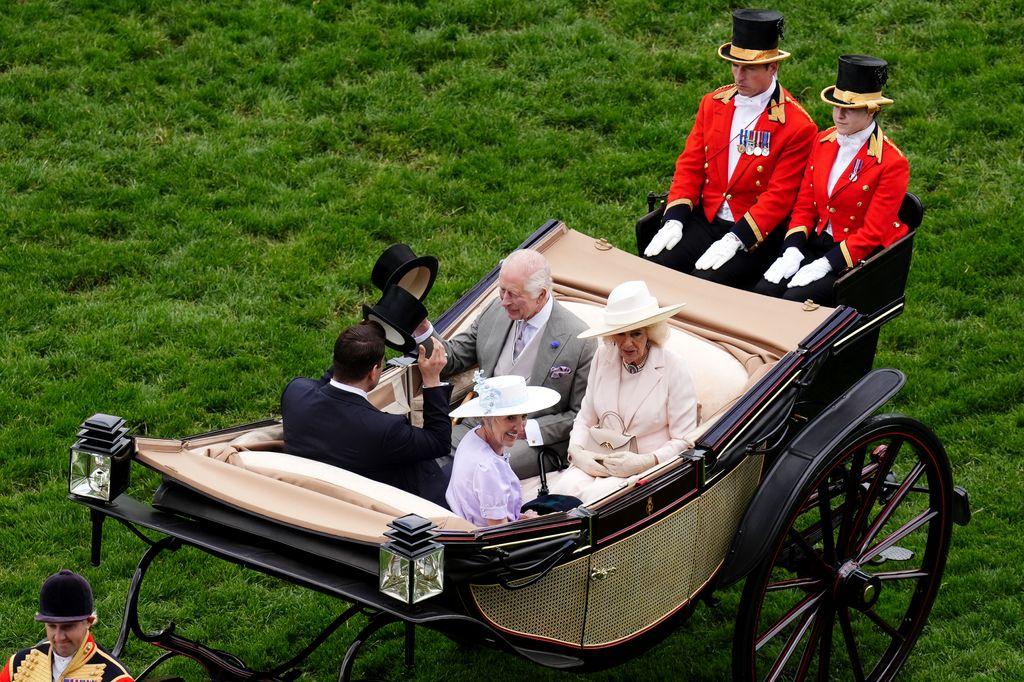
Five days a year. Royal procession, dress code, corporate hospitality, and an international guest list. Business gets done there that does not get done in offices.
Status as Returns
For an owner with nine-figure net worth, racing investments are discretionary spending, not core allocation. The non-financial returns are real. Recognition that other asset classes cannot generate. Active competition where decisions matter. Records that stay in the books for a century or more.
Many jurisdictions also treat horse breeding as agricultural activity with favourable tax treatment. Physical breeding stock has held up as an inflation hedge across cycles.
The Middle East Position
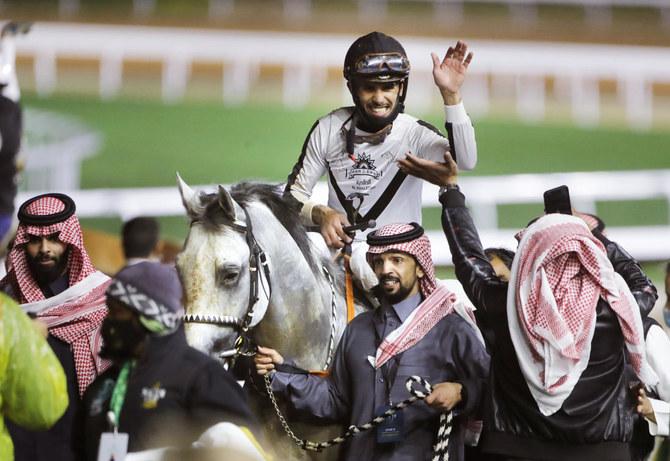
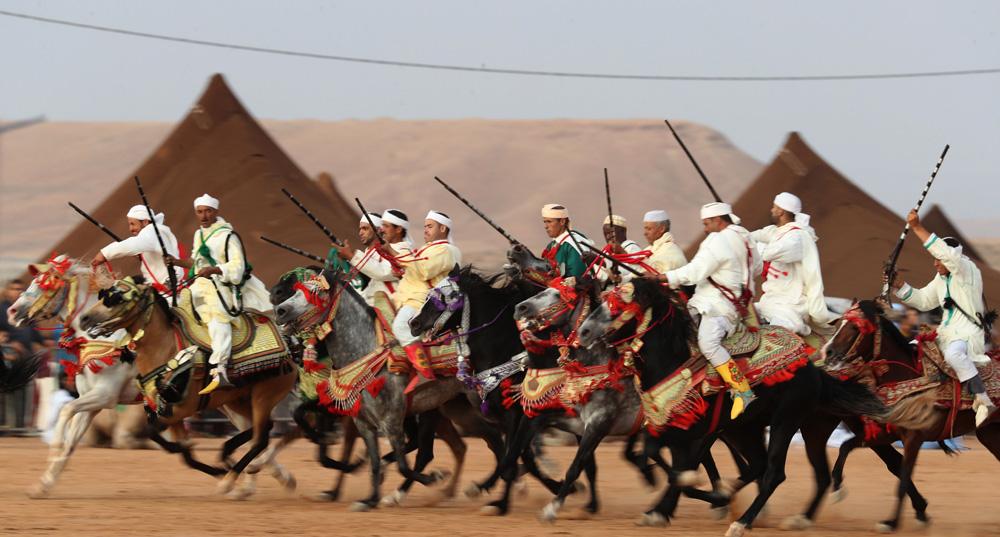
Arab horsemanship goes back over a thousand years. The cultural fit is genuine, not marketed. Racing investments tie naturally into adjacent strategies: luxury hospitality, tourism, international relationship building. That is why GCC capital keeps appearing in the books of European and American operations, not just regional ones.
The Global Elite Stallions
Northern Dancer (1961–1990)
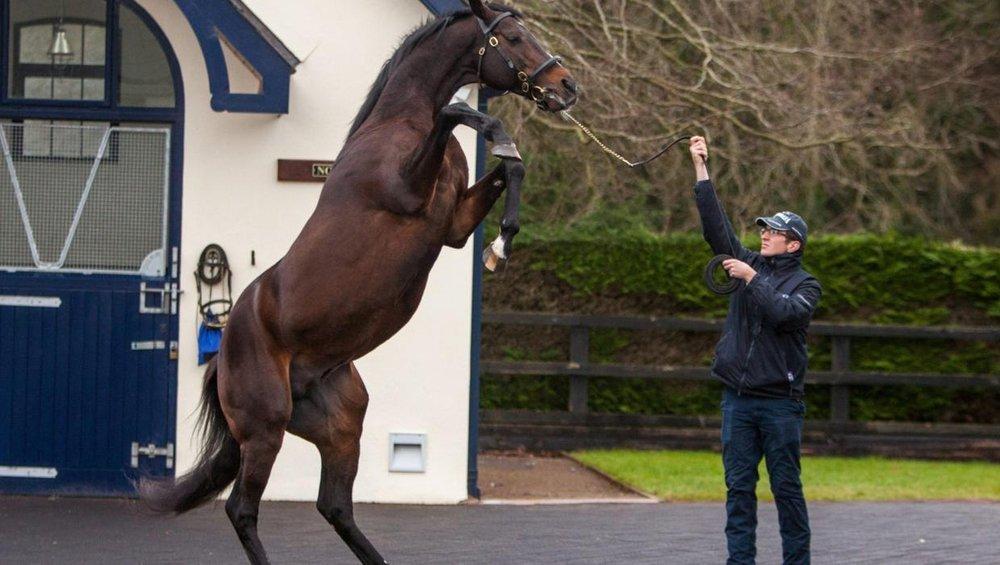
The original million-dollar sire. Stood at Windfields Farm in Canada from 1965 at $10,000. Nijinsky's English Triple Crown in 1970 raised the fee to $25,000 and started the commercial run. By 1980 he was at $100,000. By 1982, $250,000. By 1984, a published $500,000. Private deals reportedly hit $1 million in his final seasons from 1985 to 1987.
He covered small books of 30–40 mares a year. His 25-year stud career still generated extraordinary cash, and his bloodline now sits inside most of the global top tier. Northern Dancer is the reason the modern market exists as a category.
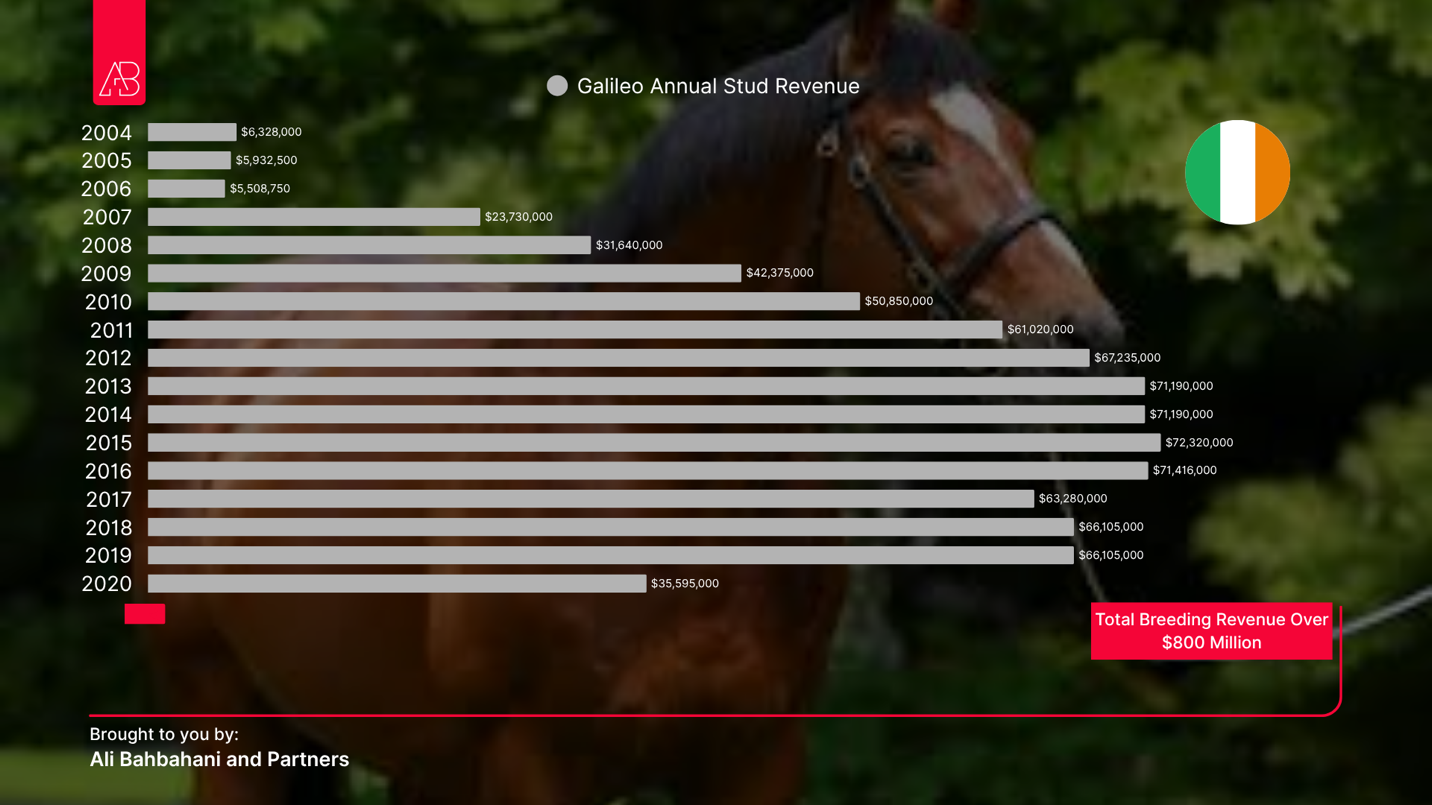
Galileo (1998–2021)
Stood at Coolmore Stud, Ireland. Started at €50,000. Private fees reached above €450,000 in his prime. His career sired more than 90 Group 1 winners. He was the engine of Coolmore's two decades of European dominance and the father of Frankel.
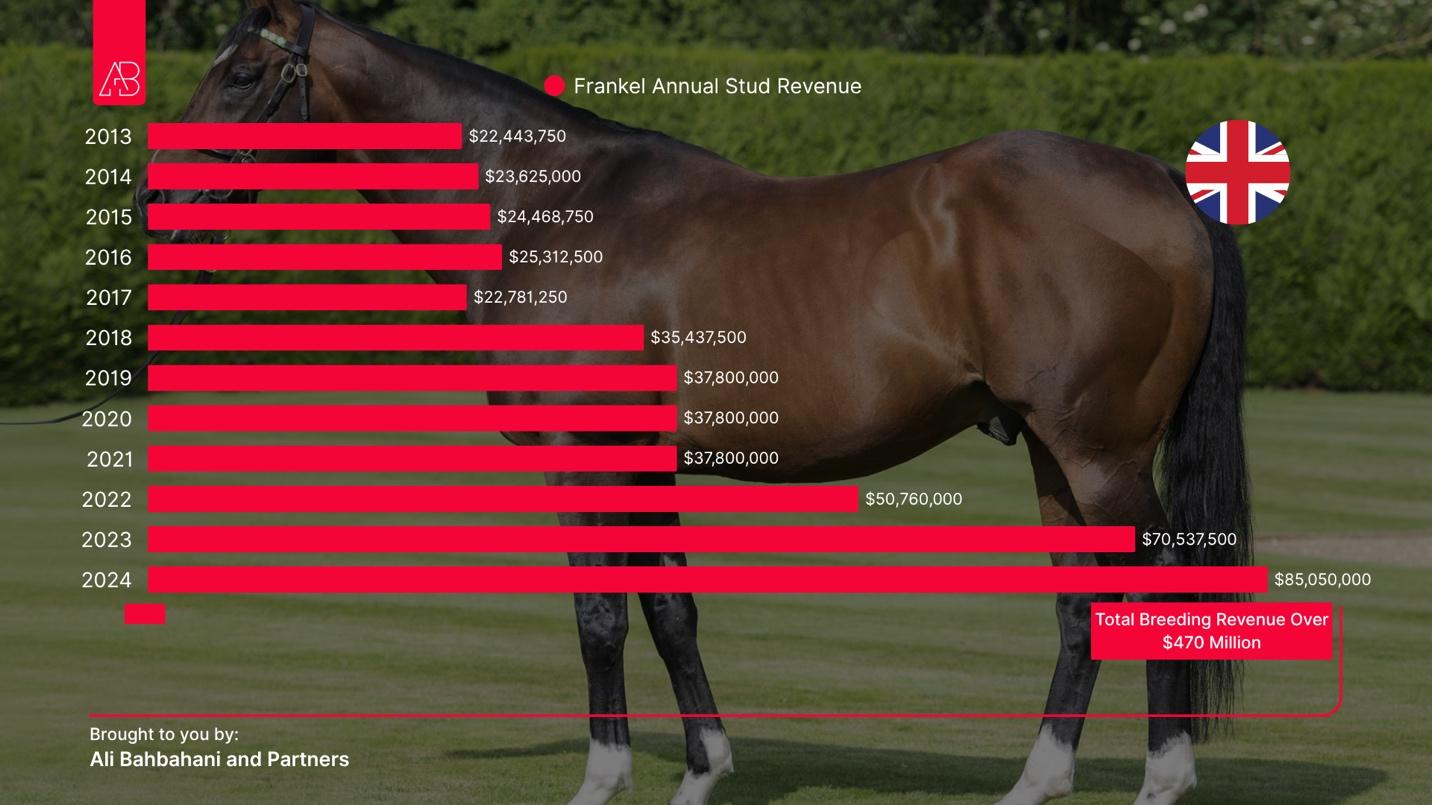
Frankel (2008–present)
Stands at Banstead Manor Stud, England, under Juddmonte. Unbeaten in 14 starts on the track. Stud fee opened at £125,000 in 2013 and now sits near £350,000–£400,000 depending on book. The case study for how track performance translates directly into stud market multiples.
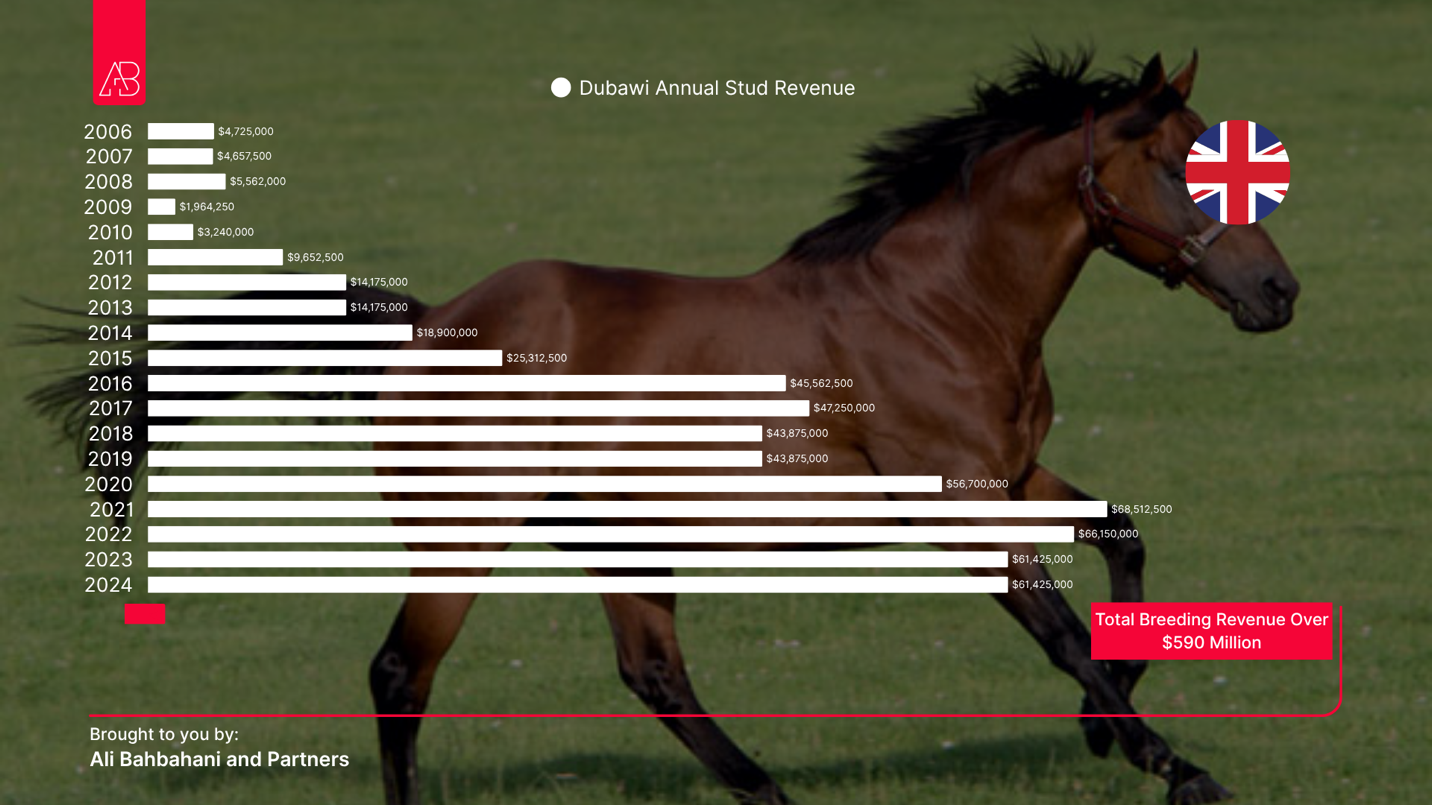
Dubawi (2002–present)
Stands at Dalham Hall Stud, England, under Darley. Began at $33,000. Now around $450,000. Took longer than Frankel to settle into top-tier pricing, which made the patient investors who covered him early look very good.
The Rest of the Top Tier
Into Mischief, at Spendthrift Farm, went from a $7,500 debut fee in 2009 to $250,000 today. That is a 33x move. He has now generated over $400 million in career revenue and leads North America by progeny earnings.
Tapit, at Gainesway, has earned over $400 million across 20 years at stud. Four Belmont Stakes winners. Fee peaked at $300,000 and now sits at $185,000, which is normal for a sire deep into his career.
Snitzel and I Am Invincible, both in Australia, both at A$247,500. Each has generated A$350–400 million in career revenue. I Am Invincible's rise from A$11,000 is one of the largest percentage appreciations on record at over 2,000%.
Danehill (deceased) pioneered the dual-hemisphere shuttle model. Career revenue over $400 million between Ireland and Australia.
Sadler's Wells dominated European breeding for 26 years. Over £500 million in career revenue. Sired Galileo, which means he produced the next decade for Coolmore as well.
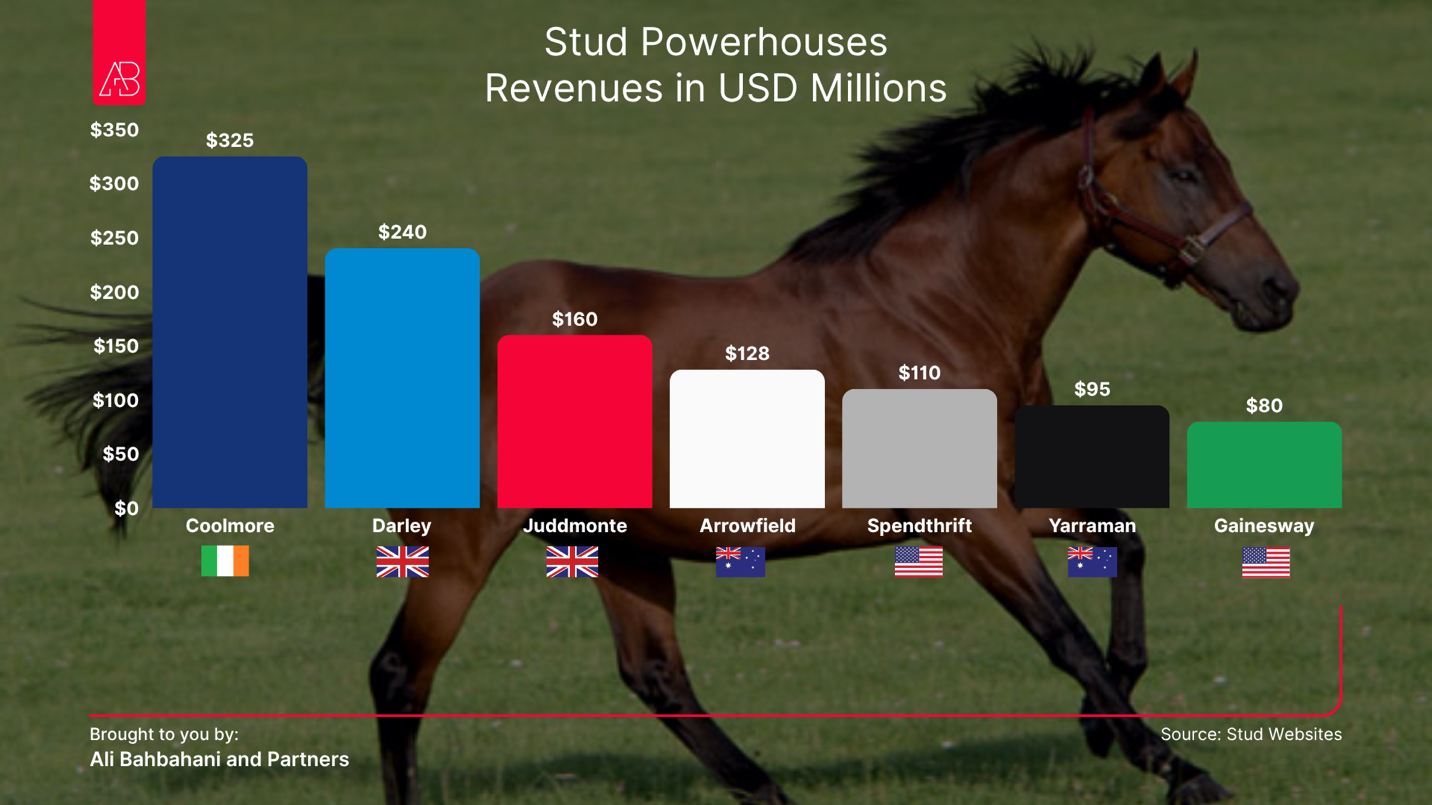
Regional Powerhouse Analysis
The global breeding industry runs on a small number of operations that collectively control over $1.1 billion in annual stallion revenues.
Coolmore International: Estimated €250 million+ revenue. Premium positioning, selective books, Galileo's legacy line still carrying weight alongside Wootton Bassett and No Nay Never. Operations in Ireland, Australia, and the US.
Darley/Godolphin: Over £200 million globally. Sheikh Mohammed's program. Dubawi alone contributes roughly £45.5 million. The most integrated racing-and-breeding operation in the world, with bases in the UK, Ireland, Australia, Japan, and the US.
Juddmonte: Over £120 million revenue. Frankel contributes around £63 million of that. The Saudi-backed operation that proves a boutique book model can compete with the volume houses.
Spendthrift Farm: Over $80 million. Volume commercial breeding. Into Mischief is roughly $50 million of the total. The operation also pioneered the share-and-syndication ownership structures now copied across the US market.
Gainesway Farm: Over $50 million. Classic distance specialists. Tapit's $22.2 million foundation reflects multi-generational expertise in stamina bloodlines.
Coolmore America: Over $75 million. Premium American program with American Pharoah, Uncle Mo, and Justify.
Arrowfield Stud (Australia): Over A$200 million. Snitzel is around A$39.6 million of that. Operations built on reproductive technology and early-speed breeding programs.
Yarraman Park (Australia): Over A$150 million. I Am Invincible delivers A$49.5 million. The clearest example of large-scale commercial efficiency in the global market.
Kuwait Compared
Kuwait runs a state-supported racing program without pari-mutuel betting. The breeding base is small. Compared to established jurisdictions, Kuwait sits closer to UAE and Saudi Arabia than to Ireland or Australia structurally: patronage-driven, government-supported, focused on quality over volume. The opportunity is to build a small but commercially serious broodmare and shuttle program tied into international books, rather than try to replicate Coolmore at scale.

Conclusion
Annual revenues above $3 billion. Individual stallions generating $20–100 million a year. The sector now attracts the same kind of capital that flows into private equity and infrastructure, and for similar reasons: long-duration assets with scarcity protection.
The data shows three things worth holding onto.
Returns can be extraordinary but they need time. Galileo's career total of roughly €800 million did not happen in five years. I Am Invincible's 2,150% fee appreciation took fifteen. The patient capital wins.
Region matters. Europe sells premium. America sells volume. Australia sells efficiency. The Middle East has capital, government backing, and cultural fit, and that combination has not been fully built out yet. Saudi Cup and Dubai World Cup are the visible tip of a larger position the region is still constructing.
The non-financial returns are real but not bankable. Prestige, networking, generational legacy. Useful, but they should not be the line item you underwrite to. Underwrite to bloodline, breeding rights, and operations.
The lessons from Northern Dancer's era still hold. Identify exceptional bloodlines early. Diversify across books. Hold for the long horizon. Partner with operators who know both the global market and the regional ground rules.
For investors in the region, the entry environment is as good as it has been in twenty years. The capital is here. The race programs are here. The bloodstock pipeline is the part that still needs building.
About Ali Bahbahani and Partners
Ali Bahbahani and Partners advises on alternative investments, including thoroughbred breeding, racing, and sports-related ventures.